Last updated November 21, 2026
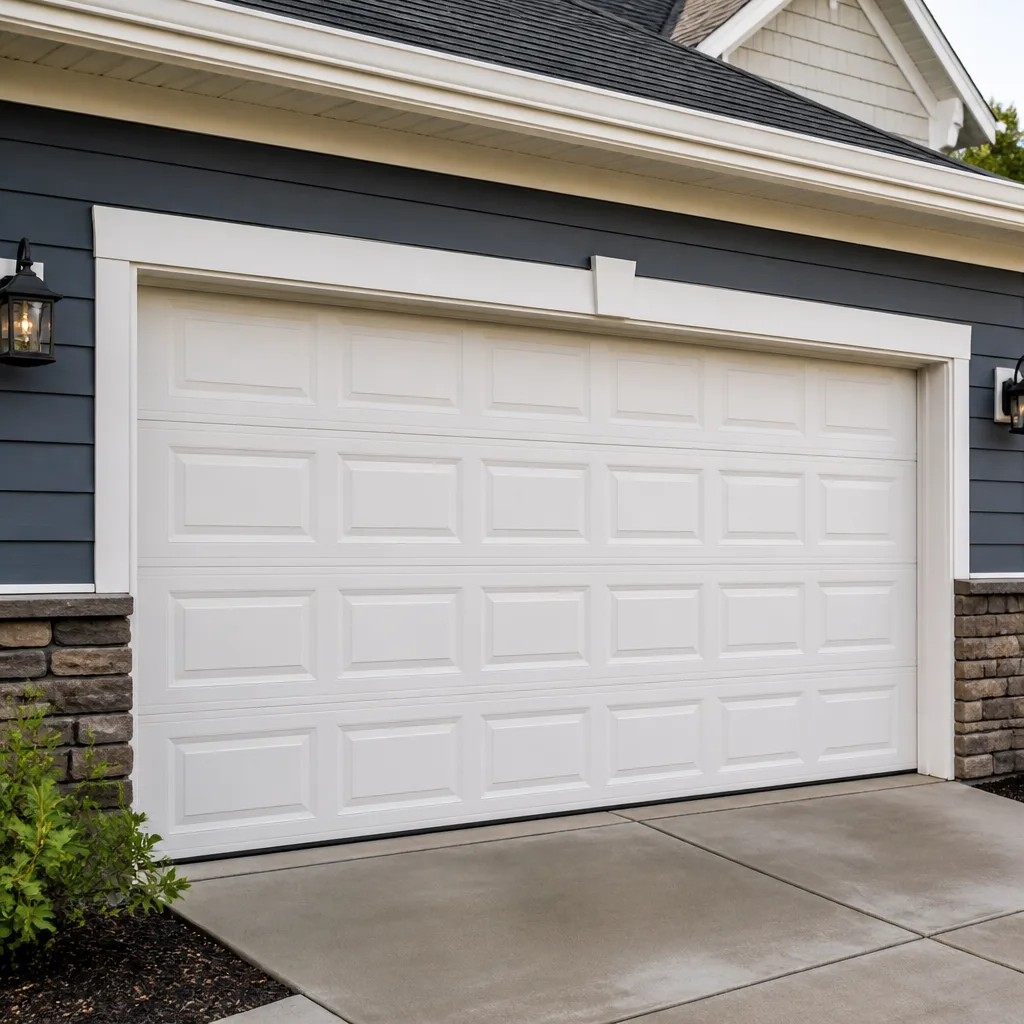 Raised-panel steel
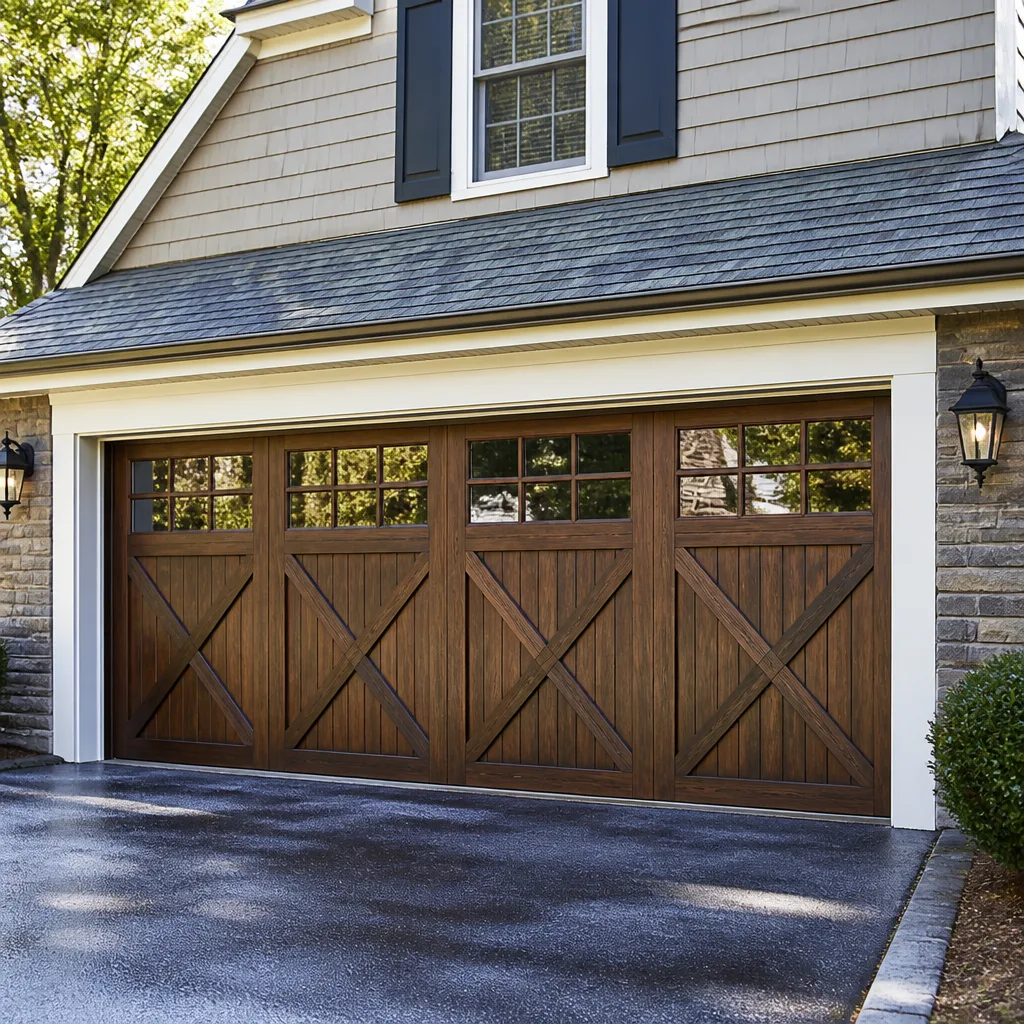 Carriage house
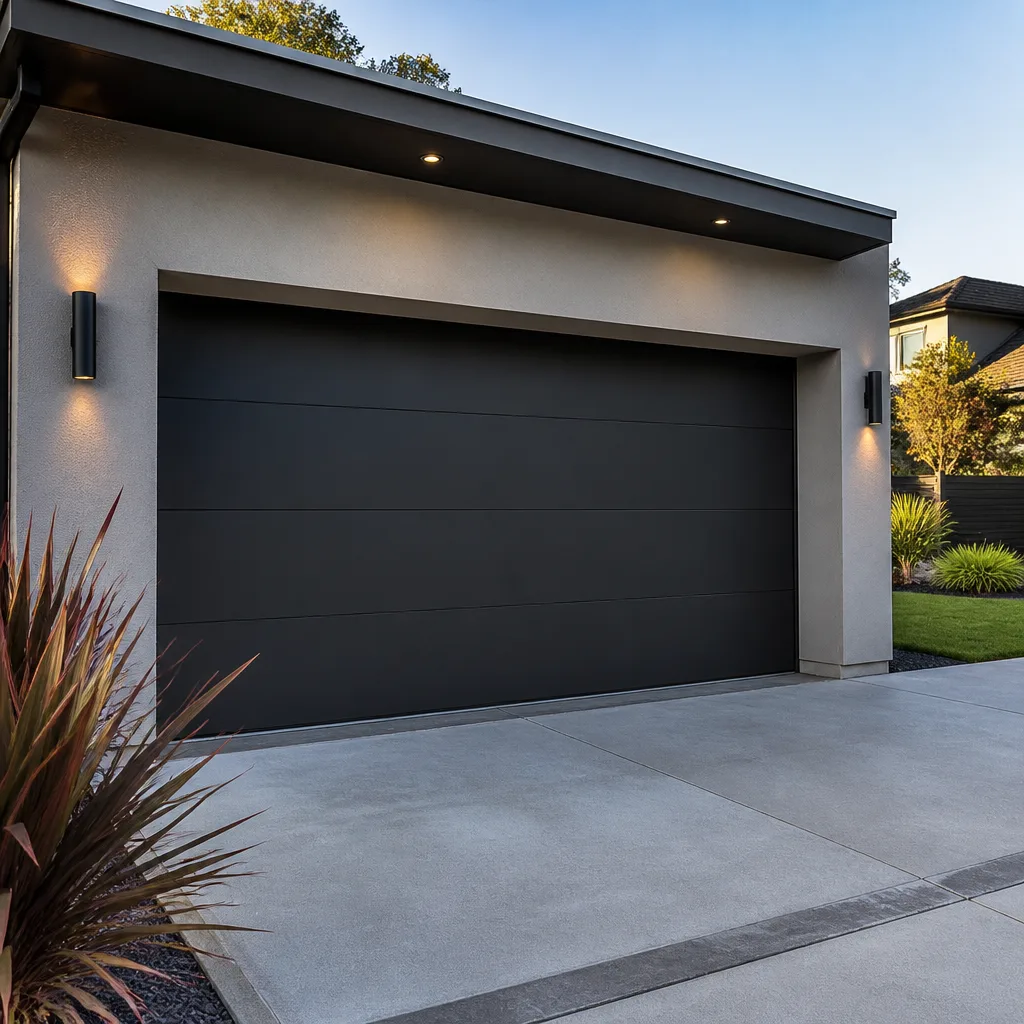 Modern flush
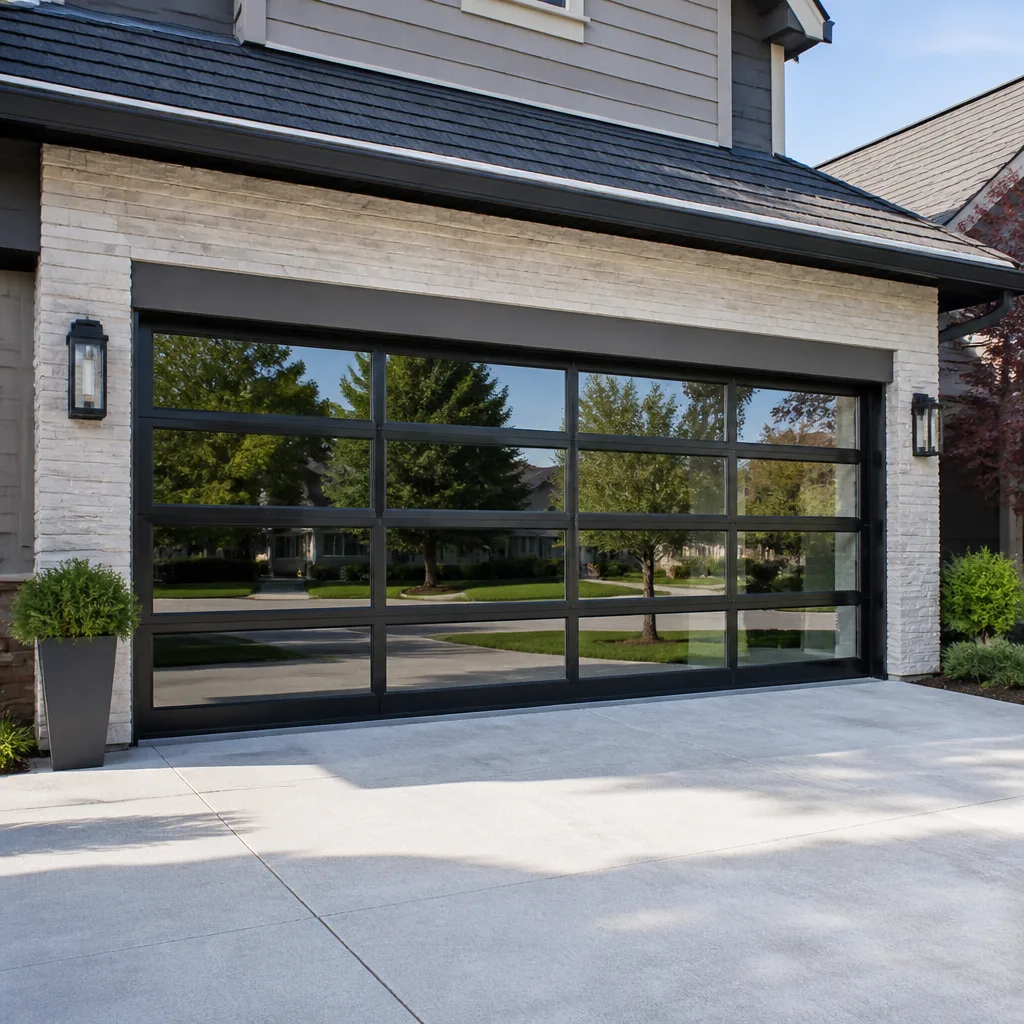 Full-view glass
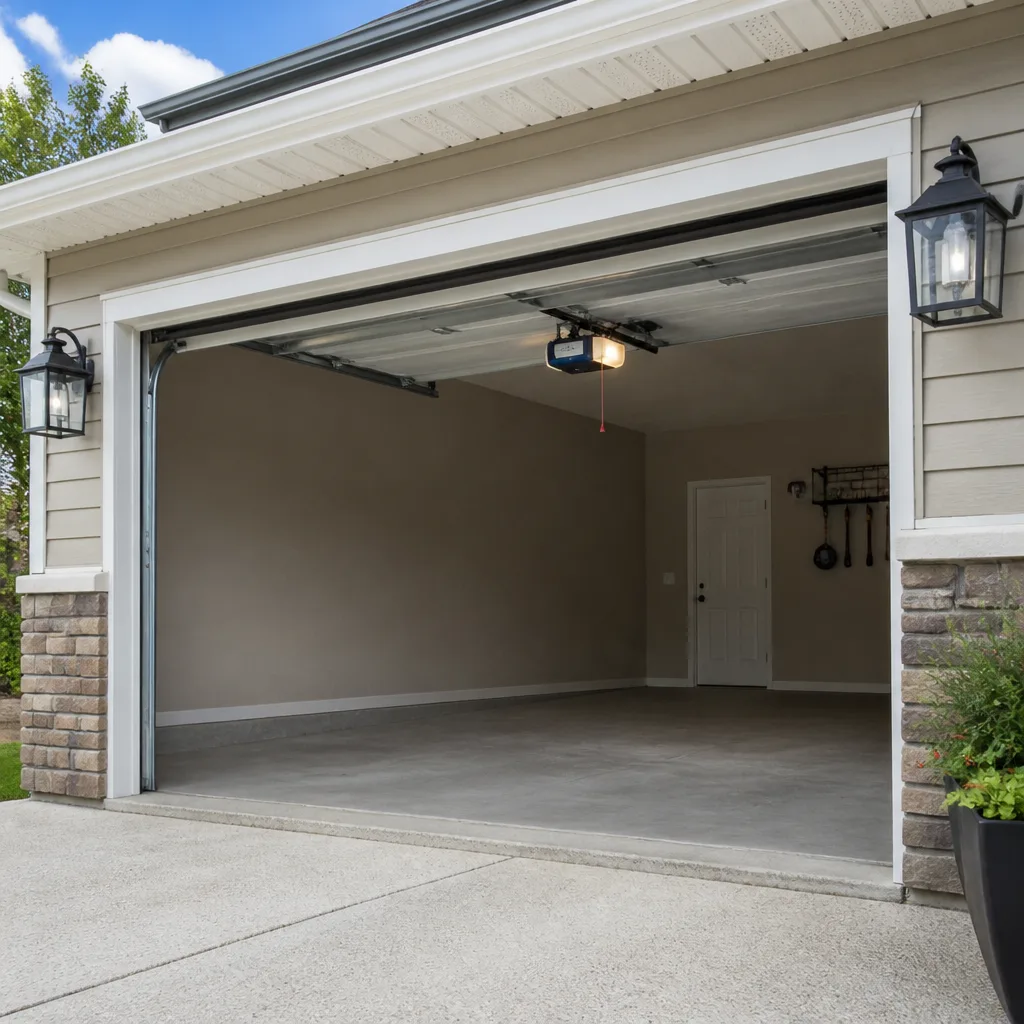 LiftMaster openers
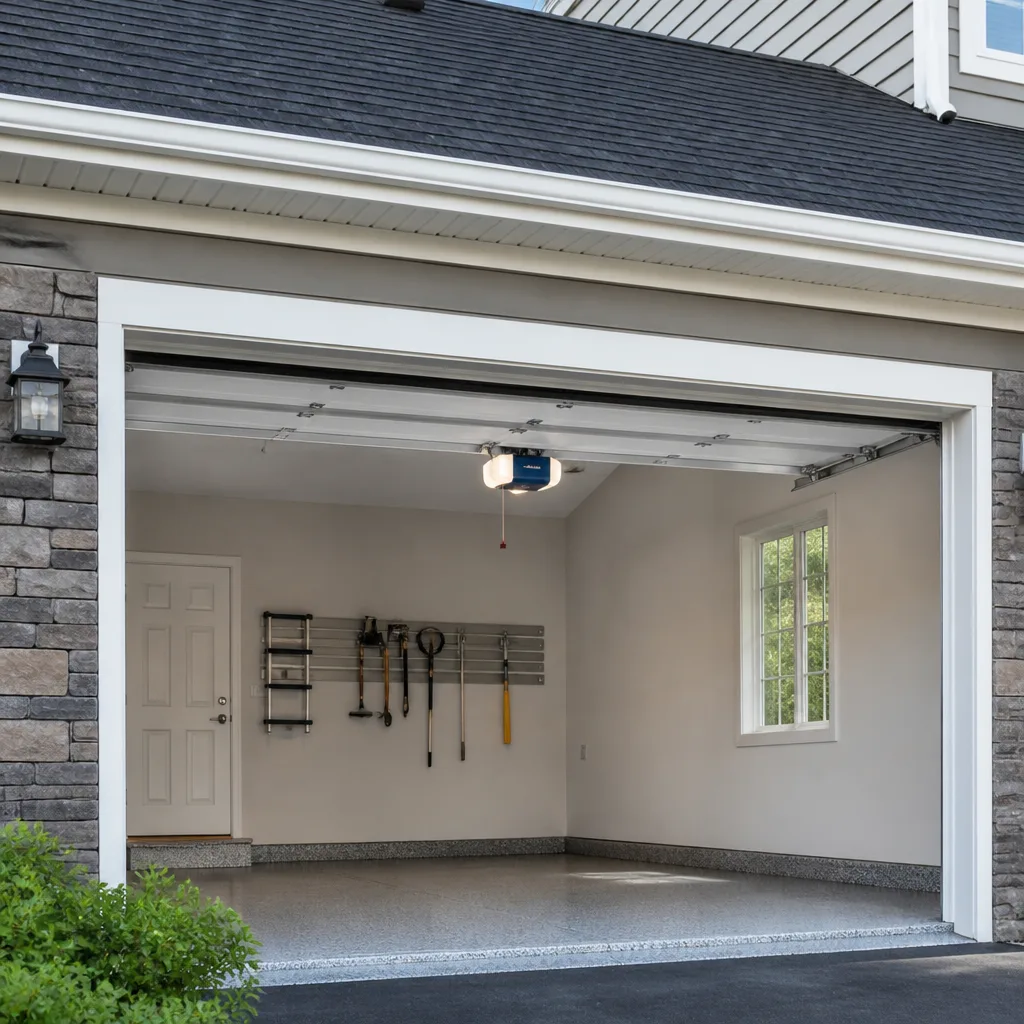 Chamberlain openers
Full 25-point door and opener safety check with every visit - springs, cables, rollers, tracks, and your LiftMaster or Chamberlain opener included
You get a price before we start. It does not change when the pro arrives.
Get your free estimateDIY vs Professional Garage Door: The Wellington Homeowner’s Decision Guide
Most homeowners approach a broken garage door the same way they approach a leaky faucet: watch two videos, decide it looks manageable, and get to work. That’s the wrong filter. Garage doors aren’t a skill question. They’re a risk question. Three parts of the system carry genuine injury potential, and one of them is legally restricted in Florida. The other half of the job, the half nobody talks about, is full of tasks you can legitimately knock out on a Sunday afternoon. This guide draws the line for Wellington homeowners: what you can safely handle, what the law and physics say to leave alone, and how to spot bad instructions before you’re halfway up a ladder.
Quick Answer
Homeowners in Wellington can safely handle weatherstripping, lubrication, safety-sensor alignment, and remote programming themselves. Torsion spring replacement, cable replacement, and new door installation are not appropriate DIY projects in Florida: torsion springs store enough energy to cause a fatality if released wrong, cables under tension can whip with serious force, and a new wind-rated door needs a permit and inspection that must meet code regardless of who installed it. Anything involving a spring, a cable, or a full replacement belongs with a trained specialist.
Styles & brands we work with
- Raised-panel steel
- Carriage house
- Modern flush
- Full-view glass
- LiftMaster openers
- Chamberlain openers
Table of Contents
- Where the DIY Line Actually Falls
- Why Torsion Springs Are Not a Weekend Project
- Cables, and Why Tension Changes Everything
- Florida Permits, Wind Ratings, and the DIY Installation Trap
- What You Can Legitimately Do Yourself
- The Real Cost Math: DIY Savings vs. False Economy
- How to Spot YouTube Instructions That Don’t Fit Florida Doors
- Five Tasks That Fit in a Weekend
Where the DIY Line Actually Falls
The mistake most people make is treating “DIY vs. professional” as a sliding scale based on confidence. It isn’t. It’s a sharper line than that, and it’s drawn by two separate factors: physical energy stored in the door system, and legal exposure under Florida law. A homeowner with excellent mechanical instincts is still in dangerous territory on a torsion spring. A homeowner with almost no tools can safely handle weatherstripping. Skill level barely enters the conversation.
Here’s how we frame it for customers who call us from Wellington neighborhoods like Olympia, VillageWalk, and the older sections off Forest Hill Boulevard.
There are three categories, not two:
- Safe to DIY – low energy, no stored tension, no permit. Weatherstripping, lubrication, sensor alignment, remote and keypad programming, cleaning tracks.
- Not safe to DIY – moderate to high stored energy, injury history, no legal restriction but no sensible insurance coverage either. Spring work, cable work, bearing plate swaps, roller replacement on a door under tension.
- Legally not DIY in practice – work that needs a permit, an inspection, and a code-compliant product for wind rating. New door installation is the big one in this category.
Wellington sits in Palm Beach County, which means wind-rated door requirements aren’t optional niceties. A garage door is the largest opening in a house, and in this part of Florida it’s treated as a structural element, not a cosmetic one. That single fact reshapes the DIY decision more than anything else.
Most garage door failures we see in Wellington fall into predictable buckets: a snapped spring on a door that had been noisy for months, an opener that died with the door half-open, a door knocked off track by a car bumper or a storm gust. Some of those you can handle. Some you absolutely cannot. Knowing which is which is the whole point of this guide.
If you’re already facing a broken door and want to skip the reading, our garage door repair team handles the diagnosis and gives you a written price before anything starts.
Why Torsion Springs Are Not a Weekend Project
A garage door torsion spring stores enough mechanical energy to cause a fatality if it releases uncontrolled. That is not a warning label. It’s a physics fact, and it is the single most important sentence in this guide. A standard two-car door spring holds hundreds of pounds of torsion wound into a steel coil. When you release it wrong, it doesn’t hiss gently and settle. It snaps, whips, and the winding bars can leave your hands before your brain registers what happened.
We handle garage door springs as a standalone service because the job demands it. It’s also the reason so many general handymen won’t touch spring work and route it elsewhere.
What actually goes into a spring replacement:
- Door weight and balance check. Springs are sized to door weight and cycle life. The wrong spring isn’t just inefficient, it’s dangerous.
- Controlled tension release. Done with the correct winding bars and the door fully closed. One slip and the spring releases into the technician, not away from them.
- Removal and replacement of the spring and its hardware. Bearing plates, drums, and set screws inspected while the spring is off.
- Re-tensioning and balance test. The door should hold halfway open and drop smoothly under its own weight when released.
- Opener force adjustment and safety reverse test. Any spring change affects opener force settings, and the reverse test confirms the door stops and reverses on contact.
Notice what’s missing: a step where you lean a ladder against the door and hope. There isn’t one. For reference on how the job looks as a service, our garage door spring repair page walks through it in detail.
If your door has a broken spring – you’ll hear a bang from the garage, the door feels impossibly heavy, or it stops partway up and won’t budge – do not force it. Call a specialist. The door can be raised manually to get a car out, but only with two people and only after you know the spring is the problem, not the opener.
Cables, and Why Tension Changes Everything
Garage door cables sit under the same tension the springs create. A cable that snaps under load can whip across the garage with enough force to break a window or a hand. Homeowners sometimes try to replace a frayed cable as a maintenance item, assuming it’s like a bike brake cable. It isn’t. The cable keeps the door level and connects the spring tension to the bottom bracket; a misrouted or under-tensioned cable can drop the door on one side or throw it completely off track.
What makes cable work more dangerous than spring work, in a way, is that it often goes wrong slowly. A door with a slightly loose cable runs fine for weeks, then the roller slips out of the track at the worst moment. We’ve seen doors in Wellington where the homeowner replaced the cable themselves, everything seemed fine, and the first windy afternoon dropped the door on one side.
Skip the cable job yourself. What you can do is check for problems early:
- Look for frayed or kinked wire near the bottom bracket
- Check that the door hangs level when closed
- Listen for a grinding or popping sound during travel
- Watch for uneven roller wear on one side
Those observations cost nothing and catch the problem before the cable fails. The replacement itself should be done by someone who works with garage door tension daily.
Florida Permits, Wind Ratings, and the DIY Installation Trap
Here’s where the DIY conversation changes entirely in Florida. A homeowner can legally pull their own permit for a garage door installation in most Florida jurisdictions, and there’s no law that says only a licensed contractor can install a door. That said, the permit still requires an inspection, and the door still has to meet the same wind-rated code requirements whether a professional or a homeowner installs it. The legal restriction isn’t on who swings the hammer. It’s on what the door has to be.
Wellington sits in a wind-borne debris region, which means a replacement garage door generally needs to be a rated product, installed to the manufacturer’s specifications, and approved by an inspection. If the door you buy at a big-box store isn’t rated for this area, no inspection will pass it, and no wind-rated house sells with an unapproved door.
What this means for the DIY decision:
- You can pull the permit yourself. That part is legal.
- You cannot substitute a non-rated door and pass inspection.
- You must install the door to the manufacturer’s exact hardware, anchor, and track specifications to meet code.
- You must schedule and pass inspection before the job is closed out.
- If you install it wrong, you own the cost of redoing it, and inspection failures aren’t cheap to fix.
That last point is what tips most Wellington homeowners toward professional installation. Installation on a wind-rated door isn’t just measuring and screwing in tracks. It’s anchor spacing, header attachment, reinforcement requirements, and often the door manufacturer’s own certified installer pathway. When we handle a full garage door installation in Wellington, the permit and inspection are part of the process from day one, and the door you get is rated for this region.
One more point often missed: even a like-for-like replacement of an existing door in Wellington may require a permit, depending on who you ask at the building department and whether the door’s rating has changed. Call the City of Wellington building department before you buy anything. That phone call takes five minutes and saves weeks.
What You Can Legitimately Do Yourself
A lot of garage door maintenance is well within reach for a homeowner with basic tools, and doing it yourself keeps the door quieter and longer-lived. This isn’t an “always call a pro” pitch. It’s a list of the parts that don’t fight back.
Weatherstripping replacement
The rubber seal along the bottom of the door and the vinyl strips around the frame wear out in Florida’s heat and humidity faster than most homeowners expect. Replacing the bottom seal usually means pulling out the old rubber and sliding a new one into the track – no tools required on most doors. The side and top weatherstripping is usually nailed or tacked into the frame, so removing the old strip and installing fresh material is genuinely a homeowner job.
Lubrication
Once or twice a year, wipe the tracks down with a cloth and apply a proper garage door lubricant (not WD-40) to rollers, hinges, and the spring coil. Do not grease the tracks themselves. That attracts dust and grit and makes the door noisier than it was.
Safety sensor alignment
If the door reverses unexpectedly or won’t close from the wall button, the photo-eye sensors near the floor are usually misaligned. Check that the LED on each sensor is solid (not blinking). If one is off, wipe the lens, then nudge the bracket until the light comes on. You can test the system by passing a broom handle through the beam while the door is closing – the door should stop and reverse.
Remote and keypad programming
If you’re working with a LiftMaster or Chamberlain opener, most models pair in under two minutes: press the learn button on the opener housing, then hold the remote button until the opener clicks. A Craftsman opener follows the same basic procedure. We walk through the full opener side on our garage door opener repair page if you get stuck.
Visual inspection
Look at the springs, cables, hinges, and rollers once a season. You’re not fixing anything. You’re spotting early wear so you can call before a part fails.
The Real Cost Math: DIY Savings vs. False Economy
The do-it-yourself calculation gets murky on garage doors because the savings are wildly different depending on the task. Replacing a bottom seal is a genuine, straightforward saving. Replacing a torsion spring yourself is a false economy dressed up as one. Here’s how the math actually breaks down.
| Task | DIY Approach | Typical Professional Range | Worth DIY? |
|---|---|---|---|
| Bottom weatherseal | Low cost for the seal, no tools | $150-$250 (estimate) | Usually yes |
| Safety sensor alignment | Free | $80-$150 (estimate) | Yes |
| Remote/keypad programming | Free | $80-$120 (estimate) | Yes |
| Annual lubrication | Cost of lubricant, an hour of time | $100-$180 (estimate) | Yes |
| Torsion spring (single) | Part cost only, but injury risk and wrong sizing | $180-$340 (estimate) | No |
| Torsion spring pair | Rarely matched correctly at home | $360-$680 (estimate) | No |
| Cable replacement | High injury risk, common return visits | $200-$400 (estimate) | No |
| Door installation | Permit, inspection, product rating all needed | Varies with door and rating | No |
Those ranges are typical for the Wellington market, not fixed prices. Every job gets a written estimate before the work starts, and that written number is the price. We don’t surprise homeowners with a higher invoice at the end.
The false economy on spring work usually shows up in one of two ways. Either the homeowner buys the wrong spring (springs are rated by door weight and cycle life; the wrong one puts the opener under stress and fails early), or they get the spring in and the balance is off, which wears out the opener and rollers within months. A $40 part becomes a $250 opener repair plus a $300 spring do-over. The savings disappated the moment the first part failed.
On opener programming, the math is even simpler: it’s free to do yourself and usually under a minute. Do it. Save the professional calls for the tasks where the professional genuinely changes the risk profile.
How to Spot YouTube Instructions That Don’t Fit Florida Doors
The internet has excellent garage door content and dangerously wrong garage door content in approximately equal volume, and it’s not always obvious which is which. The wrong videos aren’t marked. They’re confident, well-lit, and shot by someone who’s never seen a wind-rated door in their life. Here’s what to watch for before you follow along.
1. The door type doesn’t match yours. Sectional doors dominate Wellington homes, but plenty of videos show one-piece tilt-up doors, roll-up doors, or carriage-house doors. The spring system, hardware, and safety setup differ. If the door in the video doesn’t match the door in your garage, close the tab.
2. There’s no mention of winding bars on a torsion spring video. If the presenter uses a screwdriver, a piece of bar stock, or their hand to hold spring tension, stop. That’s a red flag on any torsion video and a sign the person making it doesn’t understand stored energy.
3. The hardware has a wind rating label the video ignores. If you see a Miami-Dade or Florida Product Approval sticker on the door and the video doesn’t mention it, they’re not in Florida.
4. The presenter doesn’t mention permit or inspection. For a full installation video, that’s a major omission for anyone in Wellington.
5. The opener brand doesn’t match your system’s logic. LiftMaster, Chamberlain, Genie, Raynor, and Craftsman openers each program slightly differently. If your opener is a Genie and the video is reprogramming a Craftsman, the button presses won’t translate.
When in doubt, search the exact model number of your door or opener rather than the general task. A Raynor-specific video is more useful than a “how to adjust your garage door” video for a Raynor door. If you can’t find the exact model, that’s not a reason to guess. Call. We work on the brand you already have, across all the major manufacturers in South Florida.
Five Tasks That Fit in a Weekend
If you’re the kind of homeowner who wants to give it a real go before calling anyone, here are five jobs worth doing correctly on a weekend. All of them are safe, all of them save you a service call, and all of them make the door last longer.
- Replace the bottom weather seal. Pull the old rubber out, clean the channel, slide the new seal in. Ten minutes on most doors.
- Lubricate the moving parts. Rollers, hinges, spring coil, and bearing plates. Skip the tracks.
- Test the safety reverse. Place a 2×4 flat on the ground in the door’s path. The door should hit it and reverse. If it doesn’t, the opener force settings need attention.
- Align the photo-eye sensors. Solid LED on each side. Broom handle test to confirm the beam triggers the reverse.
- Program a new remote or keypad. Learn button on the opener, pair the device, test from a few houses away.
None of these involve a spring, a cable, or a permit. All of them extend the life of your system and keep you familiar with how it’s supposed to sound and feel when it’s running properly. That familiarity is what makes you notice something’s wrong before it becomes an emergency.
Common Mistakes to Avoid
- Treating a torsion spring like a stretched rubber band. It’s not. It’s a stored-energy device. Handling it without winding bars and door weight specs is the mistake that puts people in the ER.
- Buying a non-rated replacement door online. Wellington is a wind-borne debris region. A door that doesn’t meet the rating won’t pass inspection, no matter how well it’s installed.
- Skipping the permit on a replacement door. Some homeowners assume “like-for-like replacement” doesn’t need a permit. Call the City of Wellington building department and confirm before you buy.
- Greasing the tracks. Feels helpful, isn’t. It collects grit and makes the rollers wear faster. Lubricate the rollers, not the tracks they run in.
- Following a video for a different door or opener model. The steps don’t translate. A Genie opener’s programming sequence is not a Craftsman’s, and a torsion system on a 7-foot door isn’t set up the same as a 8-foot door.
- Forcing a door that won’t move. If the door fights you – feels heavy on one side, stops halfway, makes a loud crack – stop. Forcing it stretches cables, cracks panels, and turns a repair into a replacement.
- Removing the door’s safety reverse to fix an unrelated problem. Never disable the reverse function. If the door won’t stay closed, the sensors or force settings need fixing, not bypassing.
See the difference
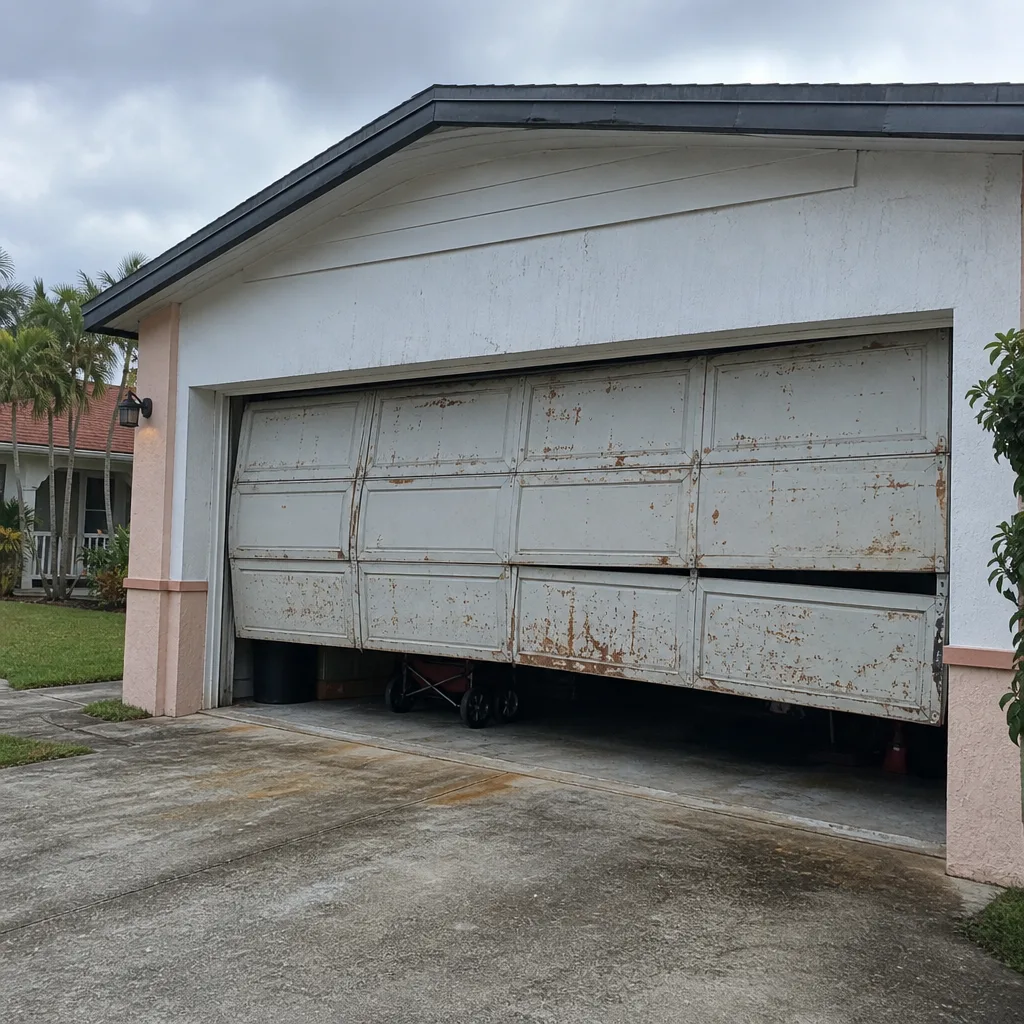 Before
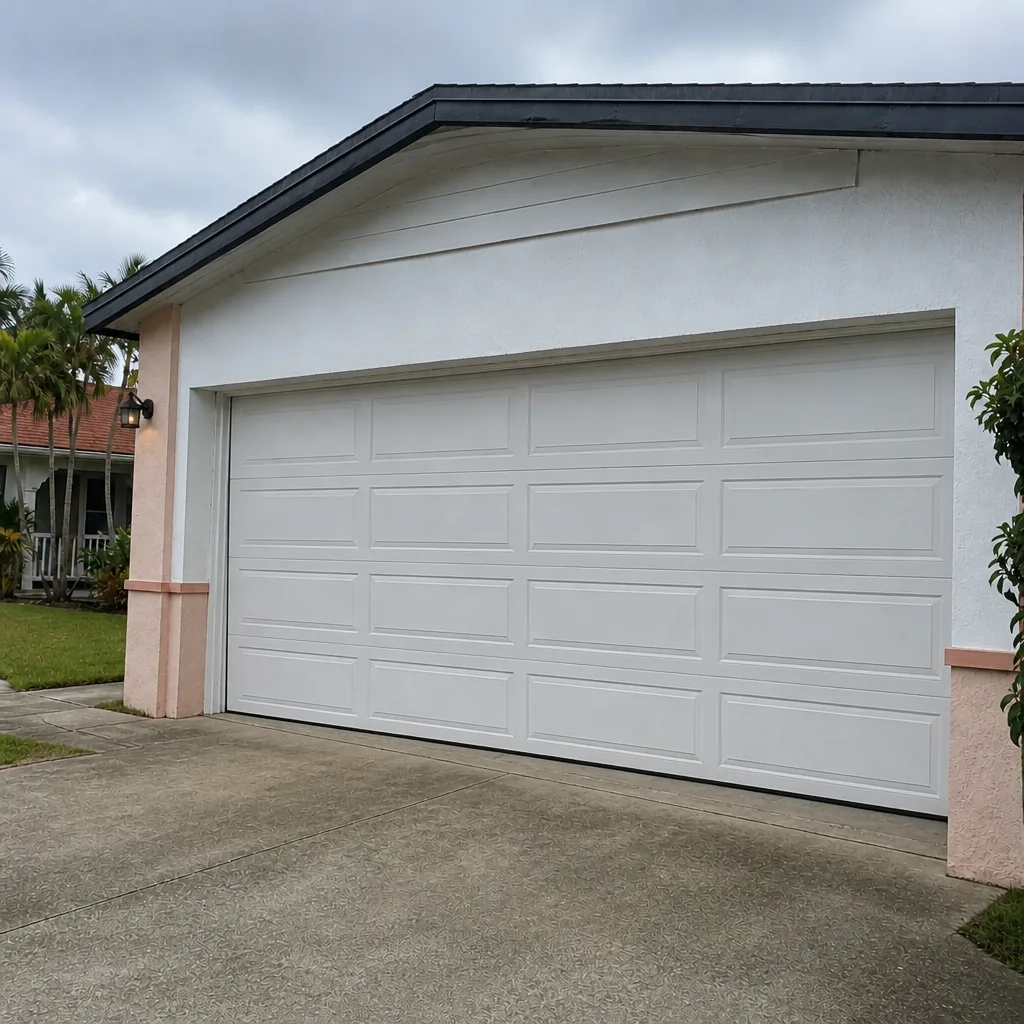 After
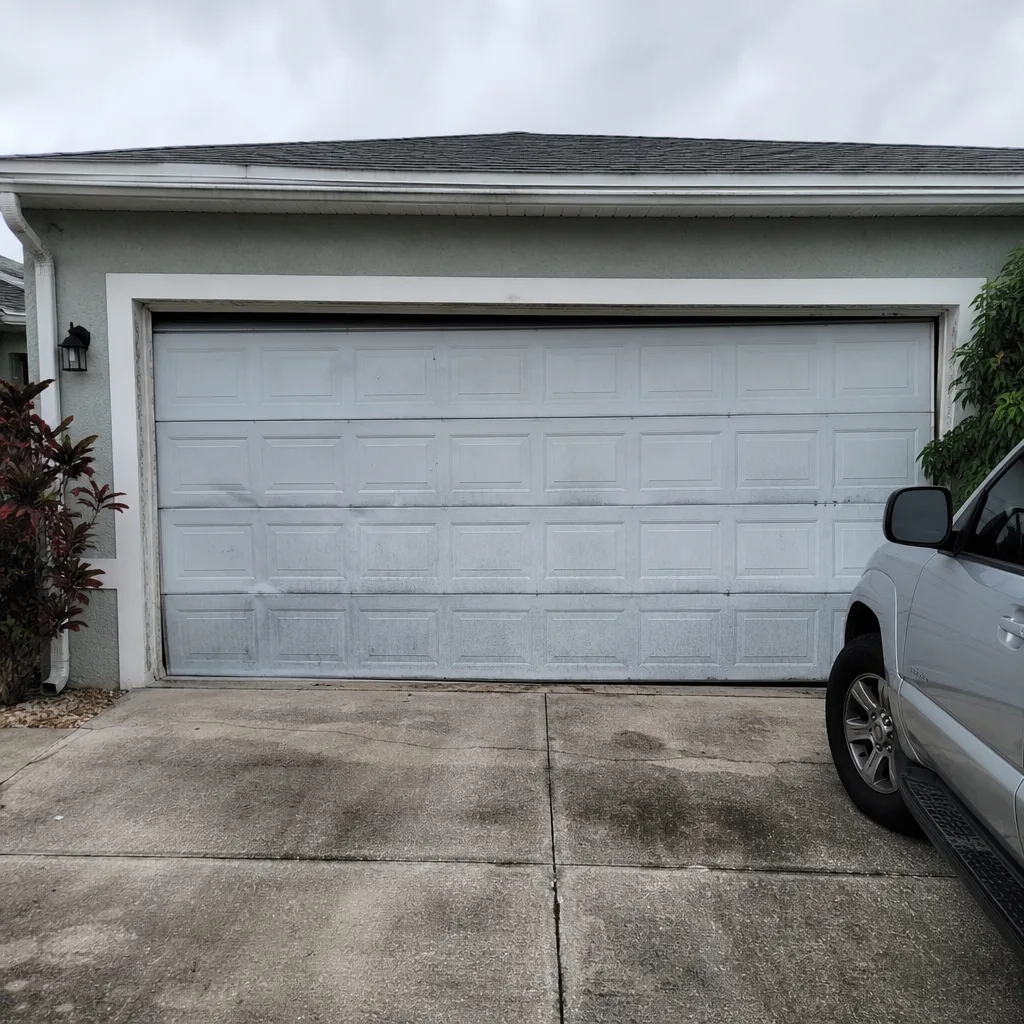 Before
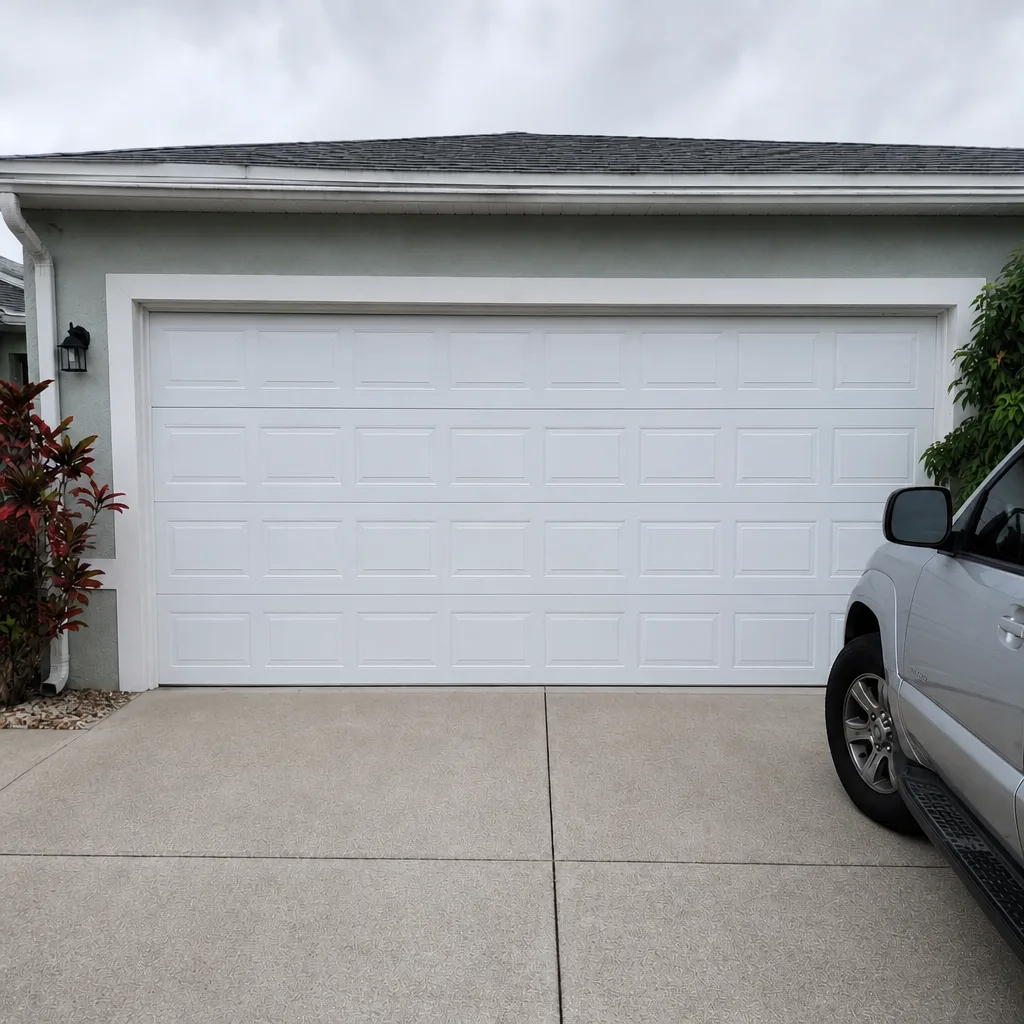 After
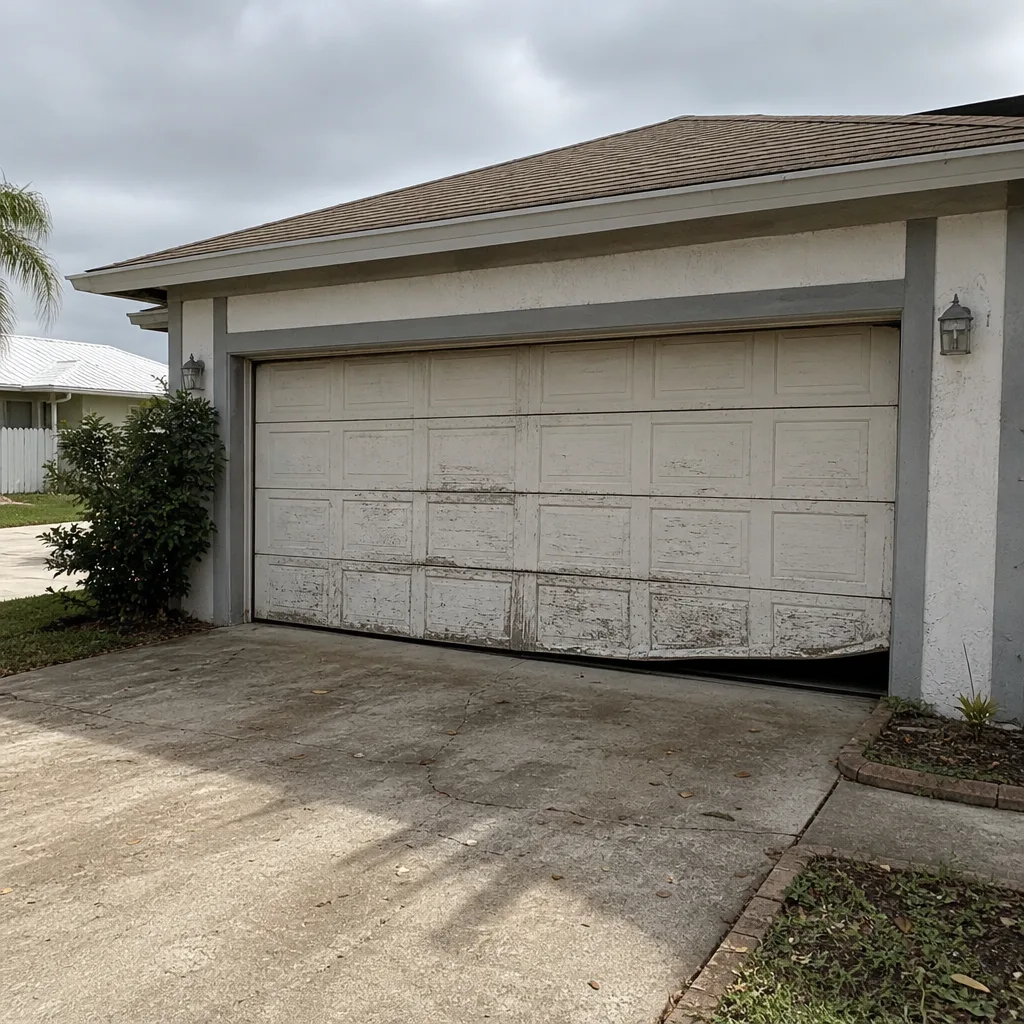 Before
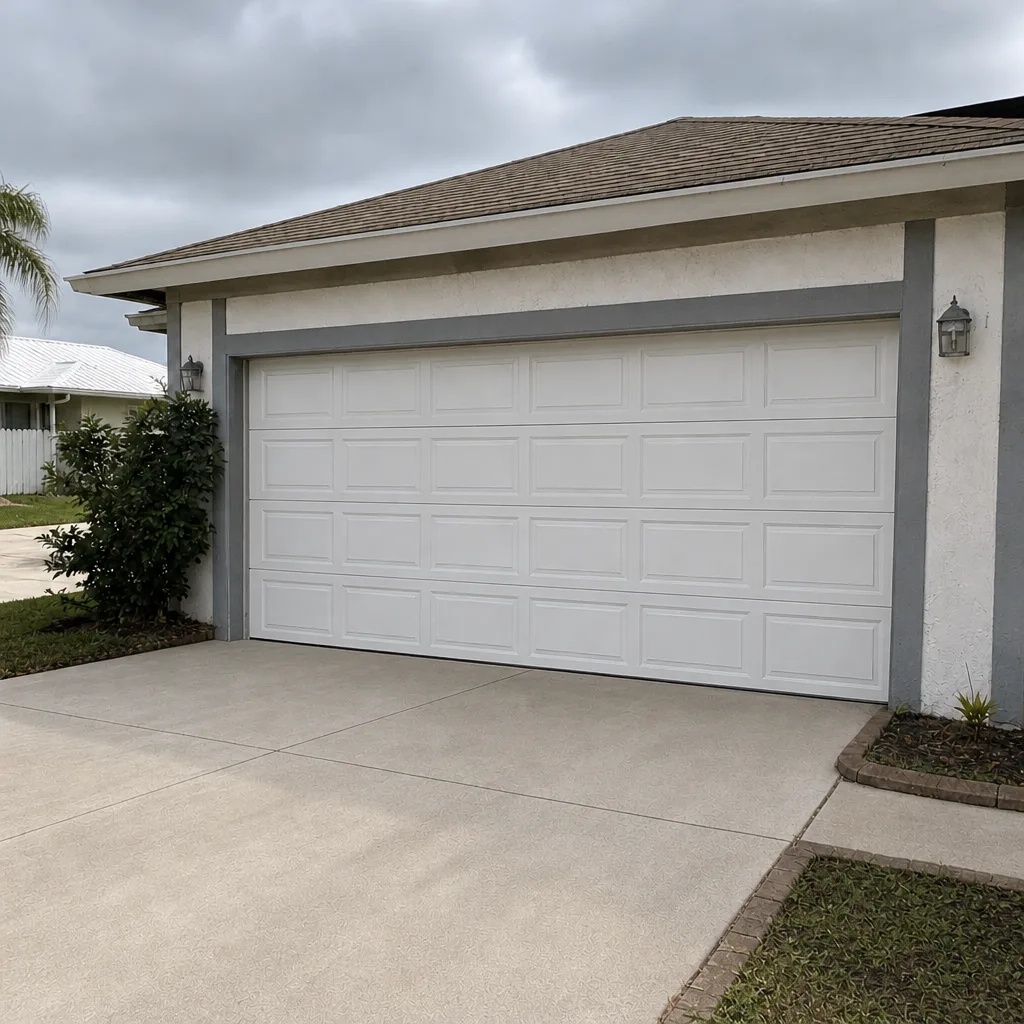 After
When to Call a Professional
Call us when the problem involves stored tension, structural attachment, or code compliance. That means: a broken spring, a snapped or slack cable, a door off its track, a bent track, a door that won’t balance, an opener that runs but won’t lift, a full door replacement, or a door that’s failing inspection for wind rating. Also call when you’ve checked the sensors, the remote, and the power, and the door still won’t close – a logic board or travel limit problem is easy to misdiagnose without the right meter and the right model-specific manual.
Wellington Garage Door Repair Pros offers free estimates in Wellington. We work on the brand you already have, whether that’s a LiftMaster opener, a Raynor door, or a system installed with the house twenty years ago. When the door won’t move, we move fast. Call (855) 658-3814 for a free estimate and a written price before any work starts.
Frequently Asked Questions
No. Torsion springs store enough energy to cause a fatality if released incorrectly, and the homeowner cannot safely size, tension, and balance a replacement spring without the correct tools and door weight specs. Spring work should always go to a specialist, even when the door mechanism looks straightforward. Call (855) 658-3814 for a written estimate.
In most cases, yes. A full garage door replacement in Wellington generally requires a permit and an inspection, and the door must meet wind-borne debris region rating requirements. Call the City of Wellington building department to confirm the specifics for your address before you buy anything. If we install the door, the permit and inspection are part of the process.
Typical single-spring replacement in the Wellington area runs about $180 to $340, and a matched pair usually runs about $360 to $680. Those are estimates, not fixed prices, and the written estimate you receive is the number you pay. Call (855) 658-3814 for an exact quote – estimates are free.
Yes. Remote and keypad programming is a safe DIY task on almost every opener. LiftMaster, Chamberlain, and Craftsman openers typically pair by pressing the learn button on the opener and holding the remote button until you hear a click. Genie and Raynor models use different sequences, so find the specific instructions for your model. If you get stuck, we can walk you through it.
Sensor alignment involves zero stored energy – you’re nudging a plastic photo-eye until its LED comes on. Spring repair involves a tension coil that can release with enough force to injure or kill. The skill required is roughly the same category, but the risk is completely different. That difference is the entire DIY line.
No, not after you’ve received a written estimate. We quote before the work starts, and the written price is the price. The only time pricing shifts is if you ask us to add work during the job, which gets quoted separately before we start it. Call (855) 658-3814 for a free estimate.
The Bottom Line
DIY works on the parts of your garage door that don’t store energy and don’t need a permit. Weatherseal, lubrication, sensor alignment, and remote programming are all reasonable homeowner tasks that save a service call and keep the door running longer. Torsion springs, cables, and full door installations belong with a specialist, in Wellington, because the risk of injury on spring and cable work is real and because a new door in this region has to be rated and inspected regardless of who installs it. The savings on a DIY spring job vanish the moment a single part fails early.
If you’re weighing it for a specific door in your Wellington home, call Wellington Garage Door Repair Pros at (855) 658-3814 for a free estimate. One of our technicians – with up to 11 years of experience – will tell you honestly whether the job needs a specialist or if it’s something you can safely handle yourself.
Written by the team at Wellington Garage Door Repair Pros.