Garage Door Repair: Repair or Replace? How Wellington Homeowners Decide
Repair the door in most cases. If a spring, cable, roller or opener has failed and the panels and frame are sound, fixing it is the right call no matter how old the door is. Replacement starts to make sense when the door’s structure is failing, the parts are discontinued, or the door no longer fits how you use the garage. In our experience, homeowners in Wellington often get this backward, paying for a new door when a repair would do, or sinking money into a door that’s already past saving. If you’d rather not sort it out alone, call us at (855) 658-3814.
Mechanical Failure vs. Structural Damage: The Core Distinction
Almost every garage door problem falls into one of two buckets, and the bucket decides the answer. Mechanical parts are the moving pieces: springs, cables, rollers, hinges, and the opener. Structural parts are the door itself: panels, stiles, the bottom section, and the frame around the opening. A mechanical failure almost never justifies replacement. A structural failure often does. This is the whole decision in one line, and it’s why a 15-year-old door with a snapped spring is usually worth fixing while a younger door with cracked panels can be a replacement case.
Here’s how to tell them apart:
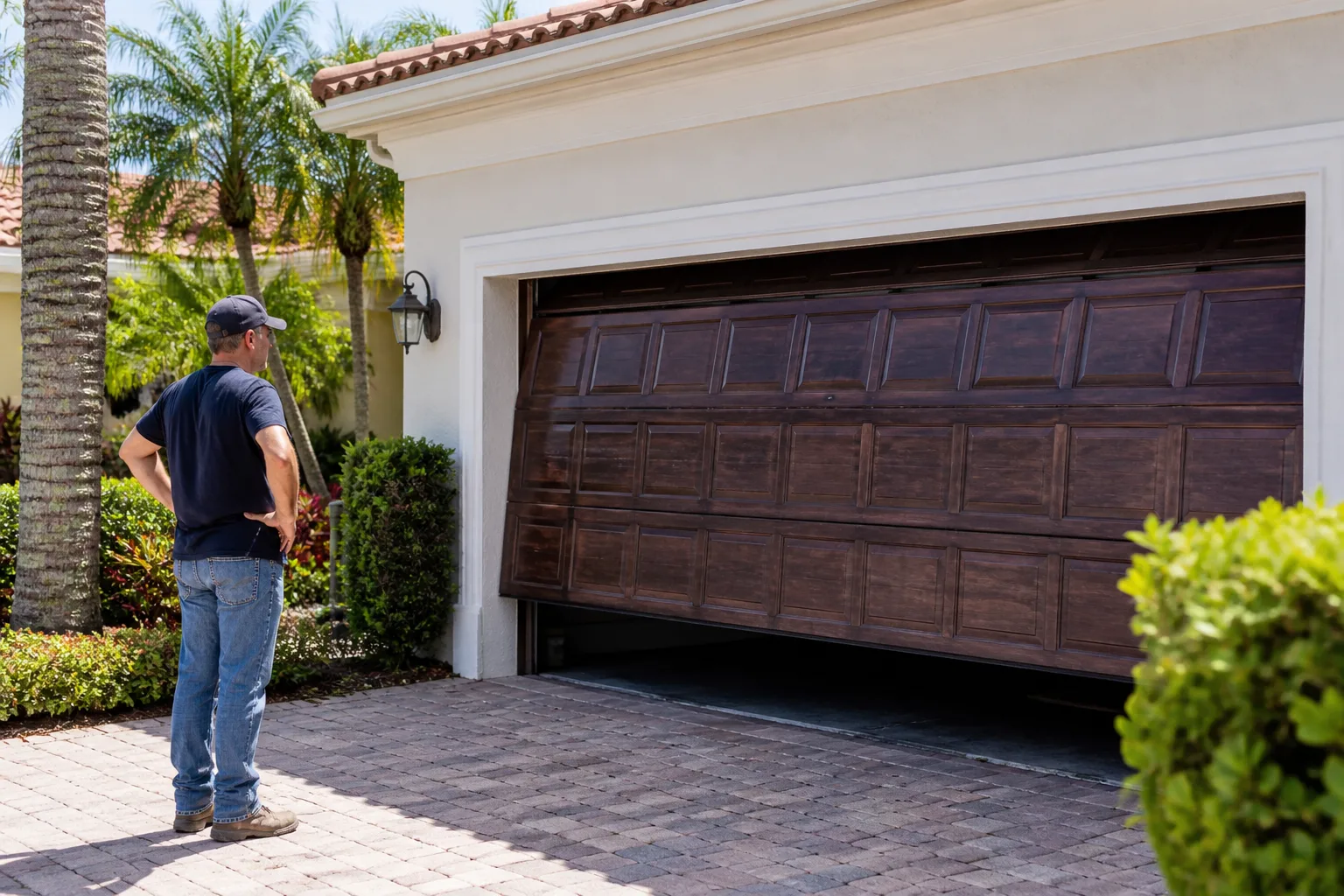
- Mechanical: The door won’t lift, lifts crooked, slams down, or the opener runs but the door doesn’t move. The door panels look straight and the frame is square.
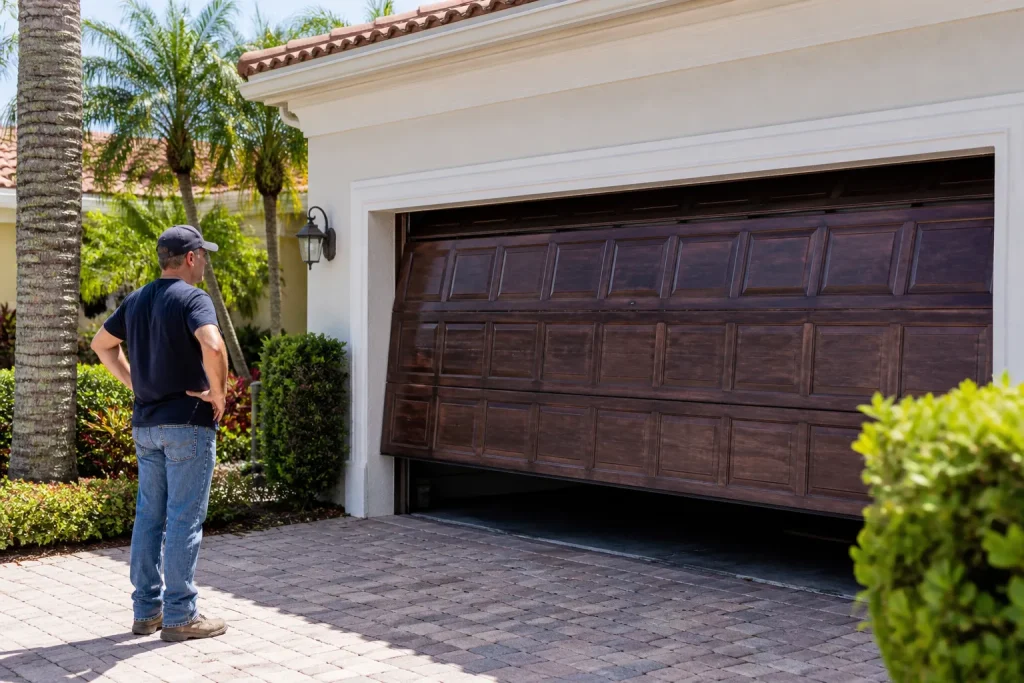
- Structural: You see cracks, splits, sagging sections, rust holes through the panel, or a frame that’s pulled away or warped. The door may still open, but the body is compromised.
Why does the distinction hold up? Because springs, cables and openers are wear items with a predictable service life. They’re designed to be replaced. The door body isn’t. When the body is intact, a repair restores full function, and that repair is nearly always the cheaper path. When the body is damaged, repairs chase a moving target: you fix one panel and the next one fails. Wellington’s humidity is gentle compared with colder climates, but it does no favors to wood and cheap steel that’s already deteriorating, and that’s usually a structural signal.
When Repair Is Almost Always the Right Call
Repair wins when the door’s structure is sound and the failure is in a wear part. Broken springs, frayed cables, worn rollers, a dead opener, a remote that won’t pair, a door off its track: these are fixable, and fixing them is typically the sensible financial move. A spring replacement restores normal operation for a fraction of what a new door costs, and the door keeps its remaining service life. Our technicians have up to 11 years of experience, and the pattern is consistent: mechanical failures are repaired, not replaced.
Your garage door spring repair is the clearest example. Springs are the part that does the heavy lifting, and when one breaks the door becomes heavy and dangerous to move. That’s a repair, full stop. The same goes for opener trouble. A LiftMaster or Chamberlain unit that’s stopped responding is usually a logic board, a gear, or a safety sensor, and swapping the unit out for a whole new door is overkill. If the opener is the problem, start with garage door opener repair.
One safety note before we go further: springs and cables are under extreme tension, and the springs in particular can cause serious injury if handled without the right tools and training. This is not a DIY job. A trained technician knows how to de-tension and replace a spring safely. If a spring has snapped, keep the door closed and call a professional rather than trying to force it.
When to call a pro: any snapped spring, a cable that’s come loose or frayed, a door that’s jumped its track, or a door that moves unevenly. Those are repair jobs, not replacement jobs, and they’re not worth risking your hands over.
When Replacement Starts to Make Financial Sense
Replacement makes sense when the door body is failing, the parts are gone, or both. Panel damage on a discontinued product line is the classic trap. If the manufacturer no longer makes the panels or the specific hardware, a repair today can leave you stranded at the next failure with no parts to fix it. That’s when the math flips: you’re not comparing a repair against a replacement, you’re comparing one more patch against a door you can actually keep maintaining.
Here’s the total-cost-of-ownership framing we walk Wellington homeowners through:
- A $400 repair on a door with years of life left is a straightforward yes.
- A $400 repair on a door that’s going to need another $400 within a year or two, and another after that, starts to add up against a replacement.
- A typical replacement in the Wellington area runs $1,800 – $3,200 depending on size, material and whether it’s impact-rated. That range is an estimate; the written quote sets the actual price.
The energy-efficiency angle is real but secondary. A newer insulated door holds temperature better than an older uninsulated one, which matters in a garage that doubles as a workshop or a room you actually use. If your garage is purely storage, that benefit is small. If you spend time out there, it’s part of the value. Either way, factor it in alongside remaining lifespan, not instead of it.
Related services in Wellington: if you’re leaning toward replacement, our garage door repair team can also assess whether a full Wellington Garage Door Repair Pros installation is the better path, and we’ll tell you honestly which one fits.
Parts Discontinuation: The Hidden Factor in the Decision
Discontinued parts are the single biggest reason a repair that should have worked becomes a dead end. A door can be mechanically fine and still be a replacement candidate if the panels or hardware are no longer made. Before you commit to a repair, it’s worth knowing whether the parts are still available. That’s the question most homeowners never ask until after they’ve paid for a service call.
We work on the brands most Wellington homes already have, including Raynor, LiftMaster, Chamberlain and Genie, so we can usually tell you quickly whether a part is sourceable or whether you’re looking at the last repair the door will take. If the answer is “no parts,” replacement is the honest recommendation. If the parts are available, repair stays on the table. Either way, you’ll know before any work starts, which matters. The price is quoted and agreed before we touch the door. Nobody should get a surprise invoice after the fact, and we don’t run jobs that way.
The Wellington Variable: Impact Rating and Curb Appeal
Two things set Wellington apart in this decision. First, impact-rated doors. Florida building code and local permitting govern what’s required on a replacement, and whether an older non-rated door needs to come up to current standards during a renovation depends on the scope and the jurisdiction. That’s a question for the city’s building department, not a guess, and we’ll walk you through what to ask. If your door predates current requirements and you’re renovating anyway, replacing it to meet code is often the cleaner move than fighting to keep an older unit.
Second, curb appeal. A door that’s mechanically sound but visually outdated is a judgment call, not a technical one. In Wellington neighborhoods, where the front elevation is part of the home’s character, an aging door can date a house that’s otherwise well kept. The objective question is whether the aesthetic gap is the main reason you’re unhappy, or whether you’re really reacting to a door that’s failing. If it’s aesthetic only and the door has life left, repair and a fresh finish can be enough. If the door is both outdated and nearing the end of its service life, replacement does double duty. Ask yourself what you’d notice first from the street.
The Bottom Line
Repair when the failure is mechanical and the body is sound. Replace when the body is failing, the parts are gone, or the door no longer fits how you live and the code you build to. Age is a weak signal on its own; structure and parts availability are the real ones.
If you’re in Wellington and need help deciding, Wellington Garage Door Repair Pros offers free estimates. We work on the brand you already have, from LiftMaster openers to Raynor doors, and we’ll give you a straight answer on repair versus replace. Call (855) 658-3814 for a free estimate.
Frequently Asked Questions
Repair is almost always cheaper in the short term. A typical spring or opener repair runs a few hundred dollars, while a replacement in the Wellington area typically costs $1,800 – $3,200. Replacement only wins the long run when the door body is failing or the parts are discontinued. Call (855) 658-3814 for a free estimate on your specific door.
Repair it. A broken spring is a mechanical failure, and a 15-year-old door with an intact body and available parts is worth fixing. Springs are wear items designed to be replaced. Call (855) 658-3814 and we’ll confirm whether your spring and hardware are still sourceable.
No, not after we’ve quoted it. We inspect the door, give you a written price, and agree it with you before any work starts. The written quote is the price. If the inspection turns up something that changes the job, we tell you before we proceed. Call (855) 658-3814 to book a free estimate.
That depends on your property, the scope of any renovation, and what your city’s building department requires. Impact rating is a code question, not a guess. We can explain what to ask the building department and quote you on a compliant replacement if one is needed. Call (855) 658-3814 for a free estimate.
The local professionals we connect you with are licensed and insured as their state requires. Our technicians have up to 11 years of experience, and garage doors are all we do. Call (855) 658-3814 for a free estimate.
Written by the team at Wellington Garage Door Repair Pros.
Need Garage Door Help?
Call Wellington Garage Door Repair Pros - the local pro we connect you with is licensed and insured, here with fast after-hours help in Wellington.
(855) 658-3814