Last updated November 21, 2026
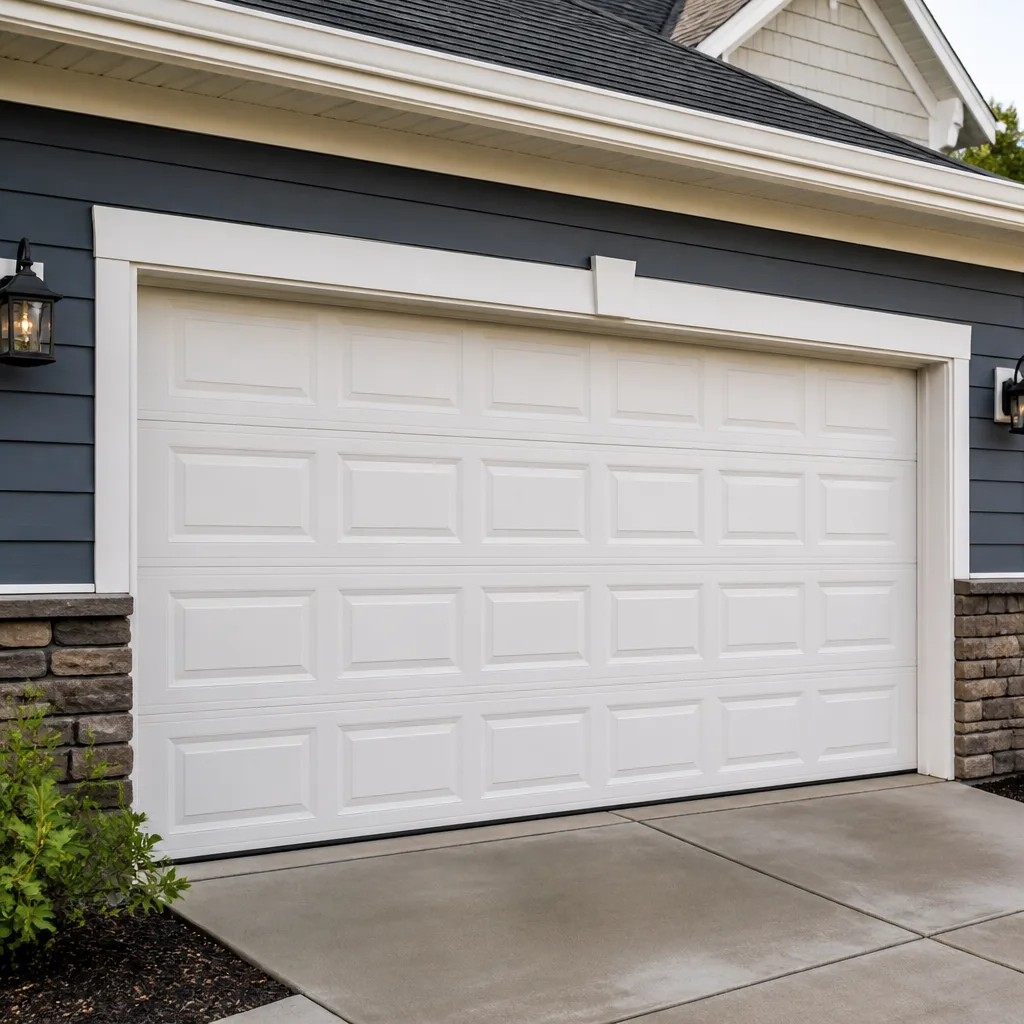 Raised-panel steel
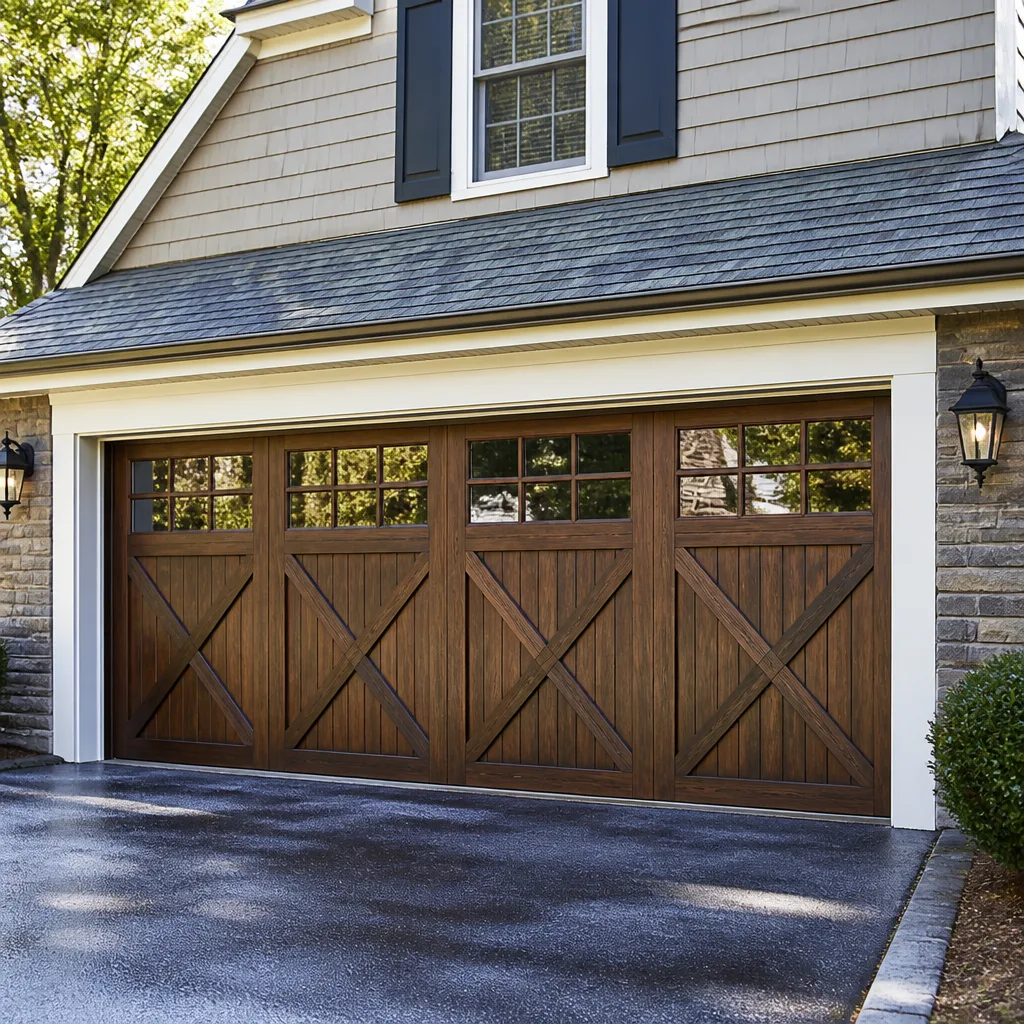 Carriage house
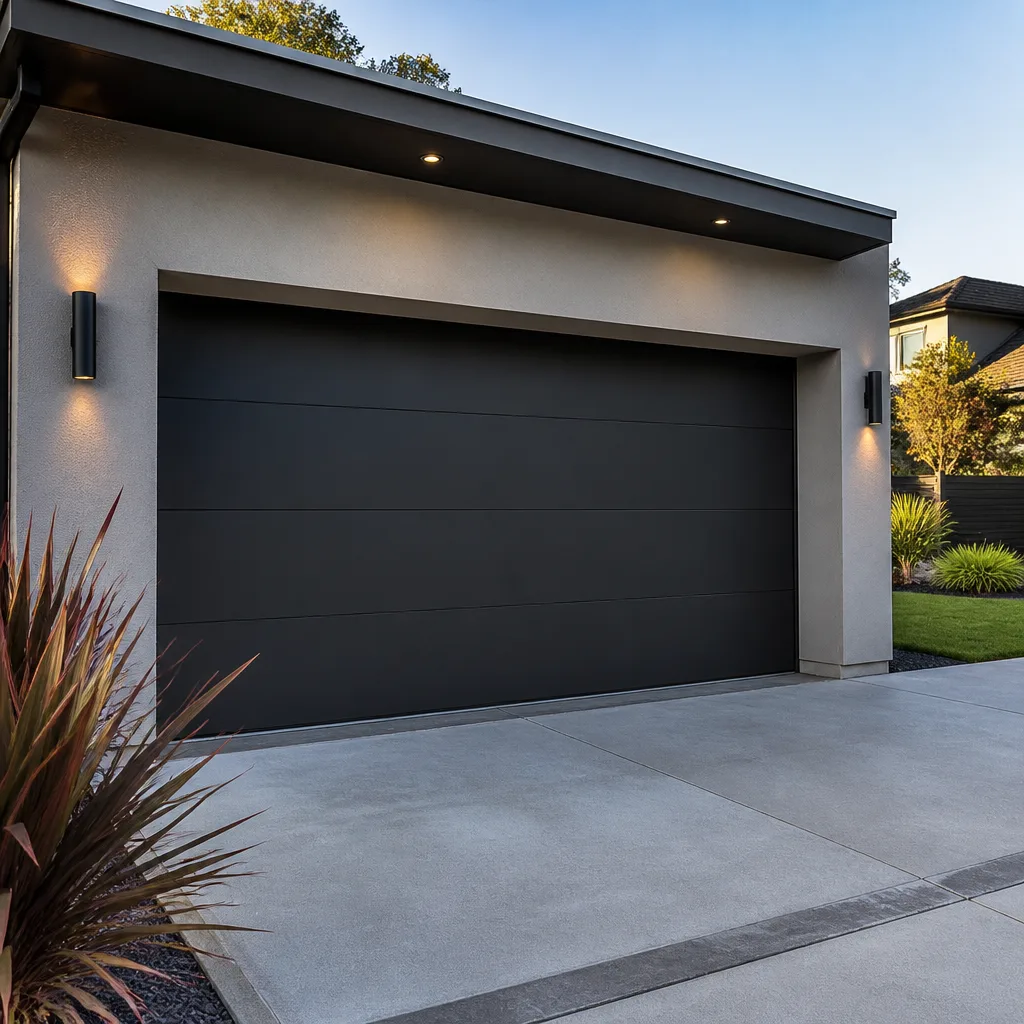 Modern flush
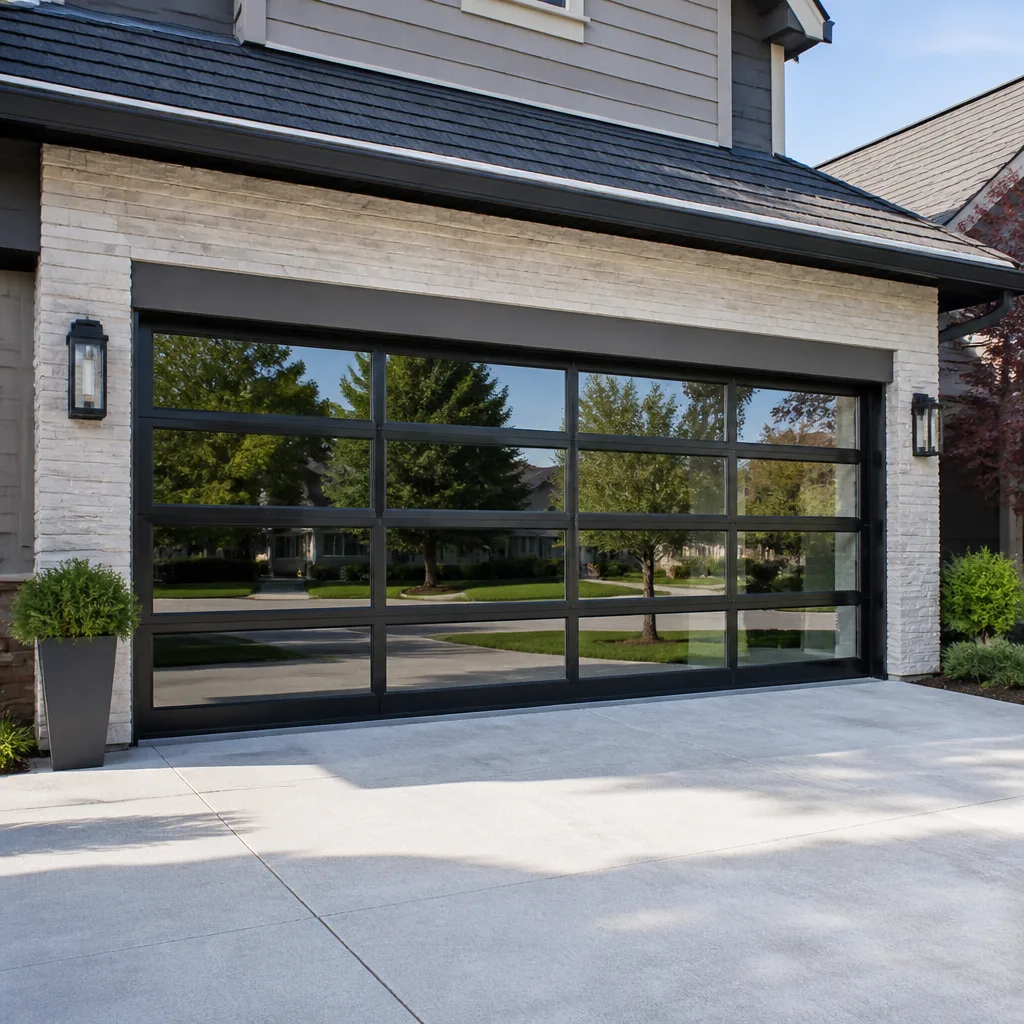 Full-view glass
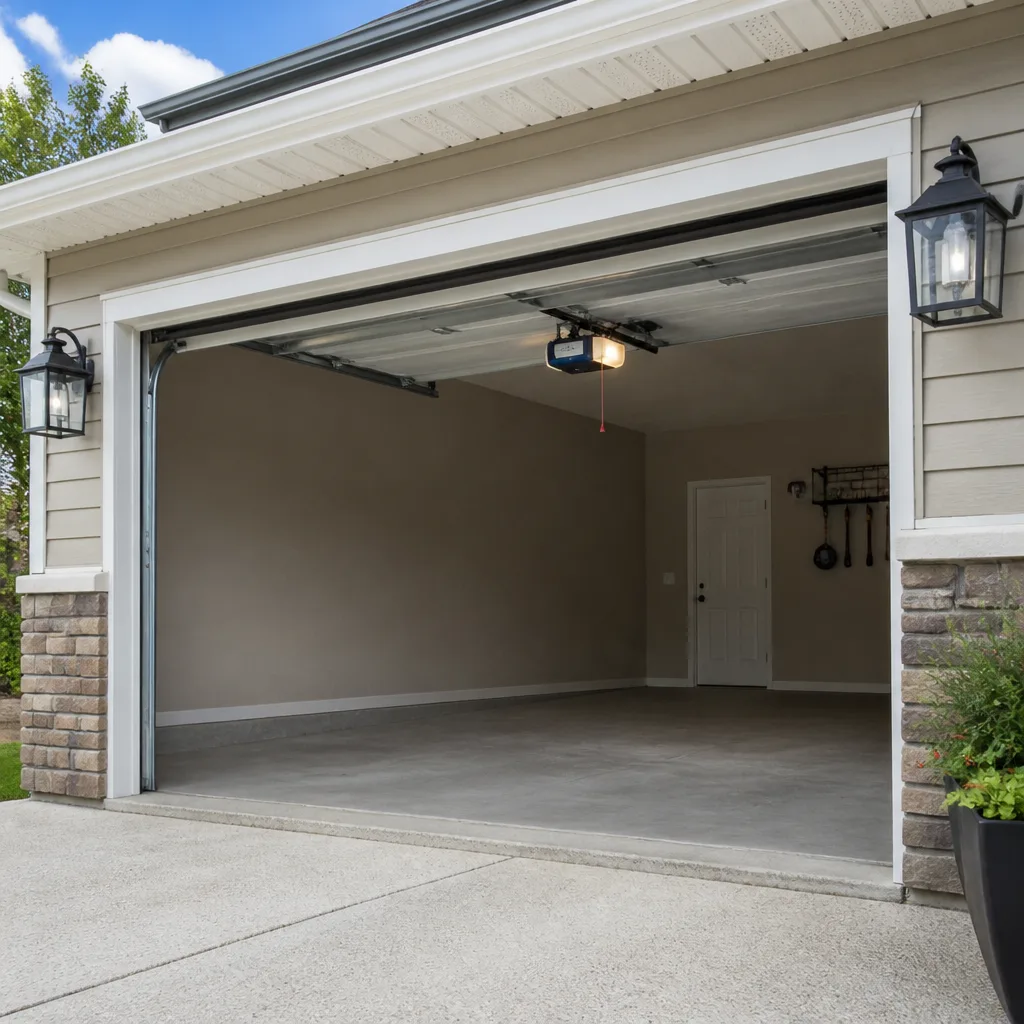 LiftMaster openers
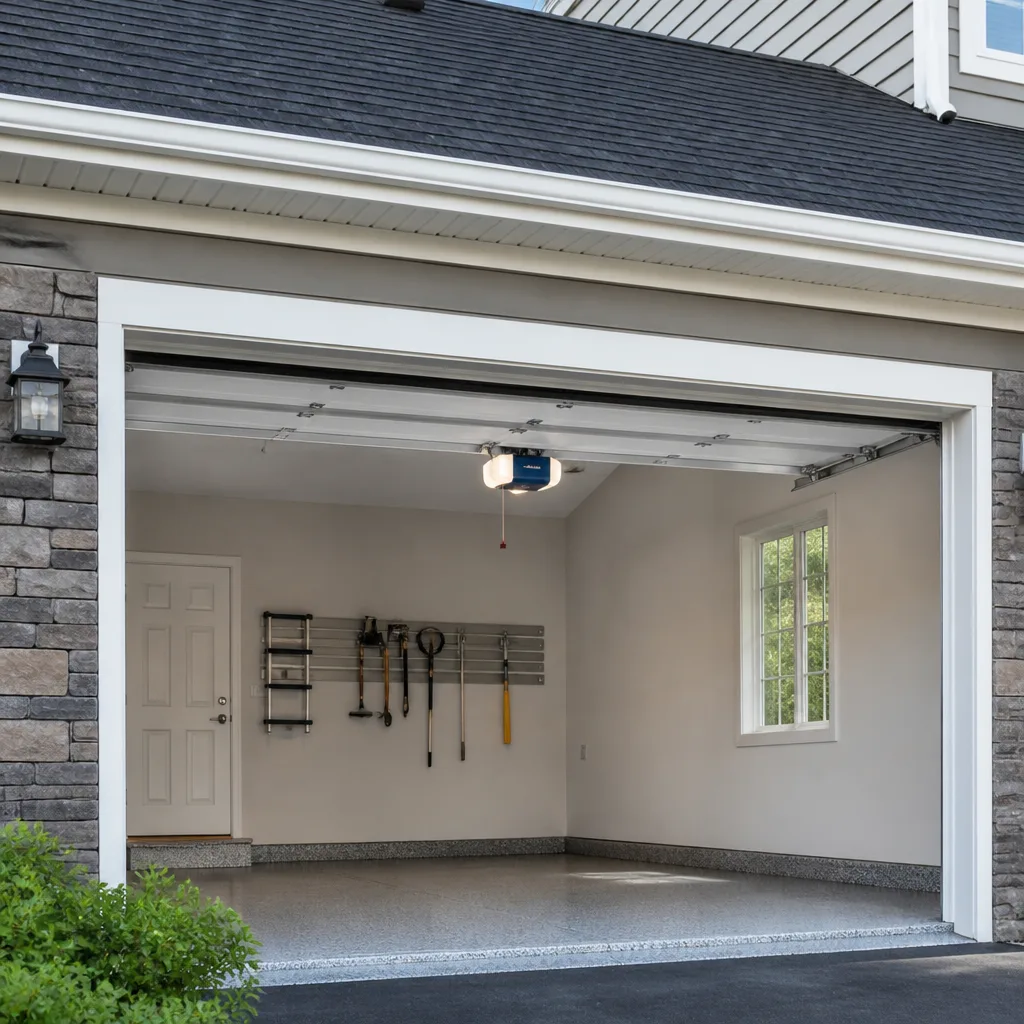 Chamberlain openers
Full 25-point door and opener safety check with every visit - springs, cables, rollers, tracks, and your LiftMaster or Chamberlain opener included
You get a price before we start. It does not change when the pro arrives.
Get your free estimateGarage Door Cost Breakdown: The Wellington Homeowner’s Reference for 2026
Most garage door cost guides you’ll find online are built on national averages, and those averages don’t hold up in Wellington. A replacement door that costs $1,200 in a national survey typically runs $300 or more here, and not because local companies are padding bills. Three forces drive the difference: hurricane-rated door premiums that Florida requires, Palm Beach County permit fees that most quotes bury or omit, and disposal charges for hauling away the old door. Understanding those three drivers, plus how labor and parts split on a repair, puts you in a much stronger position when you’re staring at three quotes and can’t tell them apart. This guide walks through every line item so you can read a Wellington garage door quote the way a specialist reads it.
Quick Answer
A typical garage door repair in Wellington runs $150 to $450 for common component failures, while a full door replacement with a hurricane-rated door, permit, and disposal lands somewhere between $1,500 and $4,500 depending on size and brand tier. Spring replacement is usually $180 to $340 for a single spring, with a matched pair costing roughly double. The written quote you receive before any work begins is the price you pay; nothing should change once the job starts.
Styles & brands we work with
- Raised-panel steel
- Carriage house
- Modern flush
- Full-view glass
- LiftMaster openers
- Chamberlain openers
Table of Contents
- Why Wellington Garage Door Costs Differ From National Averages
- Component-Level Cost Breakdown: Springs, Cables, Rollers, Panels, Openers
- Repair vs. Replace: The Decision Threshold
- Brand Pricing Tiers Available in the Wellington Market
- Permit Fees and Disposal Costs Most Quotes Leave Out
- How to Read a Garage Door Quote Line by Line
- Hurricane-Rated Doors: What the Premium Actually Buys
- When to Schedule Work in Wellington
Why Wellington Garage Door Costs Differ From National Averages
National cost guides are compiled from averages across the entire country, which means they blend labor rates from rural Mississippi with labor rates from Manhattan. Wellington sits in a different cost band. South Florida labor rates reflect a higher cost of living, stricter contractor licensing, and demand that outpaces supply during storm season. A technician hour costs more here than it does in most of the country, and that difference shows up on every line of a quote.
Beyond labor, three Wellington-specific factors push the total higher:
- Hurricane-rated door requirements. Palm Beach County sits inside the wind-borne debris region, and replacement doors must meet impact and pressure standards that standard doors don’t. That rating adds meaningful cost to door and hardware.
- Permit fees. A door replacement requires a permit in most Palm Beach County jurisdictions. The fee itself is modest, but it must be pulled and inspected, and that adds administrative cost and time.
- Disposal. Old doors don’t fit in a standard dumpster and can’t go out with regular trash. Hauling and disposal is a real cost that some quotes include and others conveniently leave off.
Add those up and you understand why the practical starting point for a replacement in Wellington is $1,500 rather than the national $1,200 figure you’ll find on home-improvement sites. Neighborhoods like Wellington’s equestrian communities off Pierson Road often carry larger, heavier doors that require reinforced tracks and heavier-gauge hardware, which pushes the number up further.
The good news: repairs don’t carry the same premium. A snapped spring or a failing opener costs roughly the same in Wellington as in any comparable Florida market, because the parts are commodity items and labor on a repair is measured in an hour or two, not a full day.
Component-Level Cost Breakdown: Springs, Cables, Rollers, Panels, Openers
Every garage door cost breaks into two buckets: parts and labor. Understanding the split tells you whether a quote is reasonable or padded. Below is a realistic 2026 breakdown for the Wellington market, with typical estimated ranges for common repairs.
Repair Parts and Labor (Typical Estimates)
| Component | Typical Part Cost | Typical Labor | Estimated Total |
|---|---|---|---|
| Torsion spring (single) | $50 – $110 | $130 – $230 | $180 – $340 |
| Torsion spring (matched pair) | $100 – $220 | $260 – $460 | $360 – $680 |
| Extension spring (single) | $40 – $80 | $100 – $180 | $140 – $260 |
| Cable replacement (each) | $20 – $45 | $80 – $150 | $100 – $195 |
| Rollers (set of 10 – 12) | $30 – $60 | $80 – $150 | $110 – $210 |
| Bottom seal / weatherstrip | $30 – $70 | $60 – $120 | $90 – $190 |
| Panel replacement (single) | $150 – $450 | $100 – $200 | $250 – $650 |
| Opener repair (board or motor) | $60 – $250 | $100 – $200 | $160 – $450 |
| Full opener replacement | $180 – $500 | $150 – $350 | $330 – $850 |
Notice a pattern: labor consistently outweighs parts on most repairs. That’s normal for a trade where every job requires a trained technician, a service call, diagnosis time, and the liability of working on a spring-loaded system. A quote that shows the part cost at $300 but the total at $340 is showing you almost no labor, which usually means the part cost is padded to hide the labor. The cleanest quotes show both lines explicitly.
Spring replacement deserves a specific note. Torsion springs store enormous energy, and the repair is genuinely dangerous without the right tools and training. This is one repair we never recommend as a do-it-yourself project, and it’s why we handle garage door spring repair as a standalone service with specialists rather than assigning whoever’s free. The price of a single spring in Wellington typically lands between $180 and $340. Matched pairs almost always get replaced together, so a pair costs about twice that range, not the single-spring number. If a quote shows a pair at a single-spring price, ask what’s missing.
Opener failures are the second most common call we get. A dead opener on a LiftMaster or Chamberlain unit often comes down to a logic board, a gear, or a safety sensor, and the fix depends on the brand and model. We work on the brand you already have across LiftMaster, Chamberlain, Genie, Wayne Dalton, Craftsman, Raynor, Clopay, and Amarr, which means a diagnosis doesn’t stall because the technician hasn’t seen that model before. For detailed opener symptoms and repair options, see garage door opener repair.
Repair vs. Replace: The Decision Threshold
Here’s the threshold most homeowners find useful: when a repair costs more than 50 percent of the cost of a new door, replacement usually makes more financial sense. Below that line, repair is almost always the better call.
That single rule handles about 80 percent of the decisions, but there are qualifiers:
- Age of the door. A door over 15 years old that needs a major repair (multiple panels, a bent track, and a broken spring) is usually better replaced. A five-year-old door with one broken spring is a repair.
- Repair frequency. If you’ve paid for three repairs in two years, you’re likely chasing a failing door. Look at a replacement.
- Panel damage. A single dented panel is a repair. Three dented panels plus a failing bottom section on an older door is often a replacement, because matching new panels to a discontinued door is difficult and sometimes impossible.
- Hurricane rating. If the existing door isn’t impact-rated and you’re facing a major repair, replacement with a rated door brings the home into compliance and adds value. That changes the math toward replacement.
- Structural track damage. A track that’s bent from impact can often be straightened or replaced as a repair. If the damage extends into the door frame or header, get an on-site assessment before deciding.
For a Wellington homeowner staring at a $650 quote for spring and cable work on a $1,400 door, the answer is usually repair. For a $700 quote on a $1,500 door that’s already 18 years old, replacement likely wins. Age, condition, and hurricane rating all shift the line, which is why we don’t quote replacements without seeing the door in person. If you’re still deciding, a free estimate gives you both numbers and lets you choose with real data instead of a rule of thumb.
Brand Pricing Tiers Available in the Wellington Market
Brand pricing breaks into roughly three tiers in Wellington. Knowing which tier you’re being quoted keeps you from comparing apples to oranges across three bids.
Budget Tier
Entry-level steel doors with basic insulation and standard (non-hurricane-rated) construction. Wayne Dalton and Craftsman openers and doors populate this tier. Typical installed cost after permit and disposal runs $1,300 to $1,900 for a standard single-car door. Budget doors are a reasonable choice for a rental property or a secondary garage where storm rating isn’t required.
Mid-Range Tier
Hurricane-rated steel or insulated steel doors, commonly Clopay or Amarr, with heavier hardware and a longer service life. This is the sweet spot for most Wellington homeowners. Installed cost typically runs $1,900 to $3,200 depending on size, insulation, and window options. LiftMaster and Chamberlain openers pair well here and add $400 to $800 installed.
Premium Tier
Carriage-house or full-view aluminum doors, often Raynor or a custom Clopay build, with high-end hurricane rating and premium finishes. Installed cost typically runs $3,200 to $4,500 and can go higher for oversized openings or custom designs. These are common in Wellington’s larger estate properties where the door is a visible architectural feature, not just a functional barrier.
Whichever tier you choose, ask for the door’s specific wind-load rating in writing. A “hurricane-rated” claim without a rating number on the quote is a red flag. Palm Beach County inspectors will want to see the product approval documentation, and so should you.
Permit Fees and Disposal Costs Most Quotes Leave Out
A garage door replacement in most Palm Beach County jurisdictions requires a building permit. The fee itself is modest, often in the $100 to $250 range depending on the jurisdiction and door valuation, but it must be pulled before the work, which means a site visit and inspection after. Some contractors fold the permit into the total without a separate line; others leave it off and hit you with it after you’ve signed. The written quote should show the permit as a distinct line item.
Disposal is the other frequently omitted cost. Old garage doors are bulky, heavy, and often contain hardware and old springs that can’t just go curbside. A typical disposal charge in Wellington runs $75 to $150 for a single-car door and $100 to $200 for a double. If a quote doesn’t mention disposal, either ask upfront or expect it as a surprise addition.
To be specific about how much this matters: a $2,000 quote that omits permit and disposal is functionally a $2,200 to $2,400 quote once those land. Comparing quotes without normalizing for these two line items is one of the most common mistakes homeowners make. Always ask the question before you compare.
We pull permits as part of every replacement and include the fee on the quote. If the permit can’t be verified or the door can’t pass inspection, the job isn’t done, and that’s on us to handle. For a broader view of what a Wellington replacement involves start to finish, see garage door repair.
How to Read a Garage Door Quote Line by Line
Most garage door quotes fall into two styles: the itemized quote and the bundled quote. Itemized is almost always easier to evaluate and a better sign of a contractor who isn’t hiding anything.
What a Good Quote Itemizes
- Parts, named by brand and description. Not “spring kit” but “Wayne Dalton torsion spring, matched pair, 16,000-cycle.” The cycle rating matters because it tells you the expected service life.
- Labor, shown separately from parts. You should see two numbers, not one.
- Permit fee as a distinct line, with the jurisdiction named.
- Disposal of old door and hardware as a distinct line.
- Total, plus a written note that this total is the price unless you approve a change in writing.
What Padding Looks Like
- One bundled “spring repair” line with no parts/labor split and no brand name.
- A truck, trip, or dispatch charge added on top of the repair total.
- An “upgraded hardware” fee with no description of what’s being upgraded.
- Permit and disposal missing entirely (they’ll appear later).
- A quote that shows a pair of springs at a single-spring price, usually because a lesser-grade spring is being installed.
The cleanest test: if you handed the quote to a second technician and asked “what’s this covering,” could they answer without calling the first contractor? If not, ask for the itemization. Any Wellington specialist should be able to provide it before work starts.
Hurricane-Rated Doors: What the Premium Actually Buys
Hurricane-rated garage doors cost $200 to $600 more than unrated equivalents in the Wellington market, and understanding what that premium covers helps you decide whether it’s worth it. Impact-rated doors are built with reinforced panels, heavier gauge steel or aluminum, and strengthened hinges and tracks. They carry a specific design pressure rating, tested against wind-borne debris and positive/negative pressure cycling. In Palm Beach County, replacement doors on any home within the county’s applicable wind zones must meet those standards.
Three practical things to know:
- Rated doors also require rated hardware. An impact-rated door hung on standard hinges and tracks won’t pass inspection. The track, hinges, and anchor bolts all have to meet the rating, and that’s why the installed price runs higher than a parts-catalog comparison suggests.
- Reinforcement for existing doors exists. If the current door is unrated but in good condition, adding a wind-load reinforcement system is sometimes possible rather than replacing the whole door. Ask whether that path is open for your door model. It isn’t always.
- The rating isn’t just regulatory. A properly rated door protects the opening from wind-borne debris during a storm, which is why the code exists. An unrated door can fail inward from relatively modest impact, and once the opening is breached, wind pressure inside the structure has nowhere to go.
Hurricane-rated doors show up consistently in Wellington’s larger homes because the garages here are often oversized, and builders know that any door facing the prevailing storm direction is a real vulnerability. If you’re replacing a failed door and your home currently has an unrated door, we recommend looking at a rated replacement even if the local jurisdiction would allow a straight swap. The cost difference buys real protection and usually holds up better on resale.
When to Schedule Work in Wellington
Garage door work can be done year-round in Wellington, but timing affects both availability and cost. The pattern we see follows the seasonal flow of the region:
Best Times to Book Non-Urgent Work
- Late spring and early summer (May – July). Demand is steady but not yet at peak, and scheduling is generally easier.
- Late fall (November – early December). A quieter window for replacement work, with more flexibility on scheduling.
Busiest Times (Book Early)
- Late August through October. Storm season peak. Emergency calls for broken springs, off-track doors, and wind damage climb, and replacement scheduling tightens up.
- January through March. Snowbird season. Replacement demand rises as seasonal residents prep homes and rental turnover picks up.
Replacement work is scheduled, not dispatched – the door has to be ordered, measured, and delivered before the install. We schedule a free measure and provide a written price, and then you choose a date. Repair work is different: broken springs, dead openers, and off-track doors are usually handled same day when you call early. If you’re planning a replacement, book the measure at least two to three weeks before you want the door installed, especially during the busier periods.
Emergency calls happen in every season, but the ones we see most often follow a long stretch of heat. Springs under continuous thermal cycling lose tension faster, and a spring already near the end of its service life tends to fail on the hottest afternoons. If your door is making a loud snap on opening, that’s usually the spring giving way, and it should not be operated until a technician looks at it. For urgent failures, emergency garage door service is a core offering here, not an add-on. We work on the brand you already have, and when the door won’t move, we move fast.
Common Mistakes to Avoid
- Comparing quotes without normalizing for permit and disposal. A quote that leaves those out looks $200 to $400 cheaper than an equivalent one that includes them, but it isn’t. Always ask both contractors to show permit and disposal as separate lines.
- Accepting a bundled “spring repair” price without a parts/labor split. A two-line quote is a sign of confidence. A one-line quote is a sign the contractor doesn’t want you to know the breakdown.
- Replacing a single spring when a pair should be replaced together. Springs wear at roughly the same rate. Replacing one and leaving the other usually means a second service call within a year. The pair cost roughly doubles a single-spring price, but it usually lasts longer than two separate jobs.
- Choosing the cheapest quote on a door replacement without checking the hurricane rating in writing. Palm Beach County inspectors will reject an unrated door being installed in a rated zone, and worse, an unrated door in a rated zone exposes the home to real risk during a storm.
- Skipping the free measure and picking a door size off the existing door label. Labels fade, and doors on older Wellington homes often don’t match the current opening once the framing has settled. The measure is what makes the written price binding.
- Ignoring a small dent that’s near a hinge or track. Panel damage near hardware can stress the track and lead to a much bigger repair. A $250 panel replacement today avoids a $600 track and hardware job later.
- Letting an old door’s hardware go unexamined when the opener gets replaced. A new opener on old hinges, rollers, and tracks is the most common reason homeowners don’t feel the improvement they expected. Have the whole system checked, especially if the door is over a decade old.
See the difference
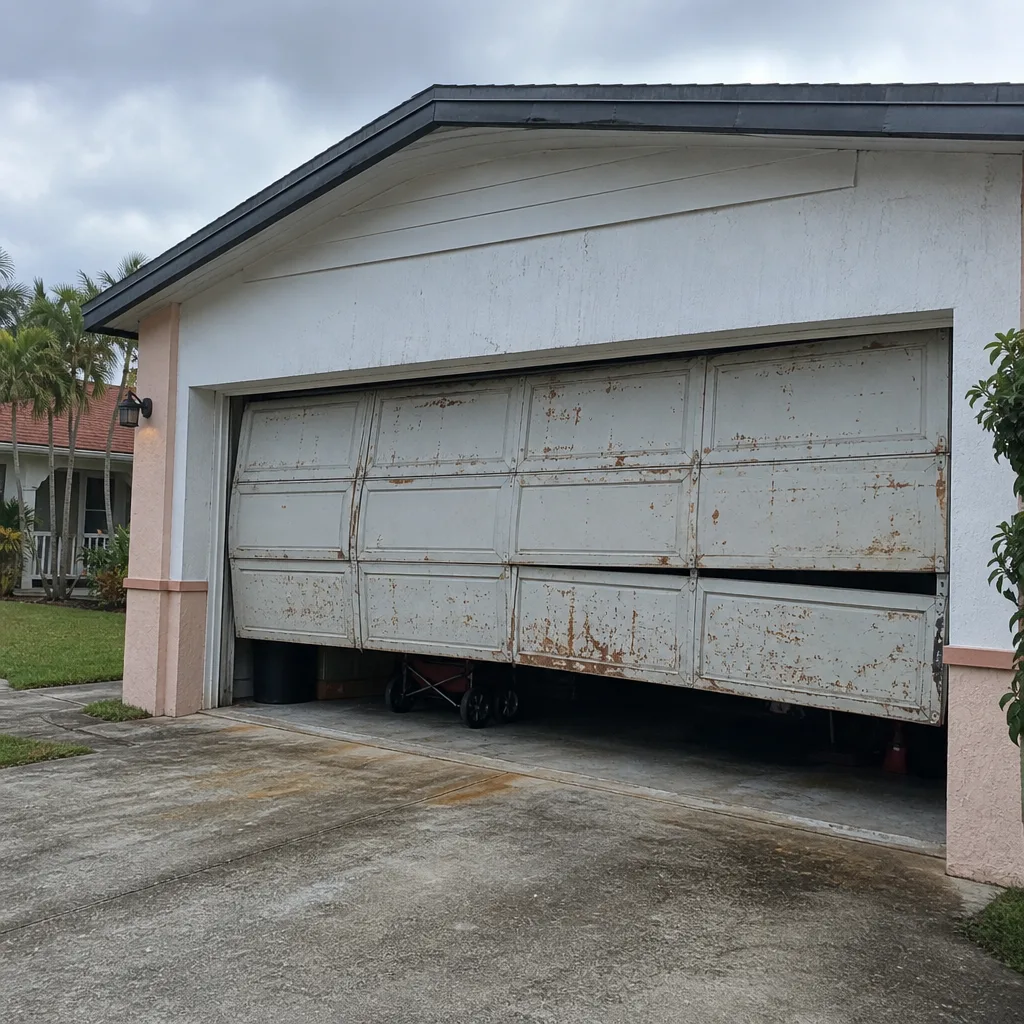 Before
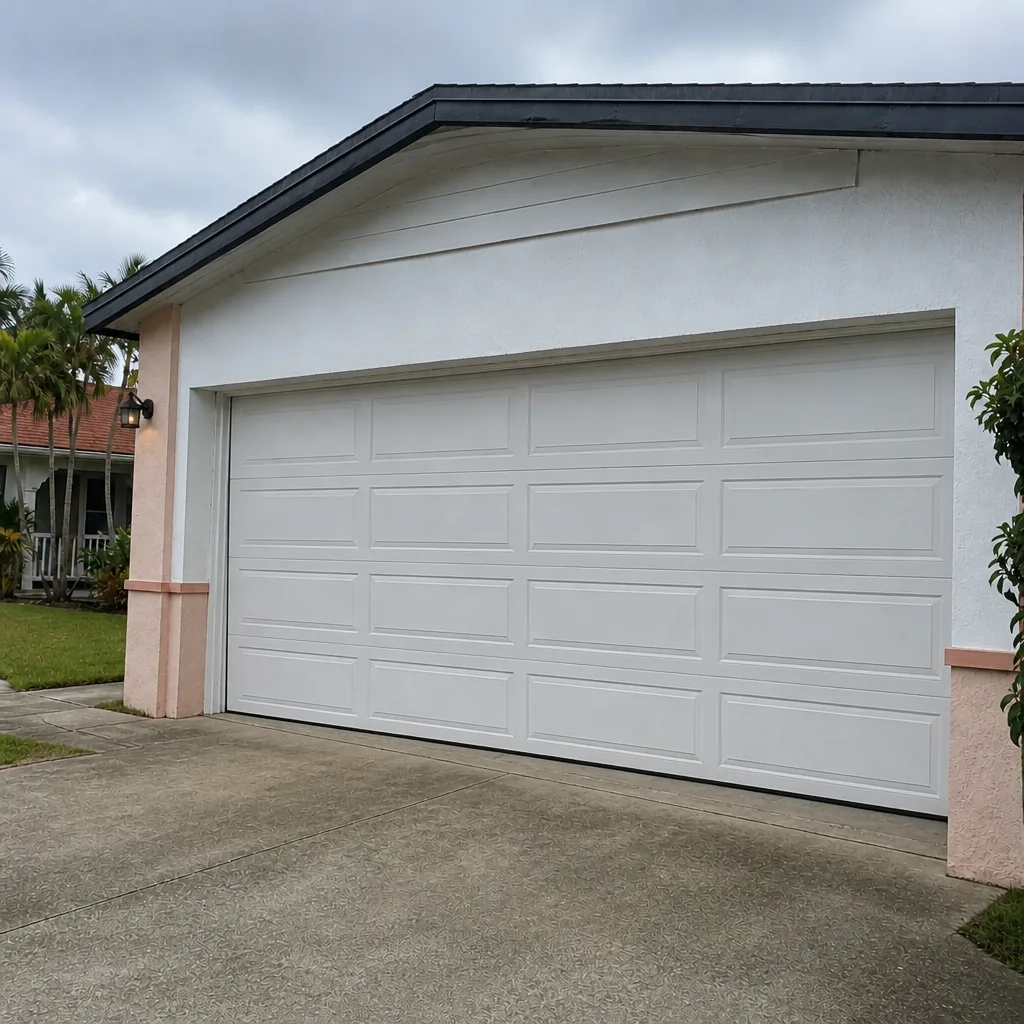 After
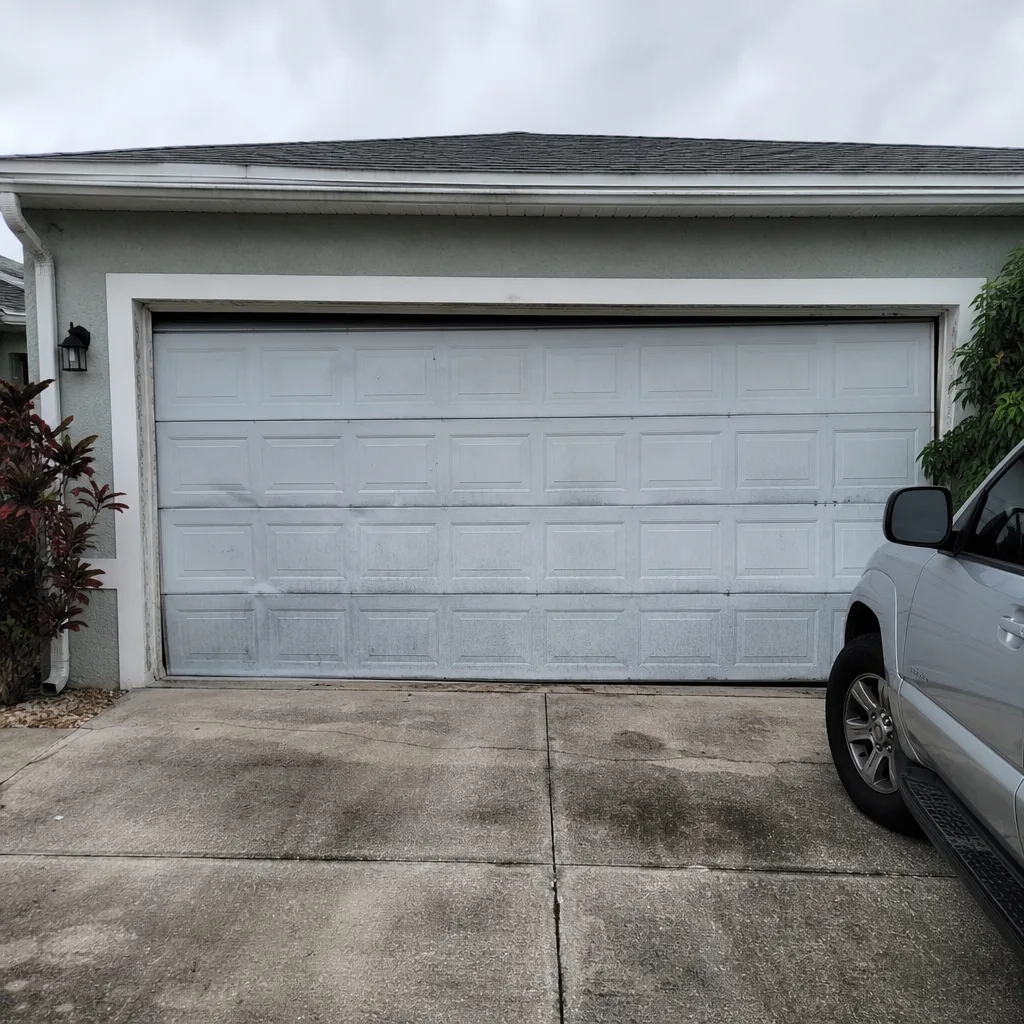 Before
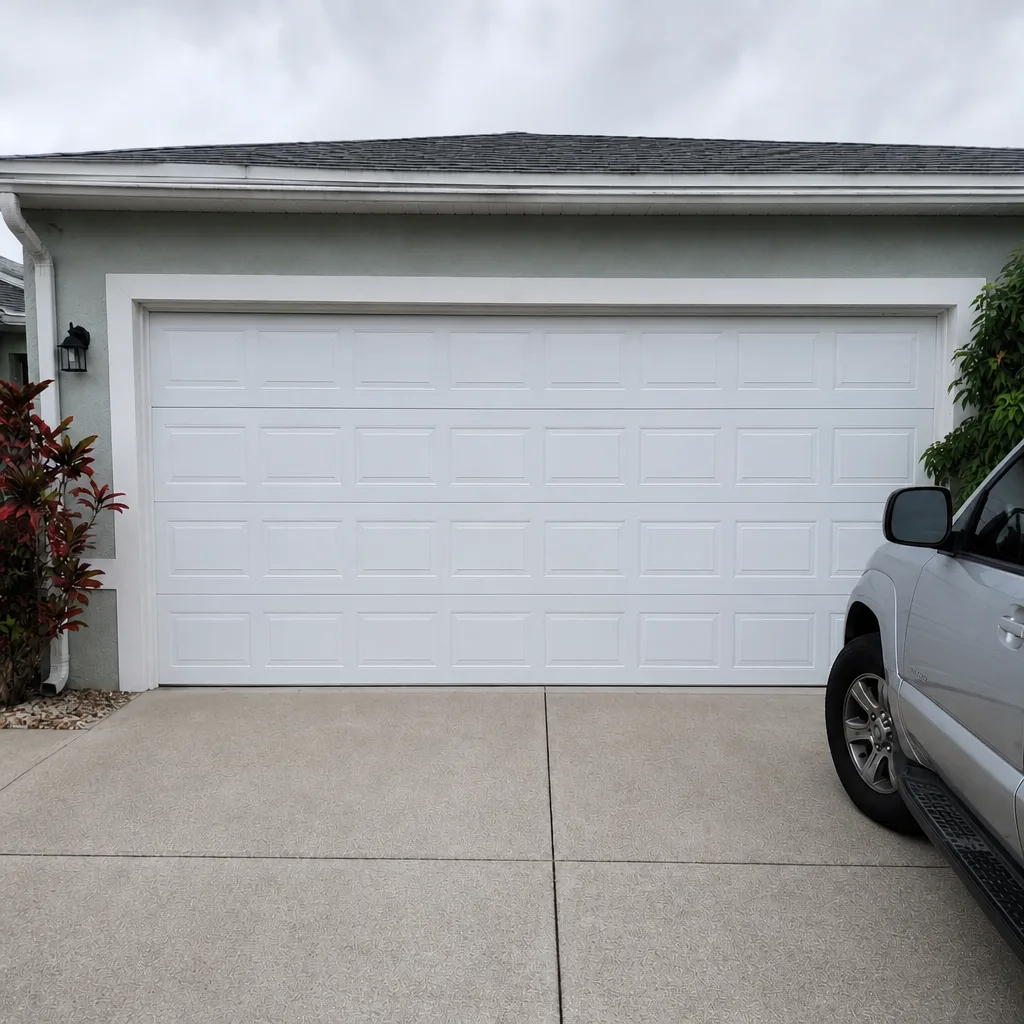 After
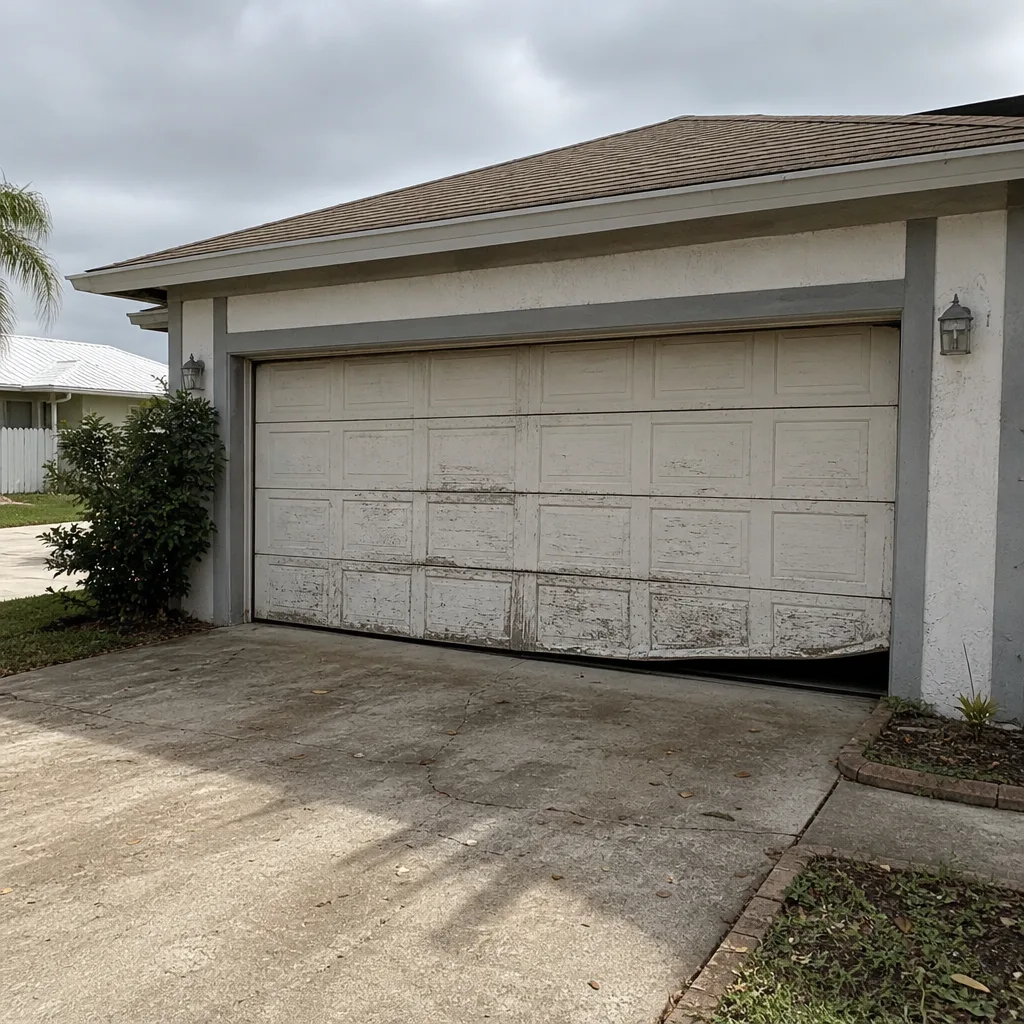 Before
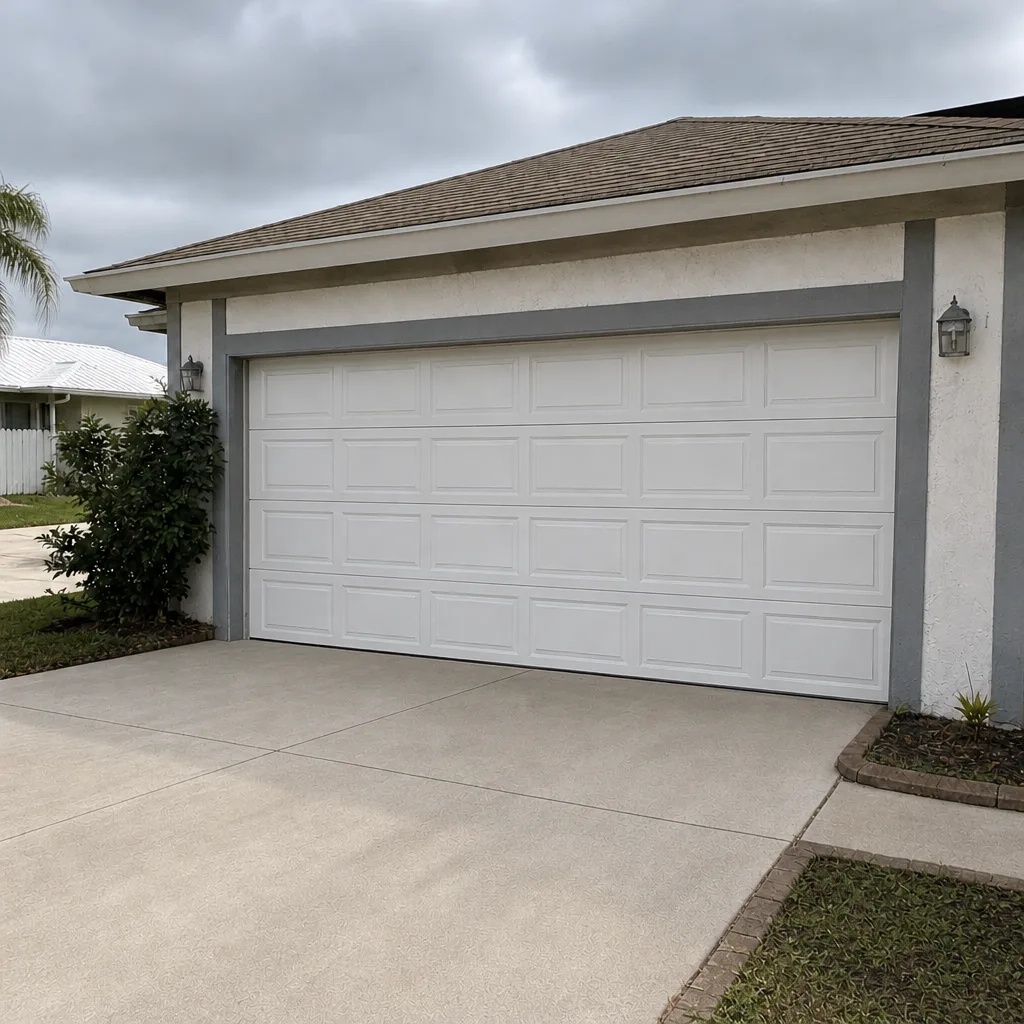 After
When to Call a Professional
Call a professional for every spring, cable, and torsion system repair. Those assemblies store energy that can cause serious injury to an untrained person, and the tools to handle them safely aren’t standard homeowner equipment. Call for an opener that keeps tripping the safety sensor, a door that reverses before closing, or a door that’s coming off its track – those usually mean a hardware or opener alignment issue that needs eyes on it. Call for a bent or cracked panel, a bottom section with rot or damage, and any door replacement that has to meet Palm Beach County wind-load rules. Call when the door won’t open at all, especially if a car is trapped inside or the door is hanging open. Our garage door specialists cover the full service range, including same-day emergency work. Wellington Garage Door Repair Pros offers free estimates in Wellington – call (855) 658-3814.
Frequently Asked Questions
Most common repair calls in Wellington run $150 to $450, with spring replacement typically landing between $180 and $340 for a single spring. Opener repairs usually range from $160 to $450 depending on the component. The written quote you approve before work begins is the final price. Call (855) 658-3814 for an exact quote – estimates are free.
The premium comes from three local factors: hurricane-rated door requirements in Palm Beach County, permit fees that must be pulled before the work, and disposal costs for the old door. Together they add roughly $300 or more over a comparable national figure. A typical Wellington replacement after permit and disposal runs $1,500 to $4,500.
No. The written quote is the price. We measure, inspect, and itemize before we give you a number, and that number doesn’t move unless you approve a change in writing. If we discover something during the job that wasn’t visible at estimate time, we stop and talk to you before adding anything.
The local professionals we connect you with are licensed and insured as Florida requires, and spring, cable, and torsion work should only be handled by trained specialists. Our technicians have up to 11 years of experience working on the exact brands you probably already own.
In most cases, yes – same-day emergency service is one of our core offerings, and broken springs, off-track doors, and dead openers get priority. Call (855) 658-3814 and we’ll confirm timing. Replacement work is scheduled rather than same-day, since the door has to be ordered and measured first.
If the repair costs more than half of a new door’s installed price, replacement usually wins. On a 15-year-old door that needs spring, cable, and panel work at the same time, replacement is often the better investment, especially if the door isn’t hurricane-rated. Keep the door if it’s structurally sound and only one component failed.
The Bottom Line
Wellington garage door costs sit above national averages for replacement because hurricane-rated doors, permit fees, and disposal all add real expense that most guides ignore. Repair costs, by comparison, track closely with the rest of South Florida. The three numbers worth memorizing: springs at $180 to $340 single, common repairs at $150 to $450, and replacements at $1,500 to $4,500 after permit and disposal. Use the 50 percent rule for repair-versus-replace decisions, insist on itemized quotes with permit and disposal as separate lines, and check that any hurricane rating on a replacement door appears in writing. For a free estimate with a written price before any work starts, call Wellington Garage Door Repair Pros at (855) 658-3814. Garage doors are all we do, and we work on the brand you already have – from LiftMaster openers to Wayne Dalton panels to Raynor replacements. For anything unfamiliar on this site, the main Wellington Garage Door Repair Pros page covers every service in one place.
Written by the team at Wellington Garage Door Repair Pros.