Last updated November 21, 2026
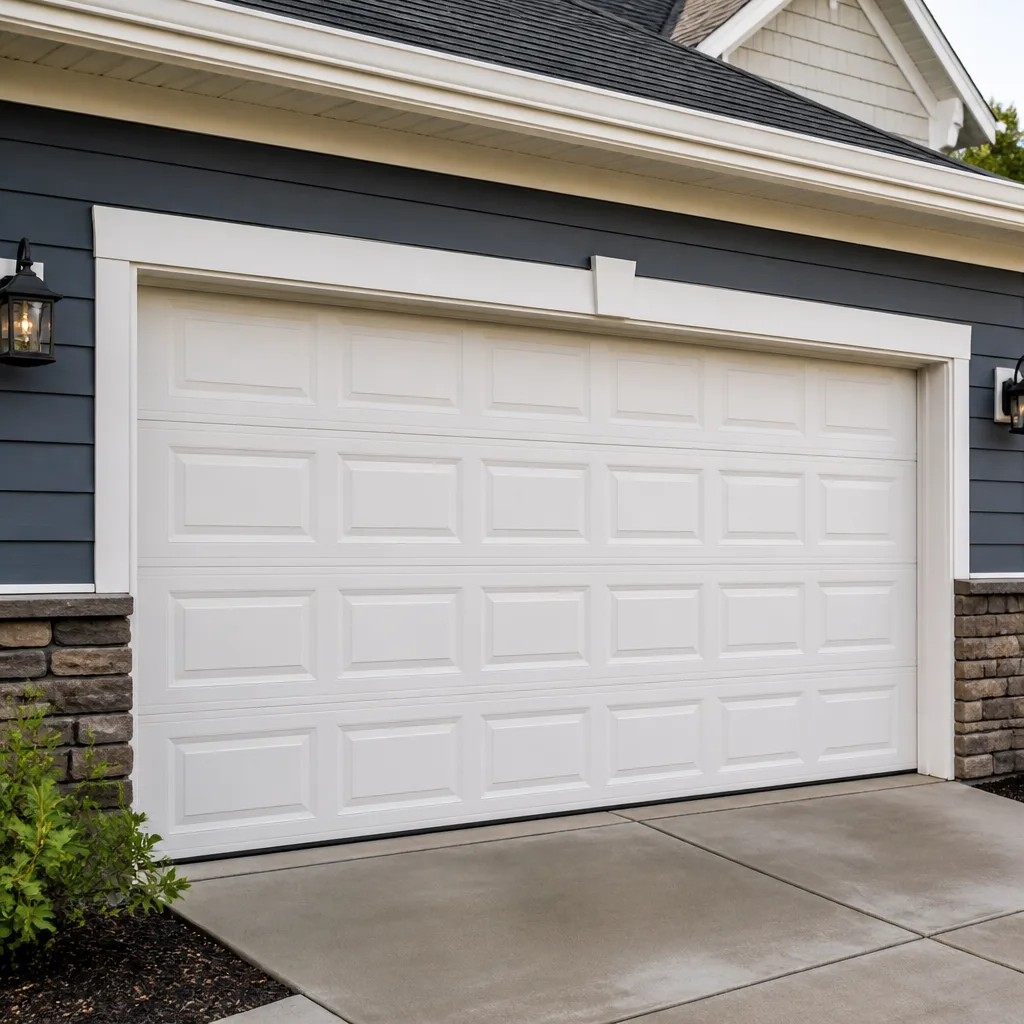 Raised-panel steel
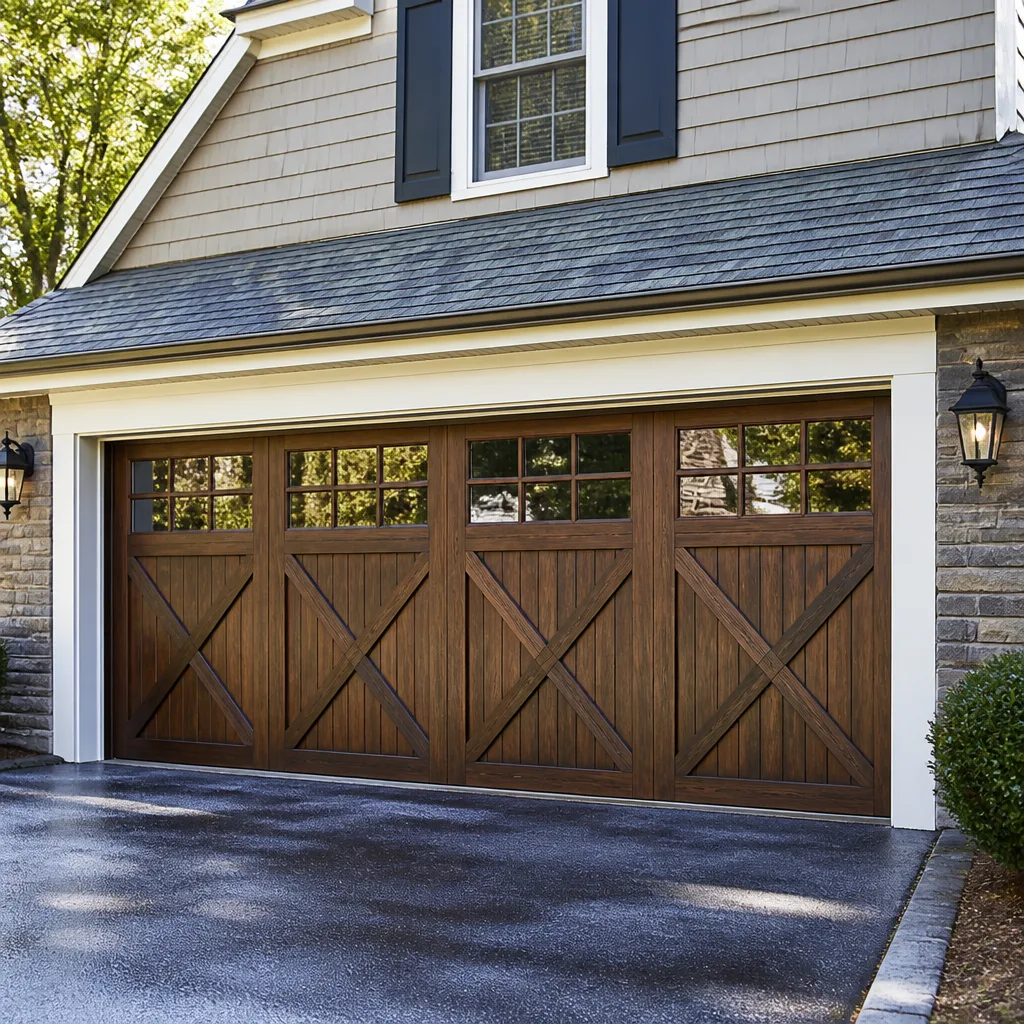 Carriage house
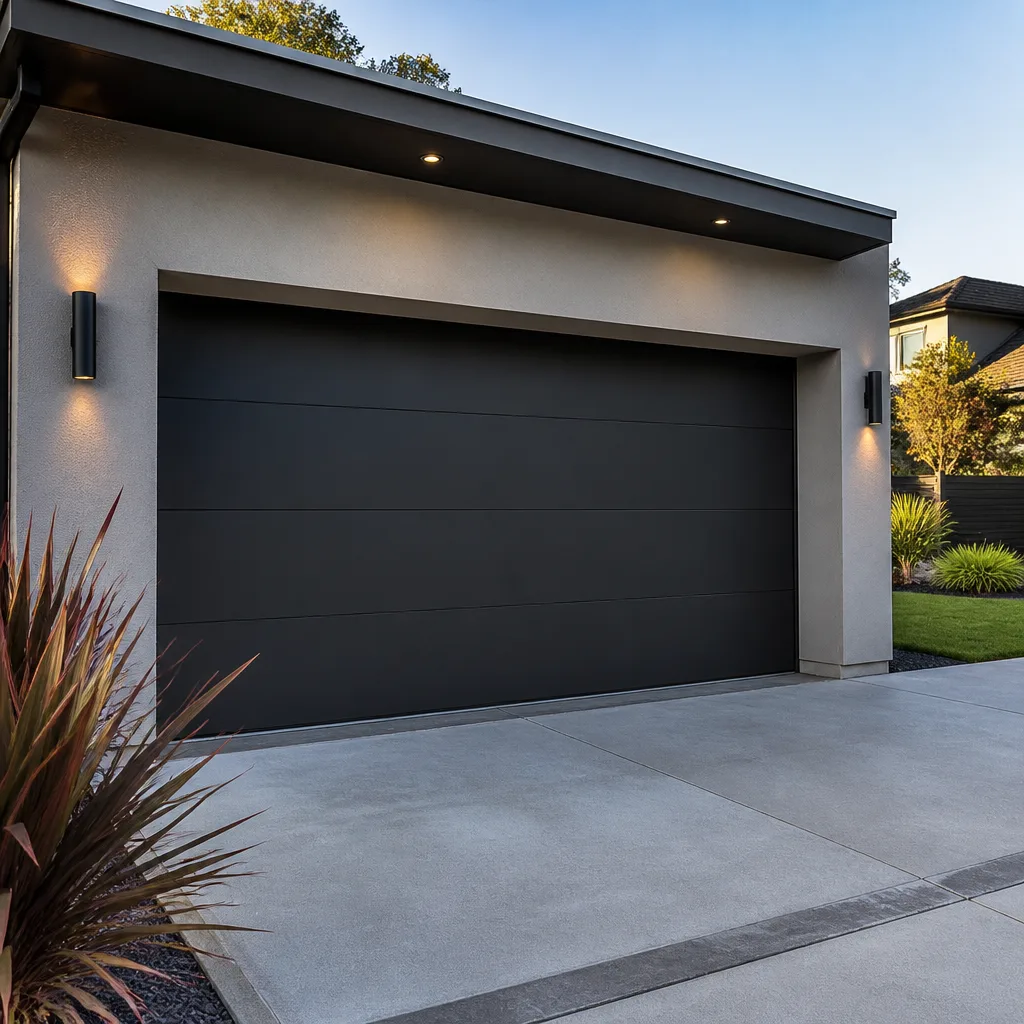 Modern flush
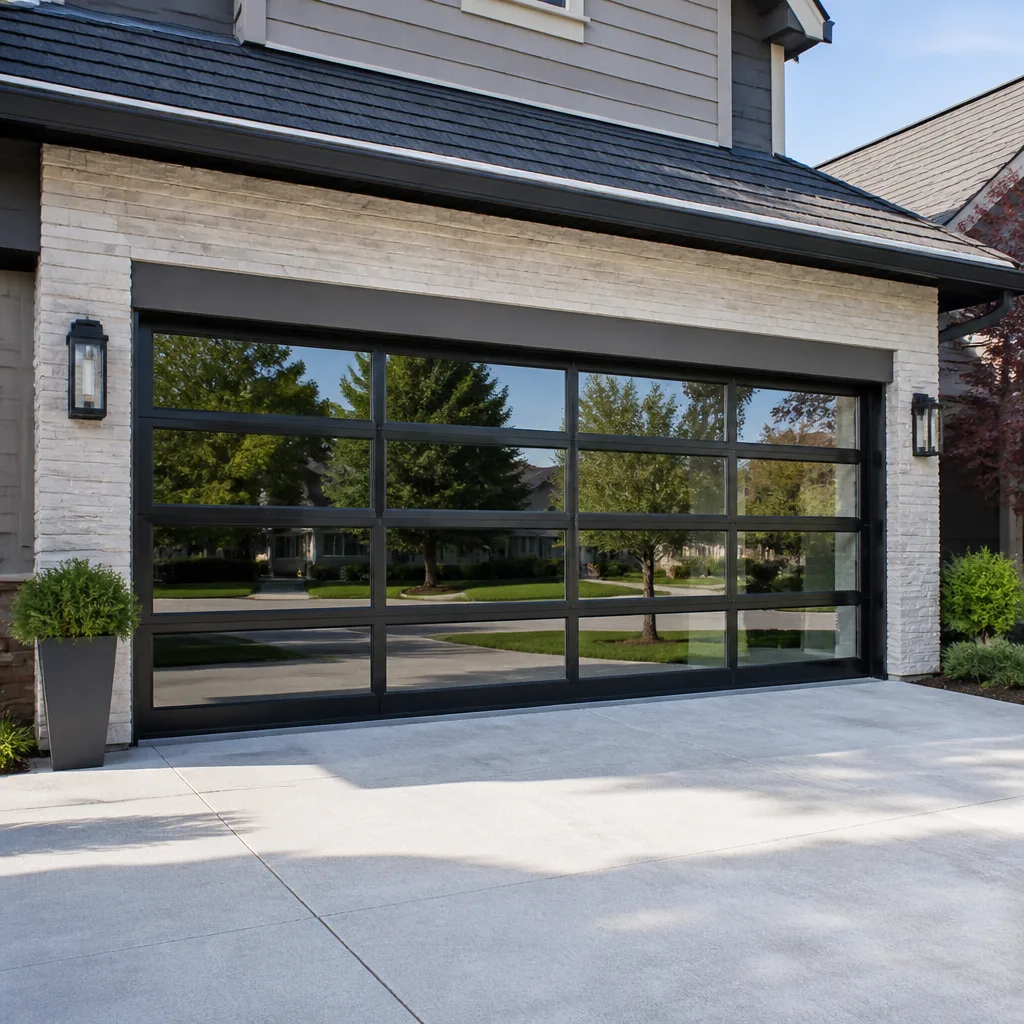 Full-view glass
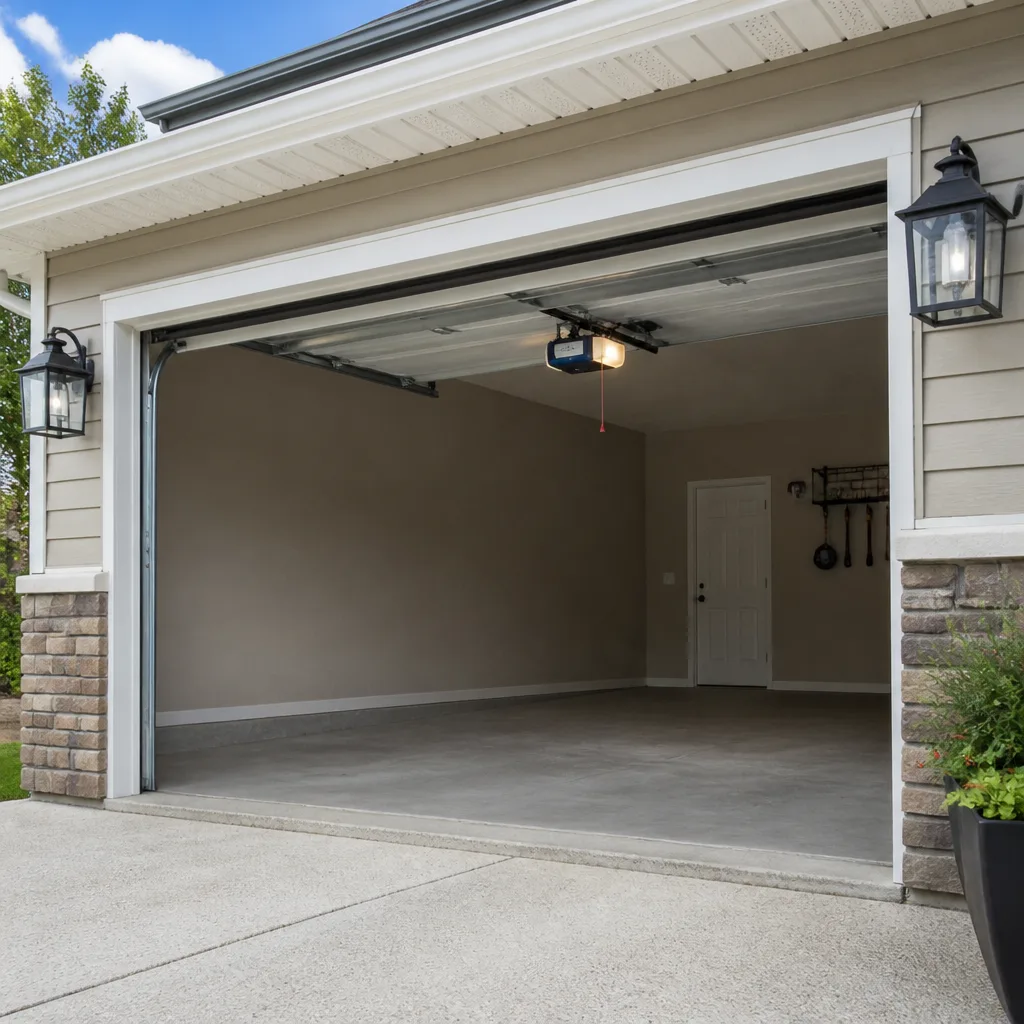 LiftMaster openers
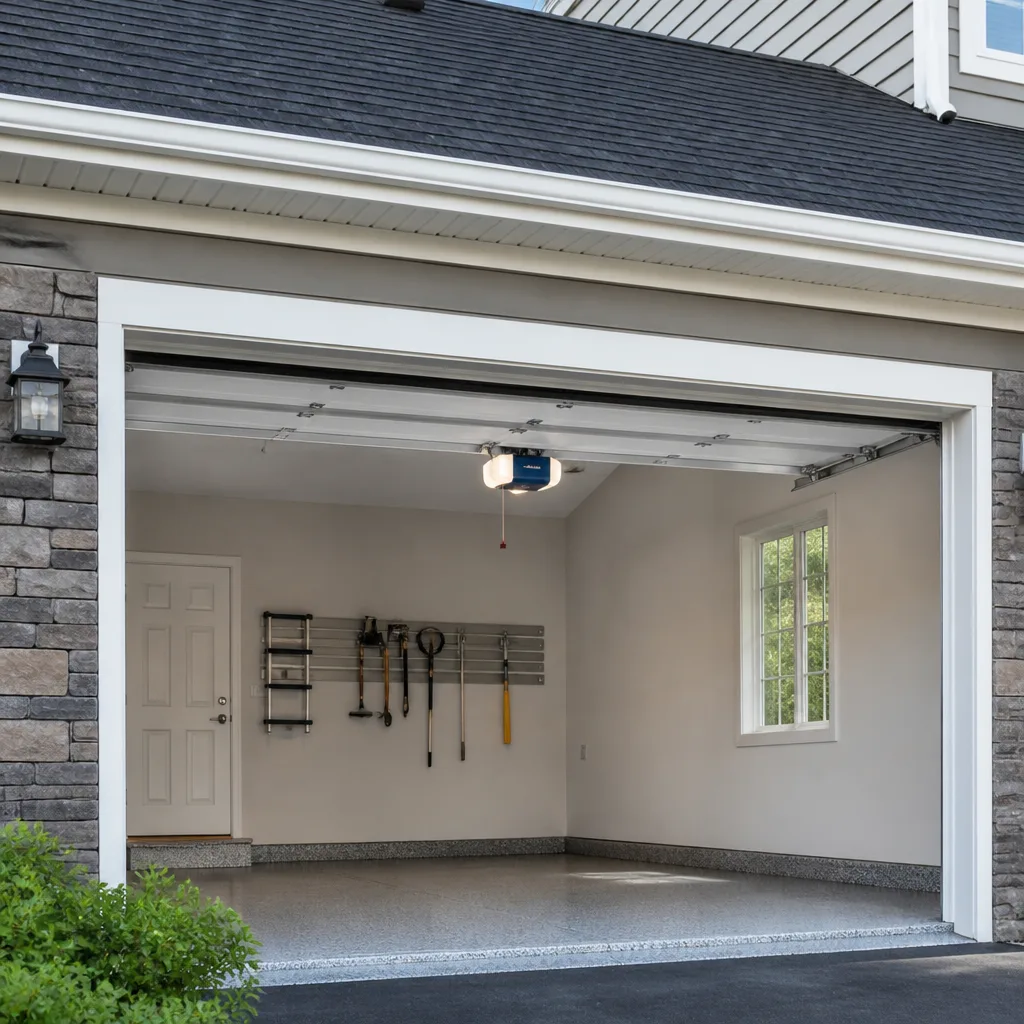 Chamberlain openers
Full 25-point door and opener safety check with every visit - springs, cables, rollers, tracks, and your LiftMaster or Chamberlain opener included
You get a price before we start. It does not change when the pro arrives.
Get your free estimateThe Complete Guide to Garage Doors in Wellington
Most garage door guides are written for Ohio. They assume freezing winters, road salt, and the occasional ice dam. Wellington homeowners face a different set of forces entirely: wind-load requirements tied to Florida’s hurricane-zone building codes, palm-tree humidity that never fully lets up, and deed restrictions that decide whether you’re even allowed to change the color of your door. Following that advice isn’t just unhelpful here – some of it is wrong in a way that costs money. This guide covers the three layers that actually shape a garage door in Wellington: code, climate, and community rules, along with the repair and maintenance decisions that follow from them.
Quick Answer
A Wellington garage door has to satisfy three things at once: Florida wind-load code, South Florida humidity, and your HOA’s aesthetic requirements. Get all three right and a door lasts a long time here. Skip any one of them and you’re looking at failed permits, rejected replacement requests, or hardware that corrodes years ahead of schedule. The short version: choose a wind-rated door approved for this region, pick materials suited to humidity, and check your association’s guidelines before you order anything.
Styles & brands we work with
- Raised-panel steel
- Carriage house
- Modern flush
- Full-view glass
- LiftMaster openers
- Chamberlain openers
Table of Contents
- Florida wind-load rules and why they matter in Wellington
- How Wellington HOA guidelines shape your choices
- Steel vs. aluminum vs. fiberglass in South Florida humidity
- The brands actually sold and serviced in Wellington
- A tune-up vs. a real inspection
- Repair or replace? A decision guide
- What to do when the door fails
- A simple maintenance routine
Florida Wind-Load Rules and Why They Matter in Wellington
Garage doors in Wellington are governed by wind-load requirements that many homeowners only discover during a sale, a refinance, or an insurance review. The key point: product approval matters. In Florida, garage doors and their components are typically required to carry a product approval demonstrating they meet the wind-load standards for the region where they’re installed. Miami-Dade and Broward County have long maintained their own product-approval systems, and those approvals are frequently used and referenced in Palm Beach County as well. In practical terms, a door that passes in a low-wind zone may not be acceptable here.
Why does this land on the garage door specifically? Because the garage door is often the largest opening in the house. When wind pressure builds against a home, a door that fails or bows inward can let pressure inside, and that’s the kind of failure the code is written to prevent. This is one of the reasons a garage door is treated as a structural component here rather than a cosmetic one.
What this means for you:
- Replacement is not a décor decision. A new door needs to match the wind-load requirement for your home, not just look right.
- Documentation matters. Keep the product approval paperwork with your home records. It comes up at sale and at insurance review.
- Ask before you buy. When you’re quoted a door, ask whether it carries approval suited to this region. A specialist who works here will know the question before you ask it.
- Repairs can affect compliance. Swapping a reinforced track or a rated panel for a generic part can undercut the door’s rating. Use parts meant for that door.
We won’t quote code sections or claim to interpret your permit requirements – that’s your city’s building department’s job, and they’re the right call for a definitive answer on your specific address. What we can say is that wind-rated installation is standard practice in Wellington for good reason, and any door professional working here should be comfortable with it.
How Wellington HOA Guidelines Shape Your Choices
Wellington has a strong association culture, and neighborhoods like Versailles and Olympia are known for detailed architectural guidelines. Those guidelines can constrain the door you’re allowed to install in ways that surprise homeowners who moved here from places without deed restrictions. The restrictions aren’t arbitrary – they exist to keep the streetscape consistent – but they do narrow your options considerably.
What associations commonly regulate:
- Material. Some communities specify or restrict door materials to keep a uniform look across the neighborhood.
- Color. A palette is often defined, and “close enough” usually isn’t.
- Window panels. Whether your door can have windows, and what style of panel, is frequently spelled out. Some communities require them; others prohibit them.
- Style and panel configuration. Raised-panel vs. carriage-house vs. flush can all be addressed in the guidelines.
- Approval process. Most associations require an architectural review submission before installation, with a specific form and timeline.
The order of operations matters here. Get HOA approval before you order a door, not after. A door that arrives on site and then gets rejected by the architectural review committee is an expensive problem, and the return window on a custom door is usually not your friend. We’ve seen this movie, and it’s avoidable with a five-minute phone call to your association first.
One practical tip: ask your association for the current architectural guidelines in writing, and ask specifically about garage doors. Guidelines get updated, and the version in your closing packet may not be the version in force now.
Steel vs. Aluminum vs. Fiberglass in South Florida Humidity
Humidity is the quiet force in Wellington. It’s not the dramatic weather event that grabs headlines – it’s the constant background condition that decides how long a door lasts. The material question here is really about how a door handles moisture, heat, and sun exposure over years, not months.
Steel is the most common choice, and for good reason: it’s strong, it takes paint well, and it’s the material most wind-rated residential doors are built from. The catch is the finish. Steel doors depend on their coating, and once that coating is compromised, moisture goes to work. In a humid climate, keeping the paint and the bottom edge in good shape is the whole game. A steel door that’s maintained properly performs well here.
Aluminum resists moisture naturally because it doesn’t rust the way steel does. It’s lighter, which is easier on the opener and springs over time. It can dent more readily than steel, and on a door with a large flat panel, dents show. Aluminum is a reasonable pick for homeowners who want low maintenance and don’t mind a slightly different feel.
Fiberglass won’t corrode at all and can be molded to mimic wood grain convincingly. It handles humidity well. The trade-off is that fiberglass can become brittle with long sun exposure and doesn’t take impact as gracefully as metal. For a door that’s mostly decorative or lightly used, it’s fine. For a hard-working door on a busy driveway, we usually steer people back toward steel.
The honest summary: no material is “best” in the abstract. The right answer depends on your HOA rules, your wind-load requirement, and how much maintenance you want to sign up for.
The Brands Actually Sold and Serviced in Wellington
National brand lists you find online are usually written by marketers, not by people who turn wrenches. The brands that matter are the ones a homeowner here can actually get parts for and get serviced. In our experience working in Wellington, the brands you’ll encounter most often on local homes include LiftMaster and Chamberlain for openers, and Wayne Dalton, Clopay, Amarr, and Raynor on the door side, with Craftsman and Genie also common on older setups. That list covers the vast majority of what’s installed in this market.
Why does the brand landscape matter to you as a homeowner? Two reasons:
- Parts availability. A brand that’s well represented locally means parts are on hand or quickly sourced. An obscure brand can mean weeks of waiting on a part for a door that’s currently unusable.
- Serviceability. Some components – especially openers and their logic boards – require brand-specific knowledge. A generalist who’s never worked on your opener model is going to spend your money learning it.
When you’re choosing a new door, it’s worth asking which brands are well supported here. When you’re repairing an existing door, knowing the brand helps you ask better questions and get a faster diagnosis. Either way, the goal is a door you can keep running, not a door that becomes a special-order headache down the road.
A Tune-Up vs. a Real Inspection
These two get used interchangeably, and they shouldn’t be. They serve different purposes, and knowing the difference tells you what you’re actually paying for.
A tune-up is routine maintenance. It’s the equivalent of an oil change. It typically involves:
- Lubricating rollers, hinges, and springs
- Checking and adjusting the balance of the door
- Testing the safety reverse and photo-eye sensors
- Tightening hardware that’s worked loose
- Checking the opener’s force settings and travel limits
- A visual once-over for obvious wear
A tune-up keeps a healthy door healthy. It’s about preventing problems, and it’s worth doing on a schedule.
An inspection is diagnostic. It’s what you want when something is off – the door is noisy, it’s binding, it’s not sealing, or you’re buying a home and want to know what you’re getting. An inspection involves measuring spring tension, checking track alignment and plumb, examining cable condition, evaluating the structural integrity of panels and stiles, and assessing whether the door still meets its original ratings. It’s a deeper look, and it’s the right call when there’s a question to answer.
The rule of thumb: if nothing is wrong, a tune-up. If something is wrong or you suspect something, an inspection. Don’t let a tune-up stand in for a diagnosis, and don’t pay inspection prices for routine lubrication.
Repair or Replace? A Decision Guide
This is the question that drives most garage door conversations, and there’s no universal answer. But there is a framework.
Lean toward repair when:
- The door structure is sound but a component failed (spring, cable, roller, opener)
- The door is under 10-15 years old and the finish is intact
- The problem is isolated to one part or one panel
- The door still meets its wind-load requirement and you have documentation
Lean toward replacement when:
- Multiple panels are damaged or the door is structurally compromised
- The door is old enough that parts are hard to source and repairs keep recurring
- You’re failing a wind-load or insurance review with the current door
- You’re doing a major remodel and the door is coming out anyway
- Repair costs are approaching the cost of a new door (get both quotes and compare)
One thing to be careful of: a repair visit that turns into a replacement pitch before the technician has actually diagnosed anything. That’s a red flag. A good specialist will tell you what’s broken, what it costs to fix, and what a replacement would cost – and then let you decide. If the door can be safely repaired, that’s usually the right first move.
What to Do When the Door Fails
A failed garage door is an urgent problem, and how you handle the first ten minutes matters. The single most important thing: do not try to force the door.
If the door is stuck open, or partially open, the priority is securing the opening. The house is exposed. That’s a security and weather concern, and it needs attention quickly. If the door is stuck closed, the house is secure but your car is trapped. Either way, the right move is the same: stop, assess, and call.
Here’s what not to do:
- Don’t yank the manual release on a door with a broken spring – the door can come down hard, and the springs are under extreme tension.
- Don’t try to lift a door that won’t lift. If the door is unusually heavy, a spring or cable has likely failed.
- Don’t stand under a partially open door while you figure out what to do.
- Don’t attempt any repair on the spring, cable, or track system yourself. These components are under high tension and can cause serious injury.
Emergency service exists for exactly this situation. When the door won’t move, the specialist moves faster. Call, describe what happened, and get a technician out to diagnose and safely resolve it. Springs, in particular, are one of the most dangerous DIY repairs a homeowner can attempt, and a specialist will tell you why before touching anything.
A Simple Maintenance Routine
A few minutes of attention a few times a year goes a long way in this climate. Here’s a routine that works for Wellington homes:
- Monthly: Test the safety reverse. Put a small object on the ground in the door’s path and confirm the door reverses when it contacts it. Also check that the photo-eye sensors are clean and aligned.
- Monthly: Listen. A door that’s gotten noticeably louder is telling you something – usually lubrication or a worn roller.
- Quarterly: Wipe down the door and check the finish, especially the bottom edge and around the hardware. Touch up any compromised paint on a steel door before moisture gets in.
- Quarterly: Lubricate the rollers, hinges, and the spring with a garage-door-appropriate lubricant. Don’t use a heavy grease that attracts grit.
- Twice a year: Look at the hardware. Are the bolts snug? Are the tracks straight? Is anything visibly worn or loose?
- Twice a year: Check the weather seal at the bottom. In a humid climate, seals degrade faster than you’d expect, and a bad seal lets water and pests in.
- Annually: Have the door looked at by a specialist. A tune-up catches what you can’t see, and it’s cheaper than the repair that comes from skipping it.
This is a routine, not a substitute for professional service. Anything involving the springs, cables, or opener internals should go to a specialist.
Common Mistakes to Avoid
- Buying a door before checking HOA rules. Ordering first and getting approval second is how homeowners end up with a door they can’t install. In a community like Versailles or Olympia, the guidelines can rule out your first choice entirely – check first.
- Ignoring the wind-load requirement. A door that looks right and passes inspection on day one but doesn’t carry suitable approval can become a problem at sale or insurance review. Ask about approvals before you buy, not after.
- Treating a tune-up as a diagnosis. Routine maintenance doesn’t find a failing spring or a bent track. If something’s off, say so and ask for an inspection.
- Letting a small repair become a replacement pitch. If you haven’t gotten a clear diagnosis and a repair quote for the actual problem, don’t accept a replacement recommendation yet.
- Trying a spring or cable repair yourself. These are the two most dangerous components on any door. This is the one where we’d rather you call us and never find out why.
- Putting off paint touch-ups on steel doors. Humidity here will find every chip and scratch. A five-minute touch-up prevents a much bigger finish problem.
- Calling a general handyman for a garage door problem. A generalist may be perfectly capable on many home repairs, but garage doors are their own trade. The diagnosis and the tools are different, and so is the safety awareness.
See the difference
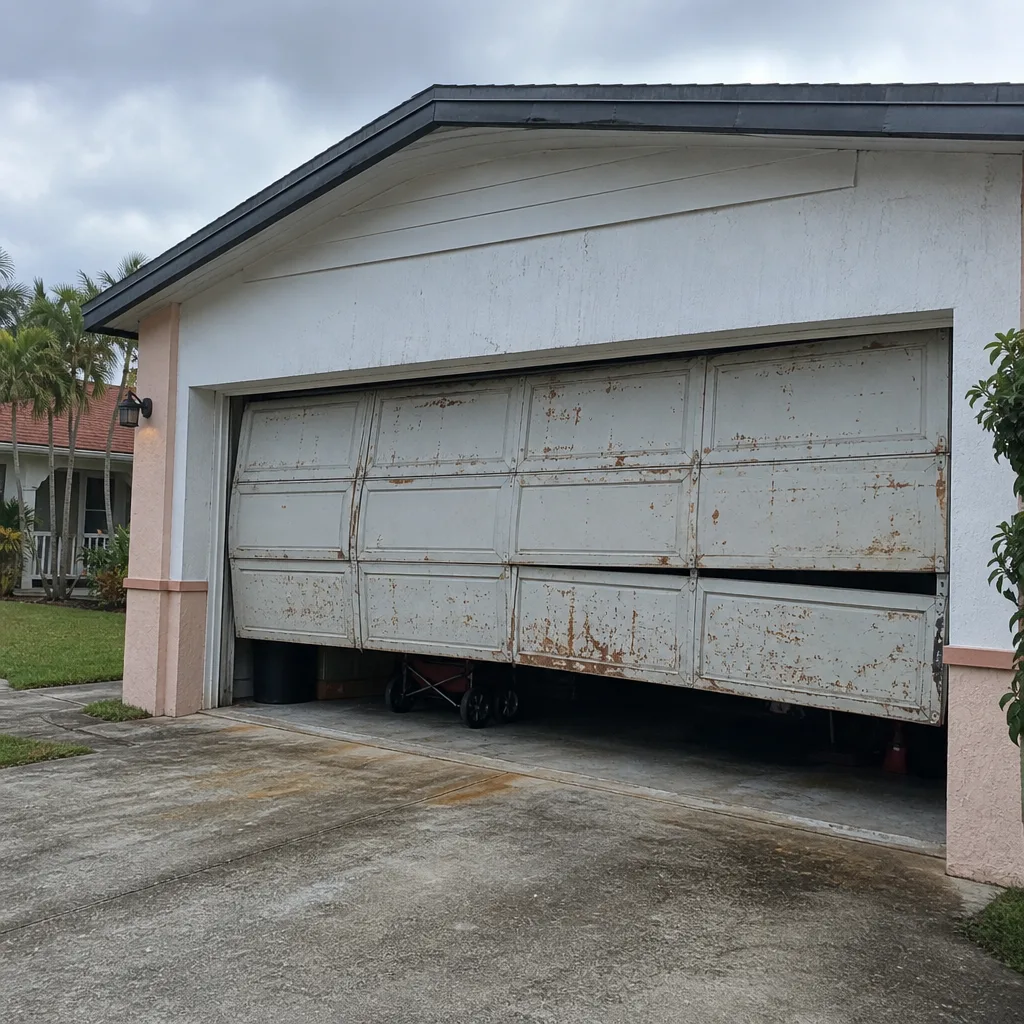 Before
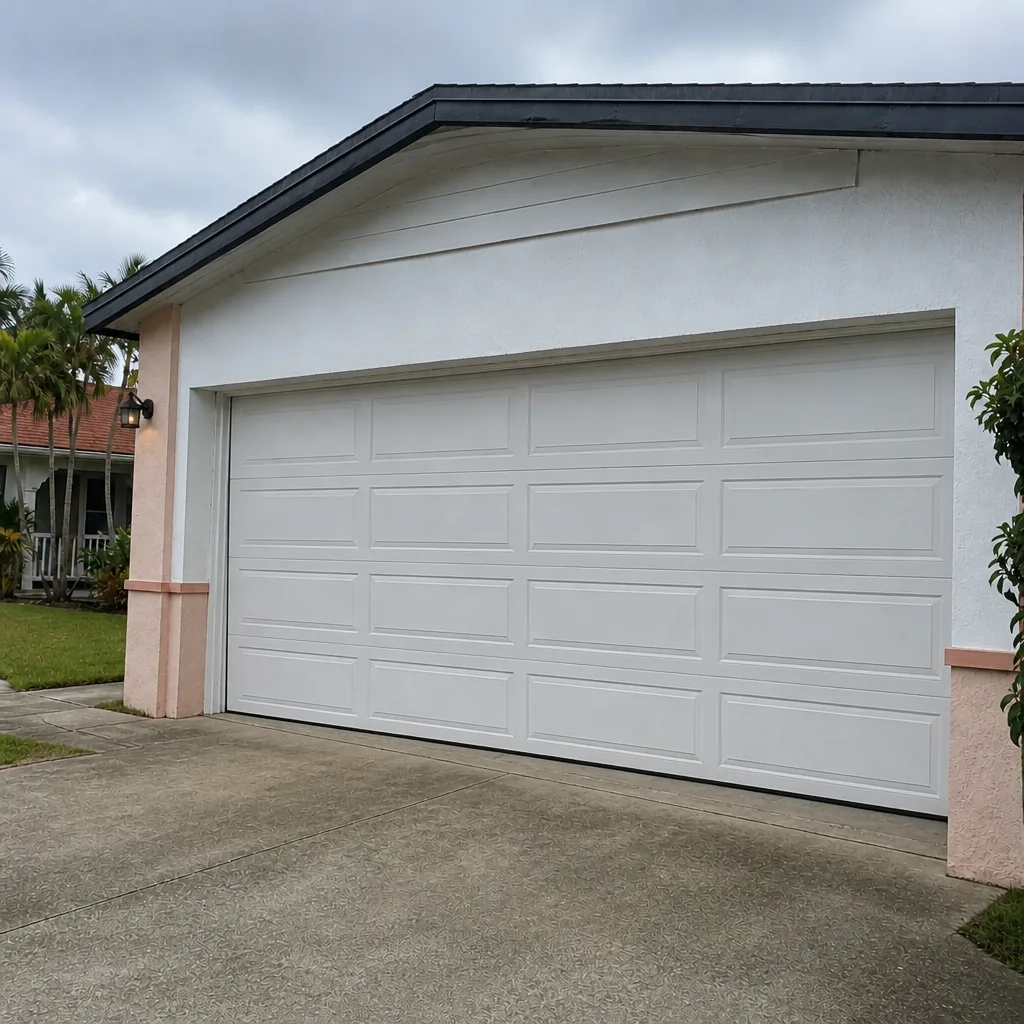 After
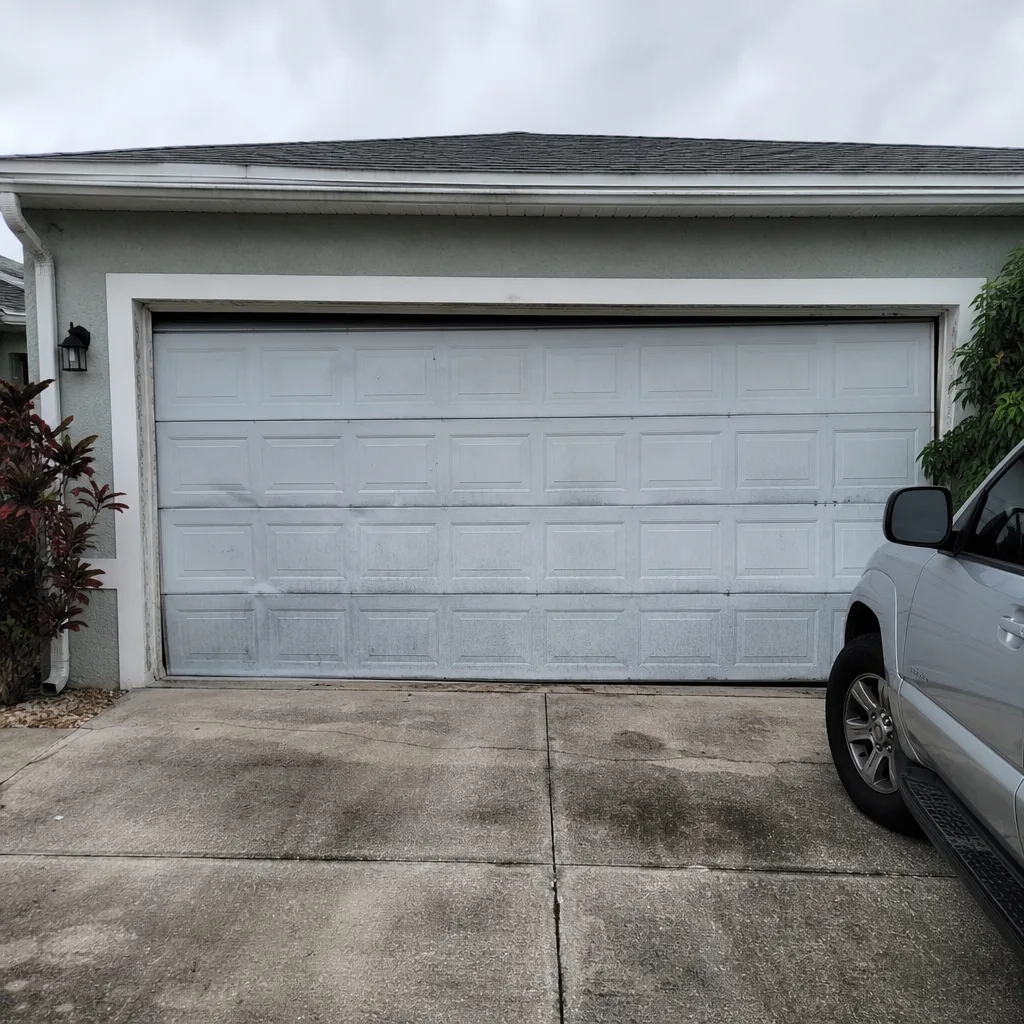 Before
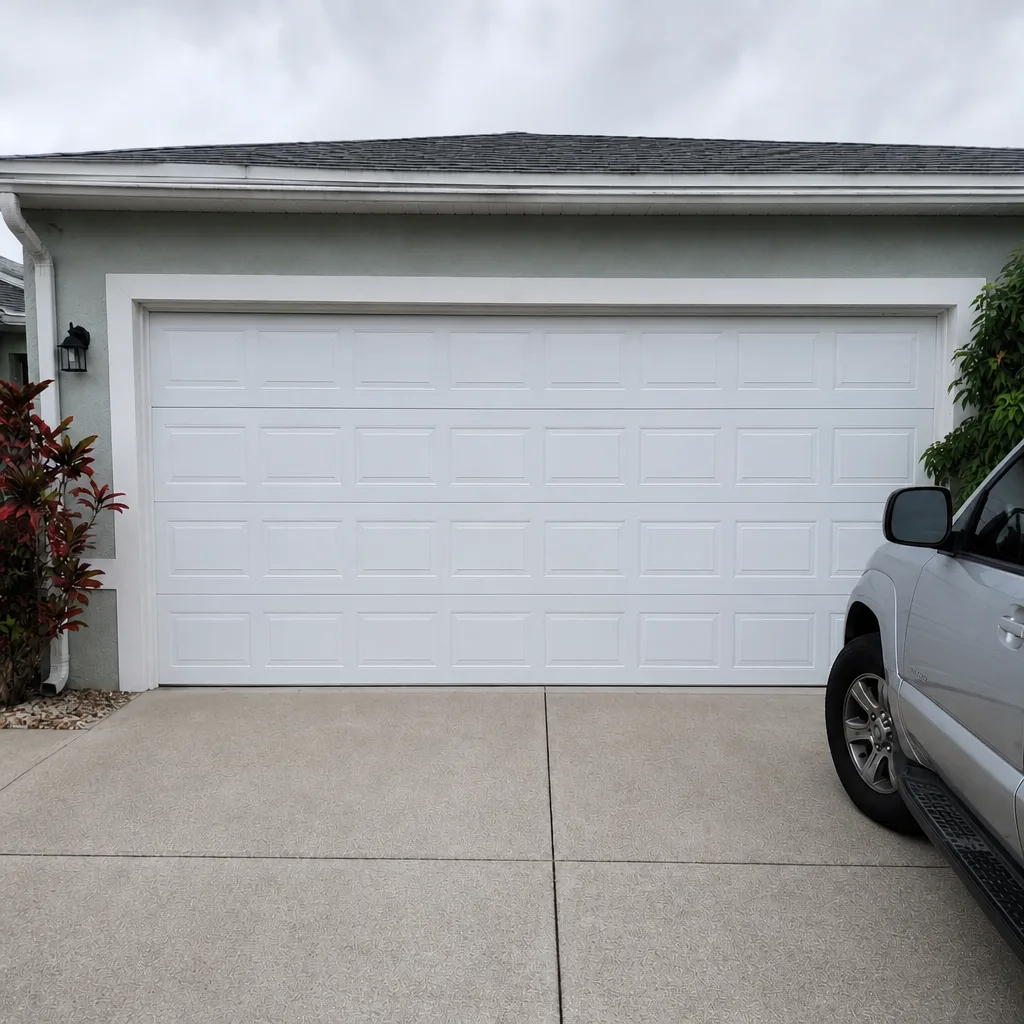 After
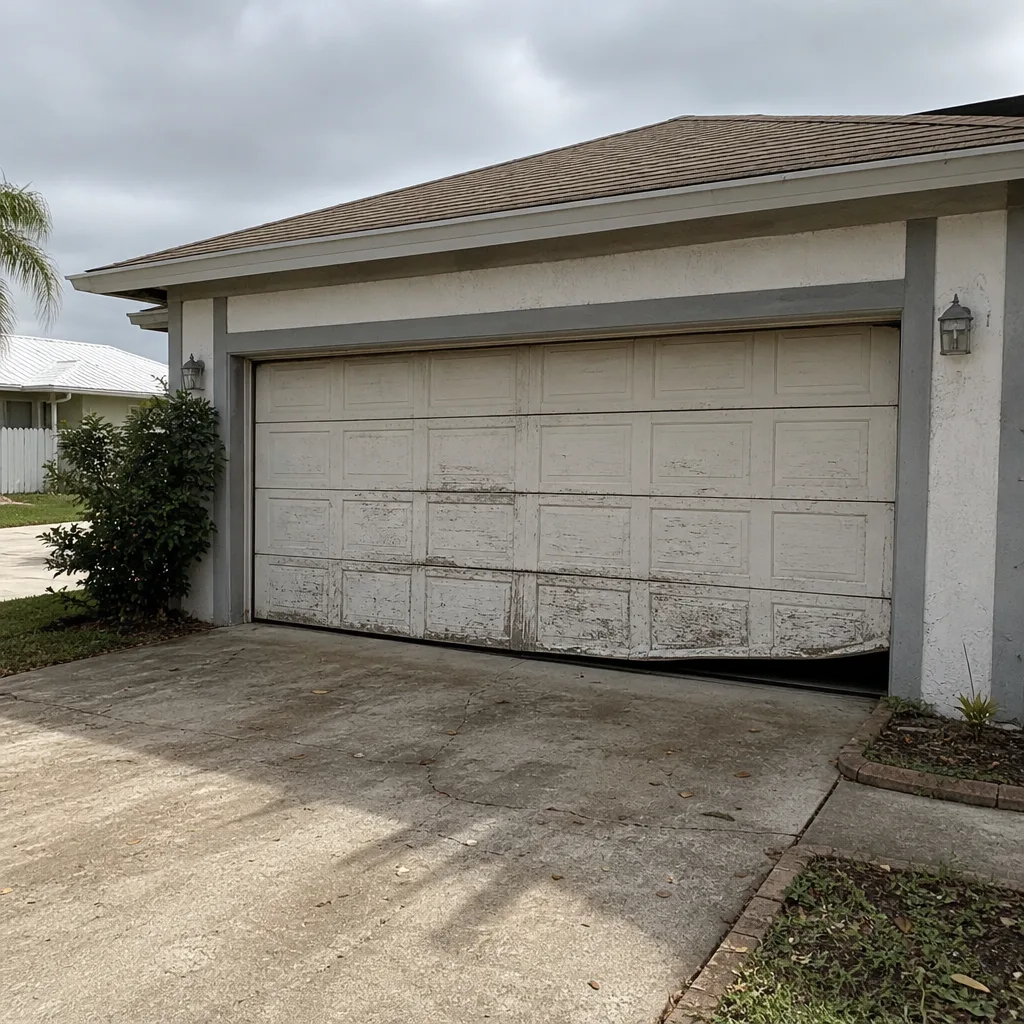 Before
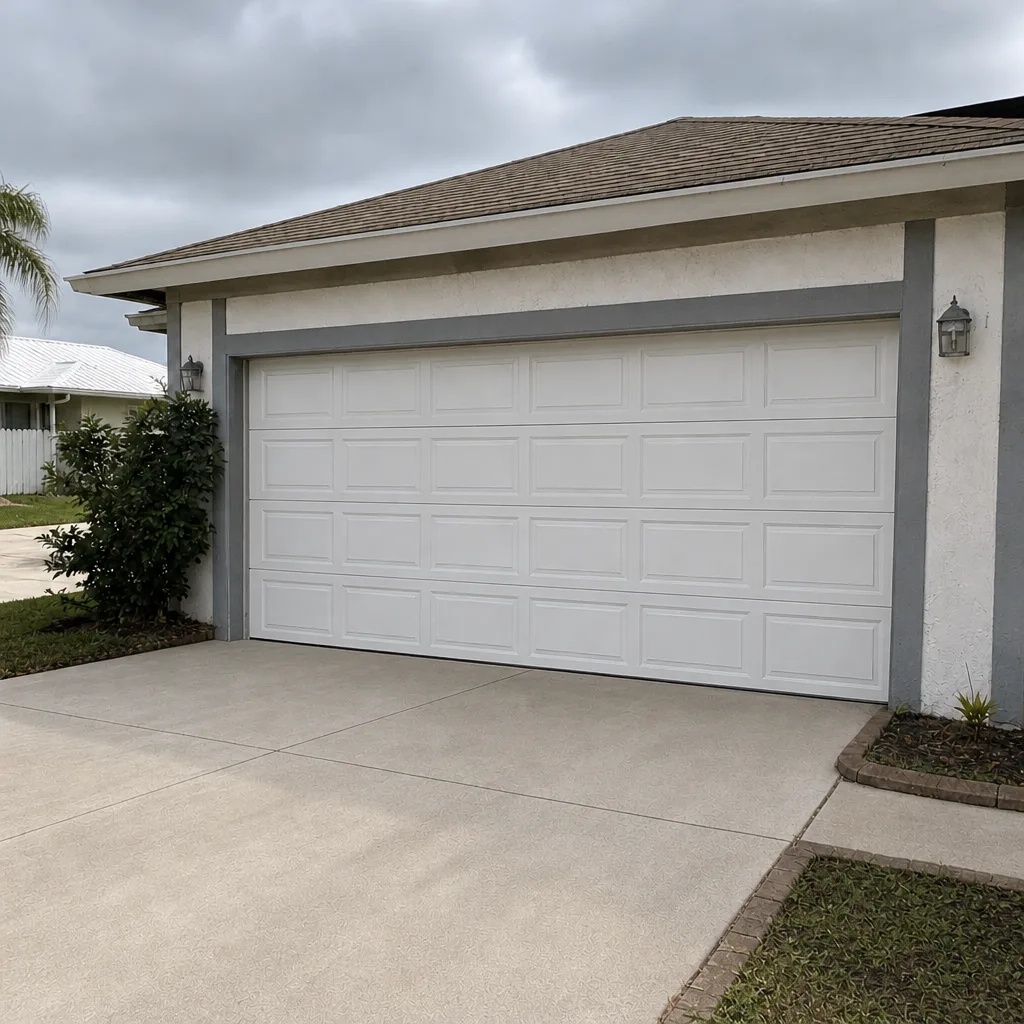 After
When to Call a Professional
Some jobs are maintenance. Some jobs need a specialist. Call a professional when: the door is stuck – open or closed; you’ve heard a loud bang from the garage and the door now won’t lift; the door is visibly off its tracks; the opener runs but the door doesn’t move, or the door moves but the opener doesn’t; you see a broken spring (usually a visible gap in the coil); the safety reverse fails its monthly test; the door is binding or difficult to operate by hand; or you’re planning a replacement and want a proper measure and written quote before committing. Any spring, cable, or track issue should go to a professional without exception – these are high-tension components, and the risk of serious injury is real. The same is true for opener electrical work and any structural repair. If you’re in Wellington and you want to know what your door needs, Wellington Garage Door Repair Pros offers free estimates in Wellington – call (855) 658-3814.
Frequently Asked Questions
The honest answer is that it depends on the door – material, size, wind rating, and window configuration all move the number, and locally the range runs from about $900 on the low end for a basic single door up to $4,500 or more for a large, wind-rated, windowed double door. Installation is typically quoted separately, and HOA-required upgrades can add to that. The number that matters is your written estimate, which is based on an on-site measure. For an exact quote, call (855) 658-3814.
Not without approval in most of Wellington’s association-governed neighborhoods. Associations like Versailles and Olympia commonly regulate color, material, and window panels, and the architectural review process has to happen before the work. Ask your association for the current written guidelines and submit the request before you order. Once you have approval, any reputable installer will work to that spec. If you’re unsure what your community allows, that’s a question for your association board, not your installer.
It’s not that doors fail more – it’s that the failure modes are different. Humidity accelerates corrosion on steel and wear on seals and rollers. Heat and sun exposure affect finishes and can make some materials brittle over time. And because doors here are structural components governed by wind-load code, there’s less margin for a door that’s degraded. The routine that keeps a door healthy in Wellington is more about moisture and finish than about the cold-weather issues you’d find in a northern climate.
A tune-up is preventive maintenance – lubrication, adjustment, safety testing. An inspection is diagnostic – it finds out what’s wrong when something is. You want a tune-up when the door is working normally and you want to keep it that way; you want an inspection when the door is noisy, binding, not sealing, or otherwise behaving differently. Don’t use one to stand in for the other.
Yes – in practice, replacement doors in this region need to carry product approval suited to the local wind-load requirement, and Miami-Dade and Broward approvals are commonly referenced in Palm Beach County as well. The safe rule: ask about wind-load approval before you buy, and keep the paperwork. For the exact requirement on your address, your city’s building department is the authority. For a door that meets the requirement and a proper installation quote, call (855) 658-3814.
Spring replacement is a standalone repair. It’s one of the most common jobs we handle, and it doesn’t require replacing the door. It does require a specialist – springs are under extreme tension and are one of the most dangerous DIY repairs a homeowner can attempt. Call (855) 658-3814 for an exact quote; estimates are free.
The Bottom Line
A garage door in Wellington has to clear three hurdles at once: wind-load code, humidity, and HOA rules. Getting them right is what separates a door that lasts from a door that becomes a problem. The practical checklist: check your association’s guidelines before you order anything; confirm the door carries approval for this region; pick a material that matches how much maintenance you want to do; keep the finish and hardware in good shape; and call a specialist for anything involving springs, cables, or the opener. When you need Wellington Garage Door Repair Pros on the line, we’re here.
For garage door repair, garage door opener repair, or garage door spring repair, call (855) 658-3814. Estimates are free, and the price is quoted and agreed before any work begins.
Written by the team at Wellington Garage Door Repair Pros.