Last updated November 21, 2026
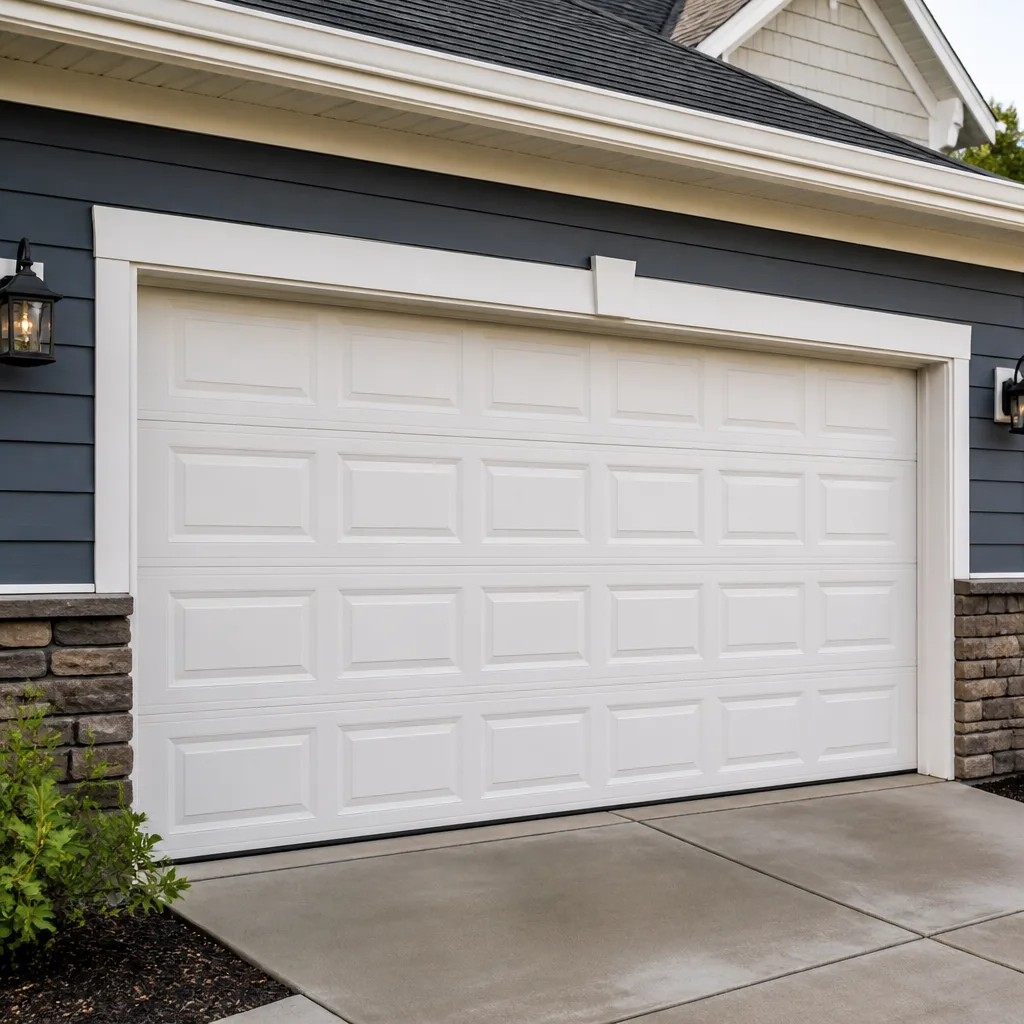 Raised-panel steel
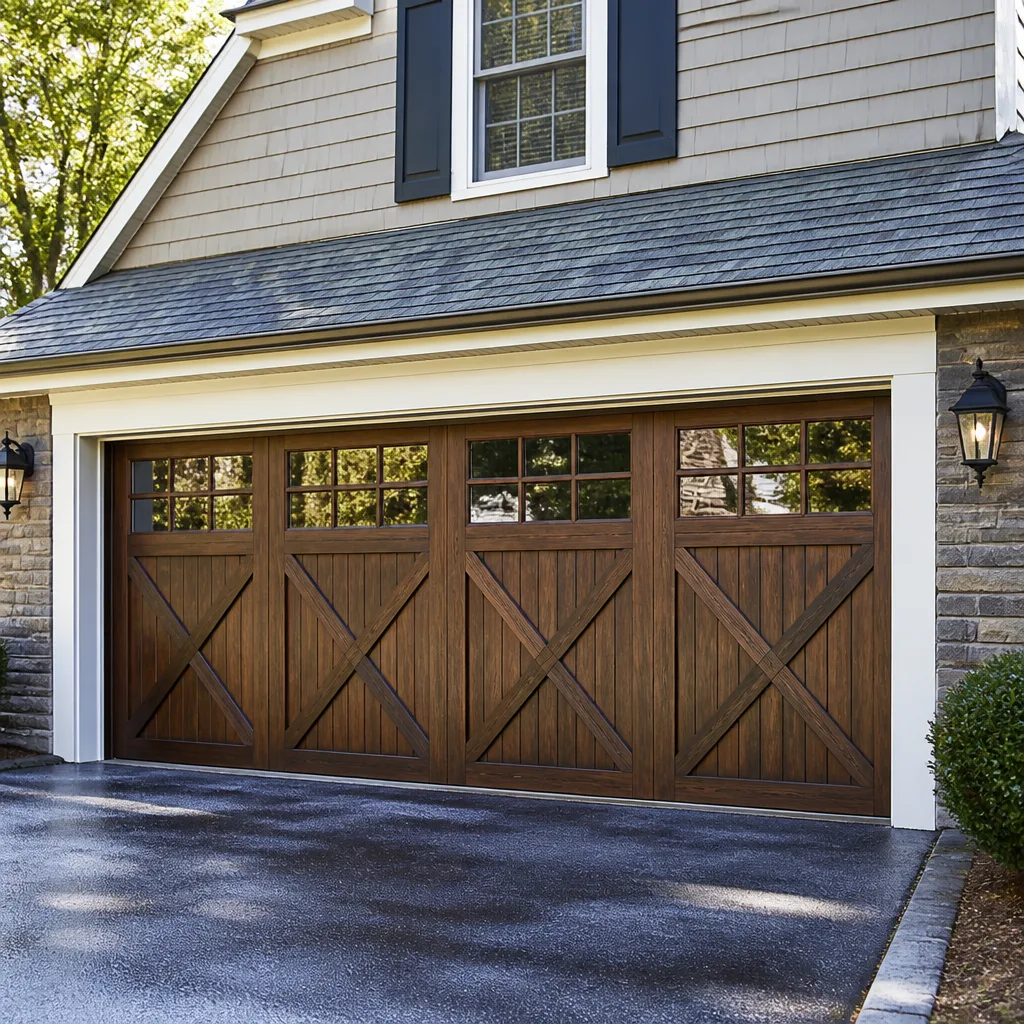 Carriage house
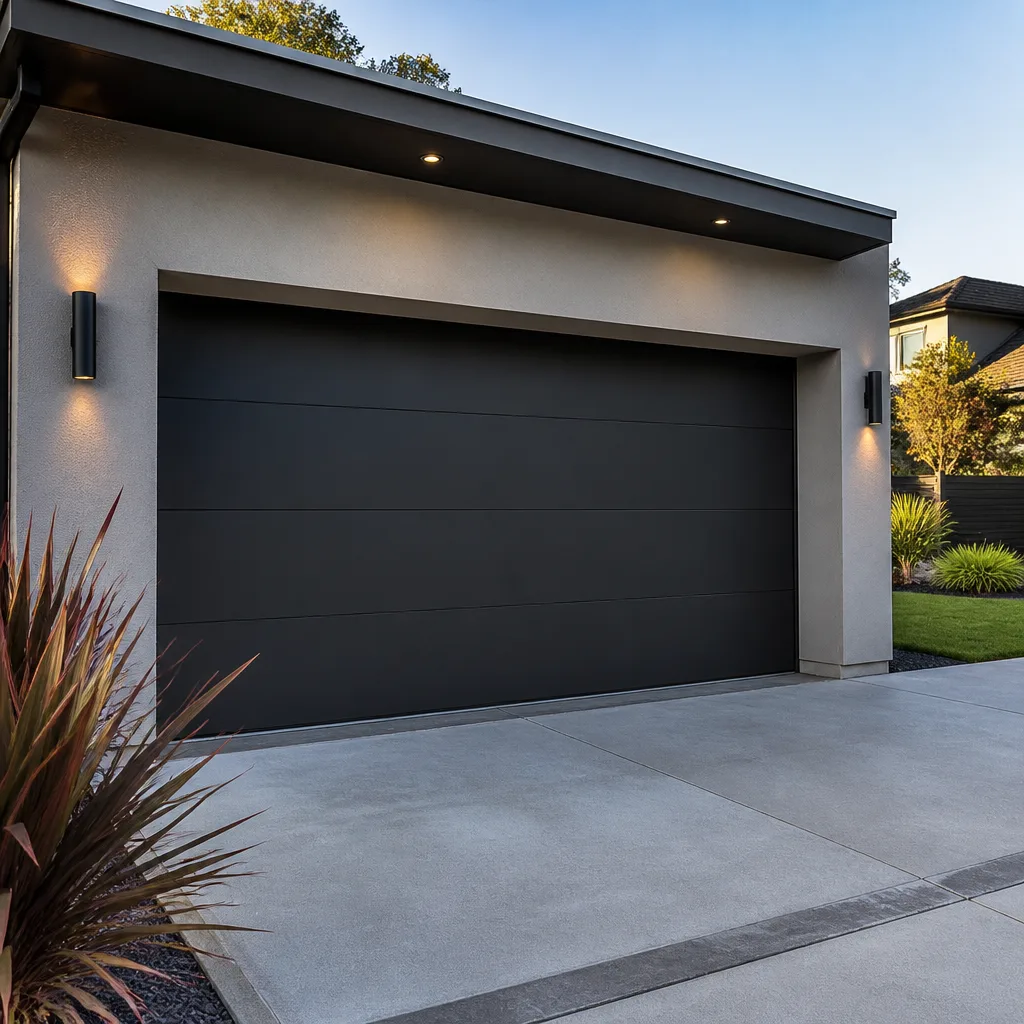 Modern flush
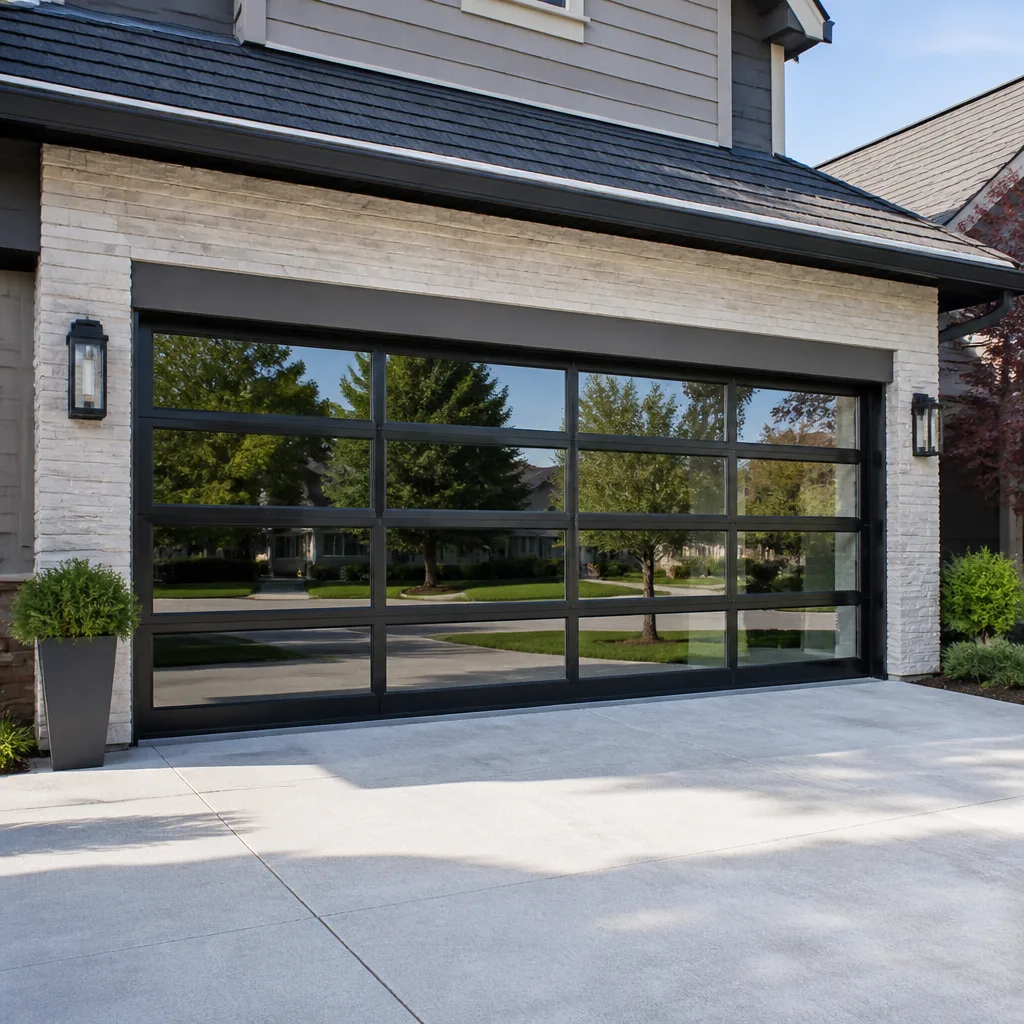 Full-view glass
 LiftMaster openers
 Chamberlain openers
Full 25-point door and opener safety check with every visit - springs, cables, rollers, tracks, and your LiftMaster or Chamberlain opener included
You get a price before we start. It does not change when the pro arrives.
Get your free estimateGarage Door Repair Maintenance Checklist for Wellington Homeowners
Most garage door maintenance checklists are written for a climate that doesn’t exist in Wellington. They tell you to lubricate the torsion springs twice a year and call it done. That schedule was built for mild, dry conditions, and it misses the thing that actually ends a spring’s service life here: humidity. An unprotected torsion spring in South Florida’s damp air can start pitting within months and fail well before its time, and a twice-a-year glance won’t catch it. This guide gives you a checklist weighted for Wellington specifically – monthly visual checks that match our humidity, a pre-hurricane-season sequence most lists skip, lubricant choices that hold up in heat, and the annual tasks you shouldn’t do yourself. Print it, pin it inside the garage, and work through it in order.
Quick Answer
A garage door maintenance checklist for Wellington should prioritize monthly visual inspections for rust and seal wear, a pre-hurricane-season hardware and track check, quarterly lubrication with a lithium-based product, and one professional inspection a year for spring tension and cable condition. Humidity and storm season drive the priority order here more than temperature.
Styles & brands we work with
- Raised-panel steel
- Carriage house
- Modern flush
- Full-view glass
- LiftMaster openers
- Chamberlain openers
Table of Contents
- Why Garage Door Maintenance in Wellington Starts With Humidity, Not Cold
- The Tiered Maintenance Schedule: Monthly, Quarterly, Annual
- Monthly Checks: Rust, Seals, and Weatherstripping
- Lubrication That Actually Works in Florida Heat
- The Pre-Hurricane-Season Garage Door Checklist
- Annual Professional Inspection: What You Shouldn’t Do Yourself
- Reading the Warning Signs Before They Become Repairs
- Common Mistakes to Avoid
- When to Call a Professional
Why Garage Door Maintenance in Wellington Starts With Humidity, Not Cold
Cold-climate garage door guides obsess over freezing temperatures and the way ice can bind a door to its frame. Wellington doesn’t have that problem. What Wellington has is warm, wet air sitting against metal for most of the year, and that changes which parts of the door need attention first.
Humidity does two quiet things to a garage door. It attacks the steel – especially the torsion springs, the cables, and the hinge plates – and it works on the rubber and vinyl parts. Weatherstripping loses its grip on the frame as the adhesive softens and re-cools. The bottom seal swells and shrinks with moisture, then stops sealing cleanly against the floor. A door that looks perfectly fine from the driveway can have rust blooming on the inside faces of the springs and cables, where you’d never see it unless you looked.
The practical result is that in Wellington, visual inspection matters more than in most markets. Catching surface rust on a spring early lets you clean and protect it. Catching it late means you’re scheduling a spring repair you didn’t expect. The cost difference is significant.
Our technicians have up to 11 years of experience, and the pattern they describe is consistent: the doors that last are the ones whose owners look at the working parts regularly, not the ones whose owners lubricate twice a year and forget about it. This guide builds the looking into a habit.
One more thing specific to this area. Wellington’s newer developments and established neighborhoods alike sit on a lot of paved, sun-baked ground, and the garage is often the hottest, most humid room on the property. That’s the environment your door’s hardware lives in every day. The checklist below is built for that environment, not for a garage attached to a house in a cooler part of the country.
The Tiered Maintenance Schedule: Monthly, Quarterly, Annual
Here’s the whole schedule in one place. If you print nothing else from this guide, print this section and tape it to the wall near the door opener. Each tier is explained in detail further down.
Monthly Tasks (15 minutes)
- Look at both torsion springs for orange or brown pitting, rust flakes, or a chalky coating.
- Check the weatherstripping along the sides and top for peeling, gaps, or hardened rubber.
- Inspect the bottom seal where it meets the floor for swelling, cracking, or tearing.
- Check the hinges and roller brackets for loose screws and rust.
- Test the door’s balance by hand and confirm the manual release works.
- Look at the safety sensors at the bottom of the tracks for obstructions.
Quarterly Tasks (30 minutes)
- Lubricate hinges, rollers, and the torsion spring with a lithium-based garage door lubricant.
- Wipe the tracks clean with a damp cloth and check for bends or debris.
- Test the auto-reverse feature with a low object placed in the door’s path.
- Check the opener’s chain or belt for slack and the rail for wear.
- Inspect the lift cables for fraying, kinks, or visible rust along their length.
Annual Tasks (professional)
- Have spring tension calibrated and cable wear assessed by a technician.
- Have the balance adjusted, the hardware torqued, and the opener serviced.
Monthly Checks: Rust, Seals, and Weatherstripping
A monthly walk-around is the core habit. It takes about 15 minutes, needs no tools beyond a flashlight, and it’s where Wellington homeowners catch most of the problems that would otherwise turn into surprise repairs. Do it at the same time each month so you don’t forget.
Rust pitting on springs
Springs are the most expensive and most safety-critical hardware on the door. Run your eyes along both torsion springs (the coiled bars above the door) or extension springs (along the horizontal tracks) and look for rust. Surface rust is a warning sign. Pitting – small, dark, crusty spots where metal has actually been eaten away – is a problem. A pitted spring is a spring that’s weak, and weak springs break. If you see orange-brown bloom or flaky patches, don’t wait: have it checked.
Weatherstripping adhesion failure
The rubber or vinyl strip that seals the sides and top of the door is held on by an adhesive strip, nails, or a retainer. In Wellington’s heat and humidity, the adhesive softens. Pull gently at the edges of the weatherstripping on each side and across the top. If it lifts away easily or you can see daylight through a gap when the door is closed, it’s time to re-seal or replace it. A failed seal lets rain and insects in and forces the opener to work harder.
Bottom seal swelling
The bottom seal, sometimes called the astragal, is the rubber tube along the bottom edge. Moisture makes it swell; sun bakes it hard. Look for a seal that no longer meets the floor evenly, has cracks, or is torn. A swollen or damaged bottom seal lets water pool under the door and lets air escape, which matters more than people realize in summer.
Any one of these caught early is a small fix. All three caught late, together, tend to mean a bigger repair bill. That’s why the monthly pass leads the checklist in Wellington.
Lubrication That Actually Works in Florida Heat
This is the section where generic checklists do the most damage. The common advice is to spray WD-40 on everything that moves. Don’t. WD-40 is a water displacer and light solvent, not a long-term lubricant. It evaporates, it attracts dust, and in a hot garage it leaves metal parts drier than they were before you sprayed them. Use it to loosen a stuck bolt if you must, then clean it off and lubricate properly.
What holds up in Wellington’s heat is a garage door lubricant built for the job – a lithium-based or silicone-based product labeled for garage door use. These stay put on the parts that need them and don’t run off or turn gummy in warm conditions. Here’s where to put it:
- Hinges: one or two short sprays per hinge pivot, worked in by opening and closing the door.
- Rollers: a small amount on the roller stems, not on the roller faces that ride the track.
- Torsion springs: a light, even coating along the coils to slow rust and reduce squeak. Don’t drown them.
- Opener chain or screw drive: a product made for the specific drive type, in the amount the opener maker specifies.
Don’t lubricate the tracks themselves. Tracks are meant to be clean and dry; lubricant collects grit and can make rollers slip and skip. Wipe them down instead. If you own a specific opener and aren’t sure which product to use, our team can point you to the right one when we’re out for a repair or an opener check.
One caution that matters for safety. Lubricating is fine, but never climb a ladder to adjust, untension, or remove a torsion spring yourself. Springs under load can cause serious injury. Have a trained professional handle anything beyond a light surface coating.
The Pre-Hurricane-Season Garage Door Checklist
Hurricane season runs from the start of summer through late fall, and the garage door is the largest opening on most Wellington homes. A door that’s aligned and properly braced holds up far better than one that isn’t. This is the piece most maintenance guides leave out. Work through it before the season starts each year.
1. Check bracing hardware torque
Certified wind-rated doors use horizontal and vertical bracing – steel struts or reinforcement bars bolted to the door panels. Over time, vibration from daily opening and closing loosens the bolts. Walk along the door with a socket wrench and check each bolt on the bracing. Hand-tight is not enough; these need to be snug. If the door has no bracing and you’re not sure of its wind rating, ask your city’s building department what your area requires and whether an upgrade is needed.
2. Check track alignment under load
Look along each vertical and horizontal track from a low angle. The tracks should be straight and parallel. Bends, kinks, or gaps where the sections join mean the rollers can jump out under the pressure of high wind or a sudden slam. Stand outside and watch the door as it opens and closes; any wobble or side-to-side sway points to alignment trouble.
3. Test the manual release
Every garage door opener has a red manual release cord. If the power goes out during a storm, that release is how you get the door open or closed by hand. Pull it with the door in the closed position, then check that the door moves freely by hand and that the release re-engages cleanly when the opener runs. If the release is stiff, stuck, or the door won’t re-engage, get it fixed before storm season.
4. Confirm the door is sealed against wind-driven rain
With the door closed, check the perimeter for gaps. A door that seals poorly lets wind-driven rain get behind it, which stresses everything from the springs to the opener. Replacing worn weatherstripping before the season is a small job with a real payoff.
If any step here turns up a problem, it’s worth having a professional take a look before a storm forces the issue. A pre-season inspection is quicker and cheaper than an emergency repair after a failure.
Annual Professional Inspection: What You Shouldn’t Do Yourself
Some tasks belong to a technician. Not because we want to sell you something, but because a few parts of a garage door store enough energy to injure someone badly if handled wrong. Two stands out as the biggest: the torsion springs above the door, which hold the door’s entire weight, and the cables, which are under constant tension. Getting one of those wrong can result in a serious injury. This is why spring work is a job for a trained professional, not a weekend project.
Spring tension calibration
Springs are matched to the door’s weight. Over time, springs lose tension and the door starts to feel heavy. A technician measures the door’s balance and adjusts or replaces springs so the door lifts and closes smoothly. This requires spring winding tools and a working knowledge of safe winding direction, and there’s no safe way to do it from a checklist.
Cable wear
The lift cables run from the bottom corners of the door to the spring system. They fray, kink, and corrode. A technician checks the entire length of both cables, including the drum windings at the top, and replaces any that show wear. A frayed cable can snap under load.
Door balance
Balance testing is a technician’s check, but you can see the symptom: a door that slams down hard, opens unevenly, or drifts halfway when you let go of the release. When we test balance in Wellington, humidity-driven spring wear is one of the most frequent causes of a door that’s gone heavy or slow. If your door is unbalanced, the garage door spring repair may be what’s needed.
Opener service
Openers need routine service too, especially in a hot garage where belts and gears wear. If the opener is cycling unevenly, making new noises, or failing to reverse, it’s worth having it looked at. Our garage door opener repair covers every major brand, so whether you have a LiftMaster, a Chamberlain, or a Genie unit, we can diagnose it.
If you’re already seeing a failing door, the garage door repair service can put it right. And when you’re ready for a full annual inspection, Wellington Garage Door Repair Pros connects you with a vetted local specialist who works on doors and openers every day – not a general handyman squeezing it in.
Reading the Warning Signs Before They Become Repairs
Maintenance is mostly about knowing what a healthy door sounds and feels like. Once you know the baseline, the warning signs are easy to spot. Here’s what to watch for in a Wellington garage.
- A new rattle or bang: loose bracing, a worn hinge, or a track that’s shifted. Check the bracing bolts first.
- A grinding or scraping sound: dry rollers or a track that’s out of alignment. Lubricate if it’s dry; check alignment if the sound continues.
- Uneven opening: one side going up before the other usually means a spring problem or a cable that’s out of adjustment. Both need a professional eye.
- The door reverses on its own: often the safety sensors, sometimes a binding track. Clear the sensors first, then look at the track.
- Water on the garage floor after rain: a failed bottom seal or side weatherstripping. Replace it before storm season.
- Stiff or stuck manual release: don’t force it. Have it checked, especially before hurricane season.
The signs compound. A slightly heavy door makes the opener work harder; a hard-working opener wears faster; a worn opener can bind the door. Catching the first item on that list early keeps the rest from following it.
If you have an older door – an Amarr, a Wayne Dalton, a Raynor, or a Craftsman unit still running on original hardware – the warning signs are worth watching a little more closely. Older doors tend to have the most mileage on the parts that matter.
Common Mistakes to Avoid
- Using WD-40 as a lubricant. It’s a solvent, not a long-term lubricant, and it evaporates in a hot Wellington garage. Use a lithium-based product made for garage doors.
- Lubricating the tracks. Tracks need to be clean and dry. Lubricant collects grit and makes rollers skip.
- Skipping the pre-hurricane-season check. Braced hardware and aligned tracks make a real difference when a storm hits. Don’t wait until the first warning.
- Adjusting or replacing a torsion spring yourself. Springs store enough energy to cause serious injury. This is the one task on the checklist that always belongs to a professional.
- Ignoring a little rust on the springs. In Wellington humidity, surface rust becomes pitting quickly. Check monthly and act early.
- Forcing weatherstripping back into place instead of replacing it. Once the adhesive fails, a re-seal is short-lived. Replace it before storm season.
- Calling a general handyman for a spring or opener issue. Garage doors are their own trade. A specialist has the right tools, the right parts, and the experience with the exact brand you own.
When to Call a Professional
Some items on this checklist are yours to handle. A handful aren’t, and knowing the difference protects both your door and your safety. Call a professional if you see rust pitting on either torsion spring, if the door opens unevenly or feels heavy, if either lift cable is frayed or kinked, if the opener reverses on its own or runs roughly, if the manual release is stiff or stuck, or if the door has come off its track. Also call if the door is older and its wind rating is unclear – that’s a question for the city’s building department, and a specialist can assess the hardware. Wellington Garage Door Repair Pros offers free estimates in Wellington – call (855) 658-3814. We work on the brand you already own, across LiftMaster, Chamberlain, Genie, Clopay, and more, so you don’t need to find a second company. Garage doors are all we do.
See the difference
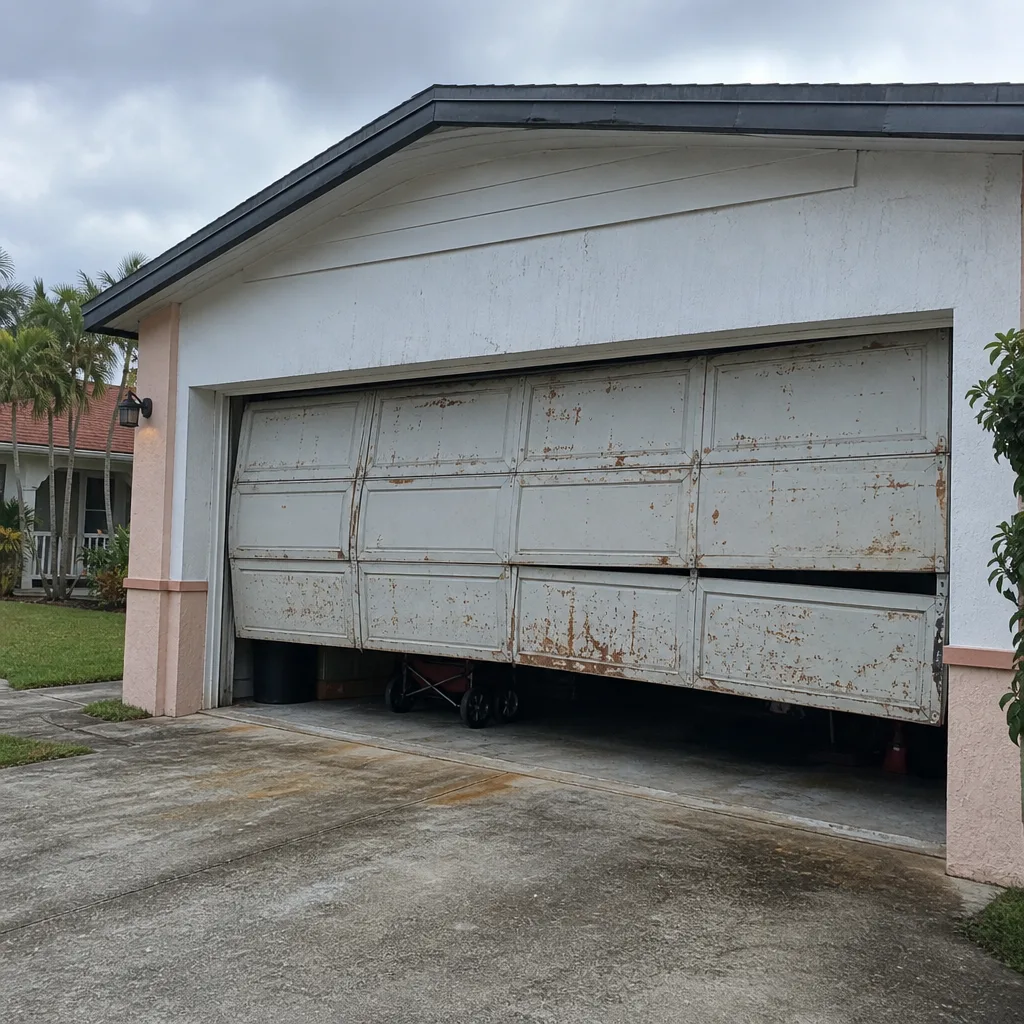 Before
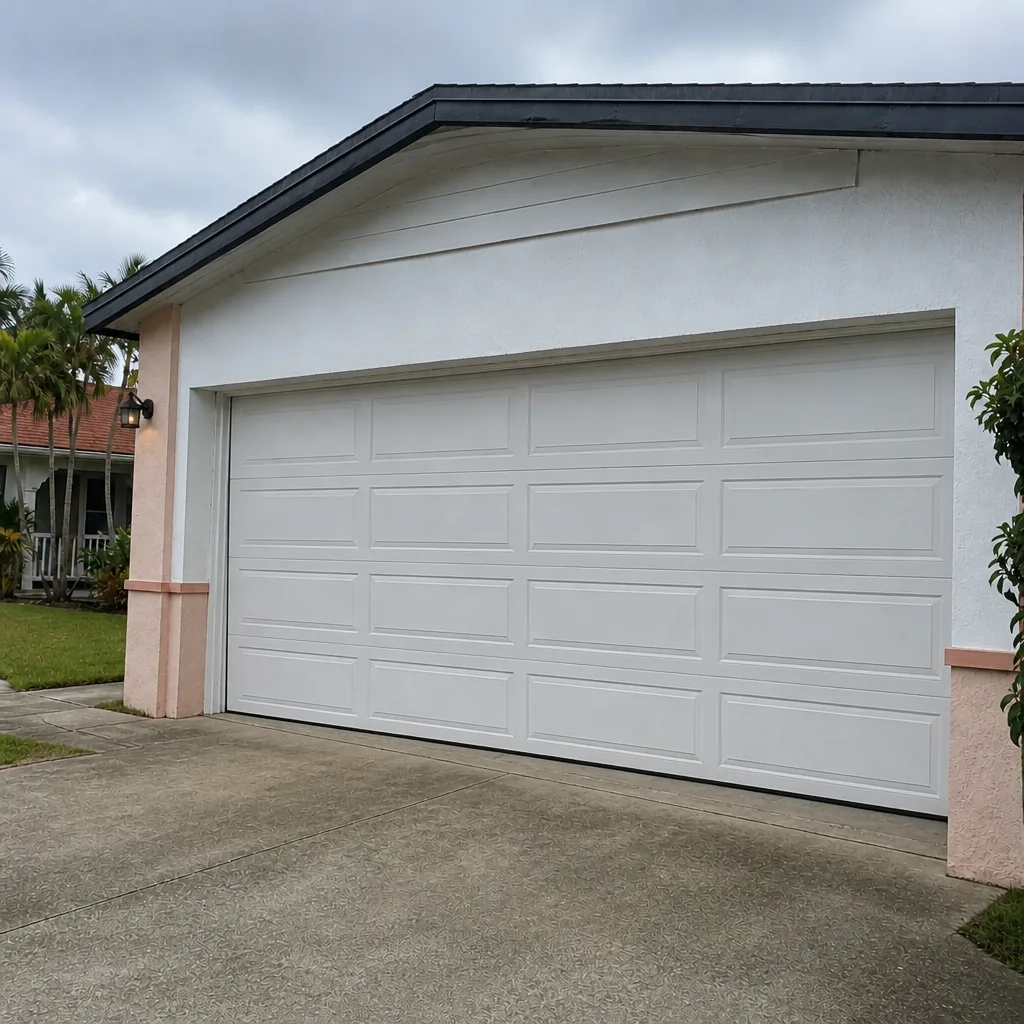 After
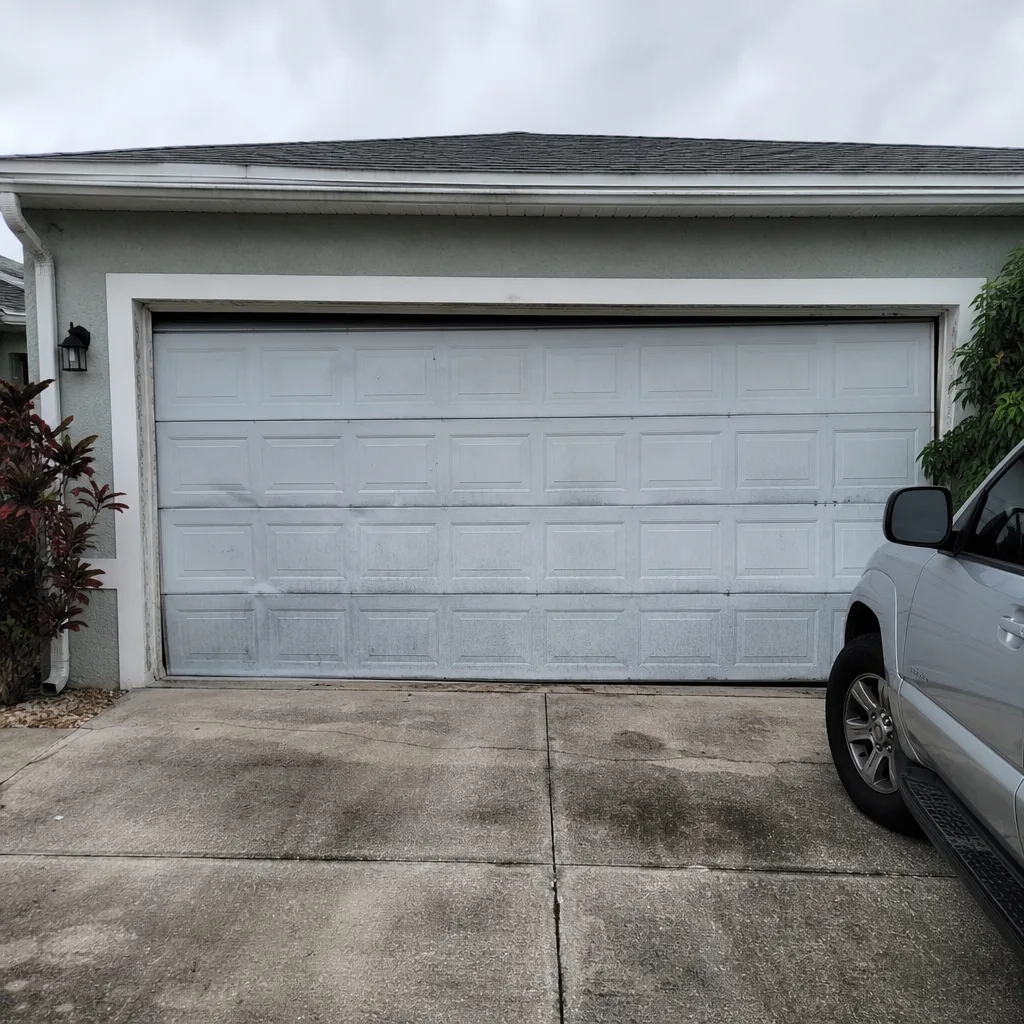 Before
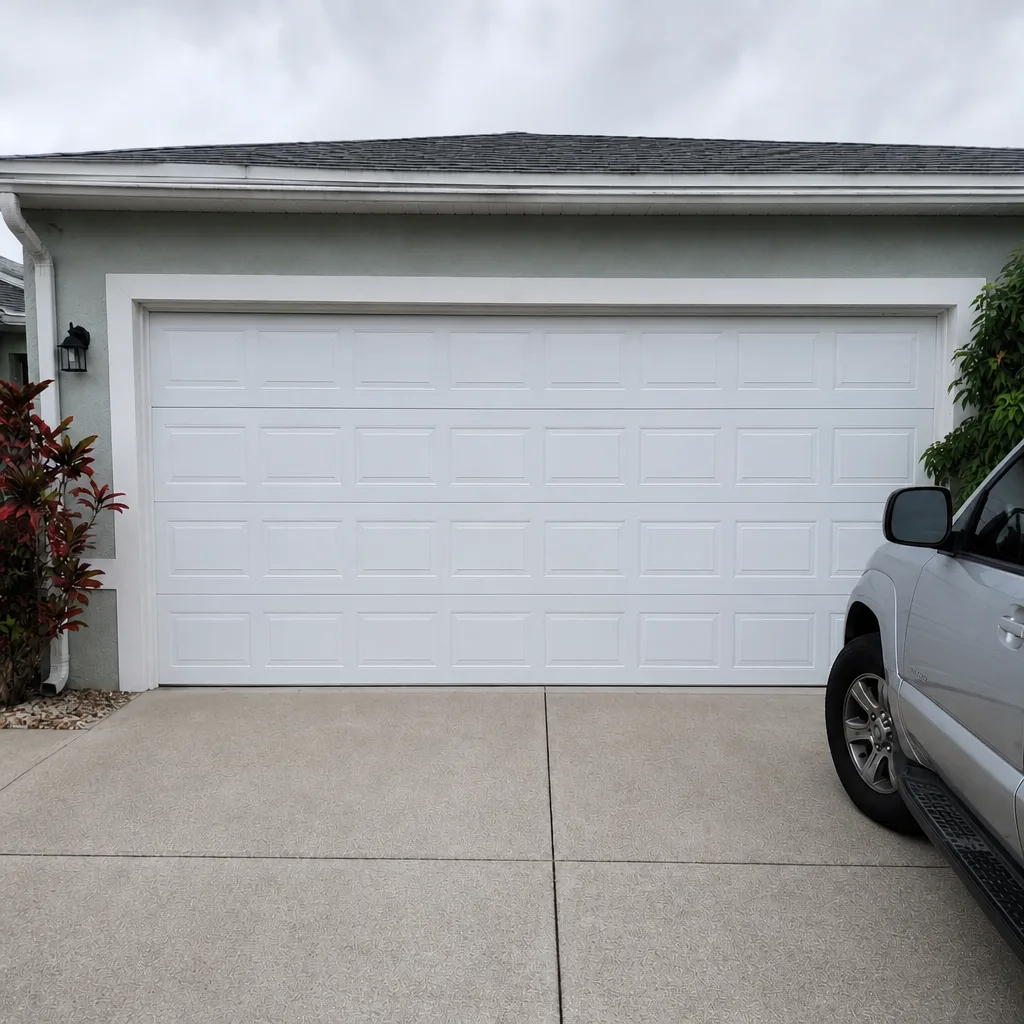 After
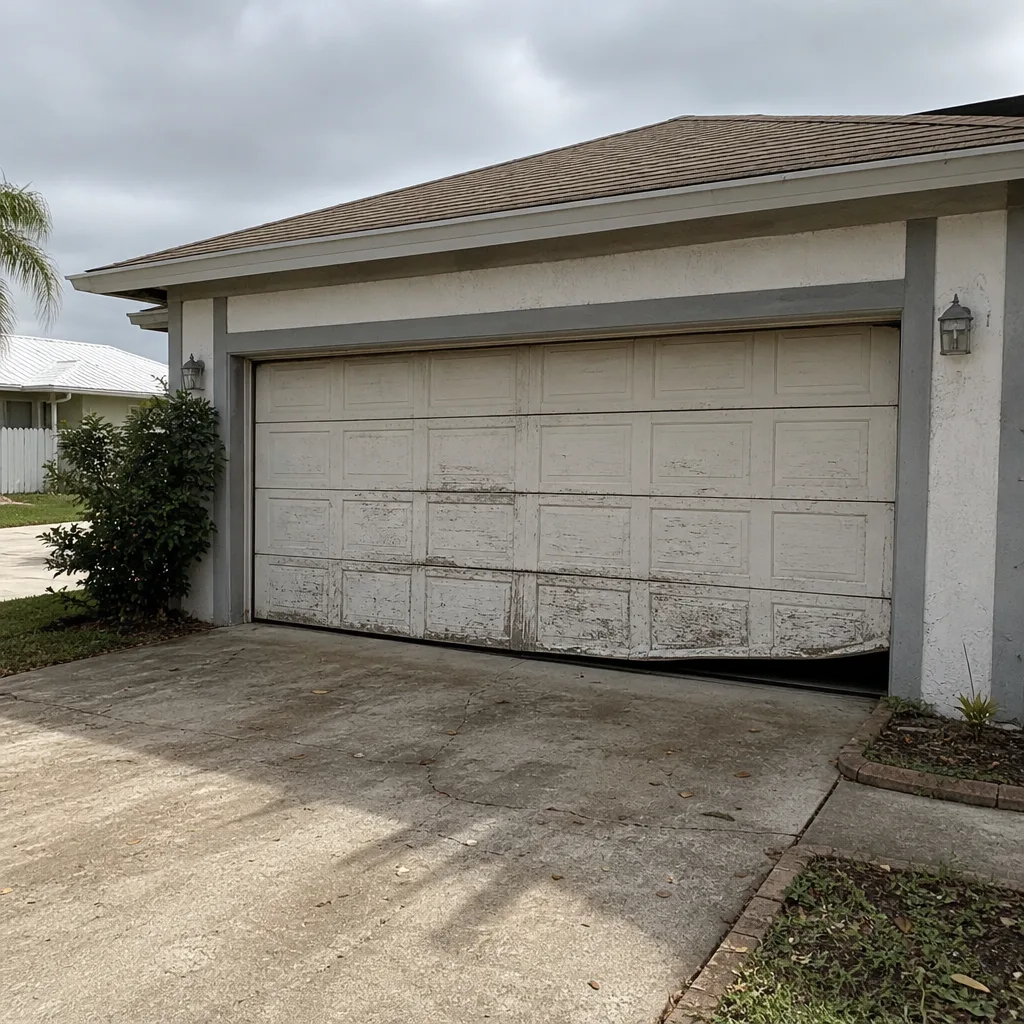 Before
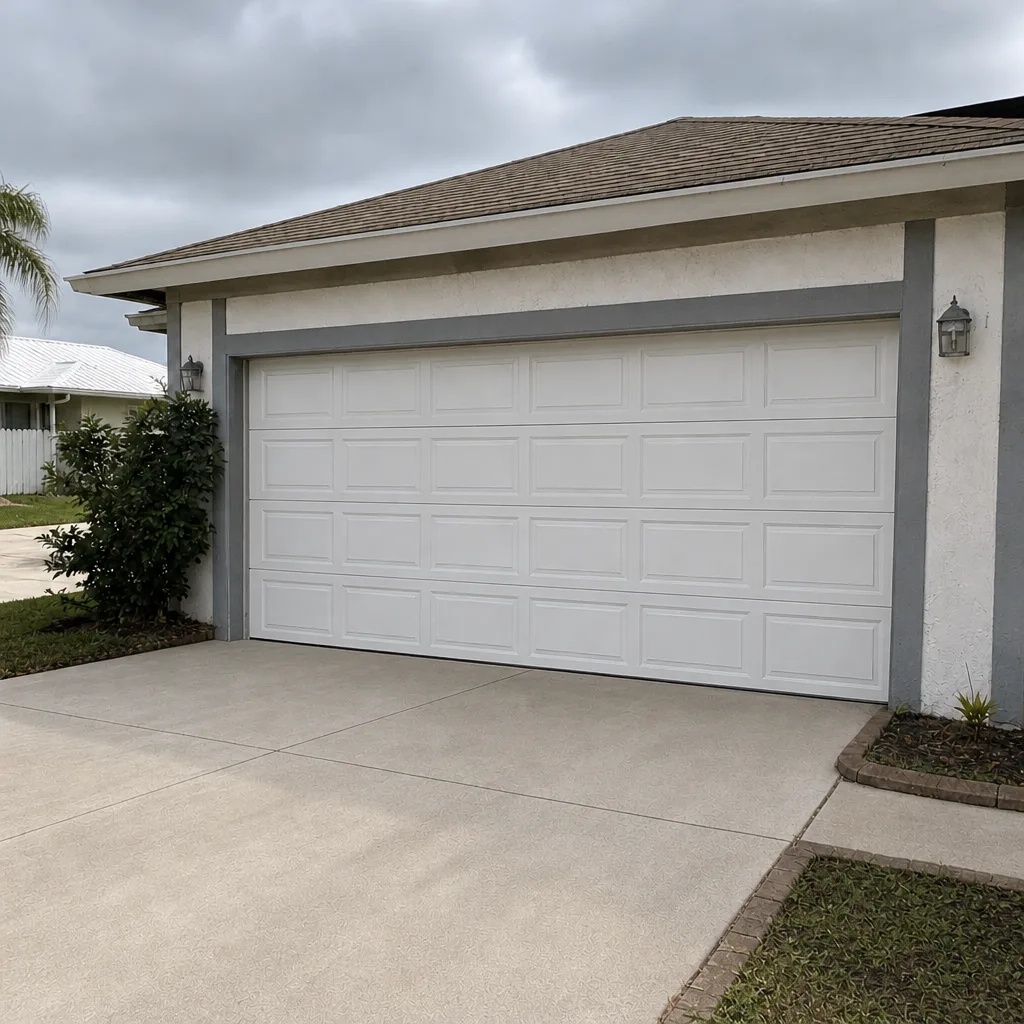 After
Frequently Asked Questions
Quarterly is the right rhythm here. The heat and humidity mean lubricant breaks down faster than in cooler climates, so every three months keeps the hinges, rollers, and springs protected. Use a lithium-based or silicone-based garage door lubricant, not WD-40, and keep it off the tracks. Call (855) 658-3814 for an exact quote if you’d rather have a technician handle it – estimates are free.
Look for rust pitting – small, dark, crusty spots where metal has actually eaten away – along the coils, and a door that suddenly feels heavy or opens unevenly. Cracks or a visible gap in a torsion spring are clear signs it’s failing. A pitted spring is a weak spring; don’t wait for it to break. Call (855) 658-3814 for a free estimate and a technician can confirm.
Four things, in order: torque the bracing bolts, check the tracks for bends or misalignment, test the manual release, and confirm the door seals cleanly around its edges. Do this before storm season starts each year, and have any bracing or alignment problem fixed before the first storm. Call (855) 658-3814 for a free estimate on anything that turns up.
No. Torsion springs are under high tension and can cause serious injury if handled wrong, and there’s no safe way to do the job from a checklist. A trained professional has the spring winding tools and knows the door’s weight and spring rating. If you suspect a problem, call (855) 658-3814 and we’ll have a specialist take a look – estimates are free.
Yes, because the two most important checks – spring tension calibration and cable wear – are things you can’t safely self-assess. They’re also the two that lead to the biggest surprise repair bills when they fail. One inspection a year in Wellington catches them early. Call (855) 658-3814 to book one.
A lithium-based or silicone-based product made specifically for garage doors holds up best in Wellington’s heat. Avoid WD-40 as a long-term lubricant and avoid oil-based products that turn gummy. If you’re unsure which product suits your opener, ask a specialist. Garage door brands like Amarr, Wayne Dalton, Raynor, and Craftsman all have their own recommendations.
The Bottom Line
Garage door maintenance in Wellington is really about the order of operations. Monthly visual checks for rust and seal wear come first because humidity drives the damage. The pre-hurricane-season hardware check comes next because our storms make alignment and bracing matter. Lubrication and the annual professional inspection round it out. Springs and cables are always a professional’s job – never a checklist task. Work through the tiered schedule, print it, and keep it where you’ll see it. When something needs a specialist’s eye, call (855) 658-3814 for a free estimate. You’ll get a written price agreed before any work starts, so there are no surprises when the job is done.
Written by the team at Wellington Garage Door Repair Pros.